Raised wagon
What Fits a Subaru Outback: Roof Racks, Cargo Boxes and Kayak Carriers
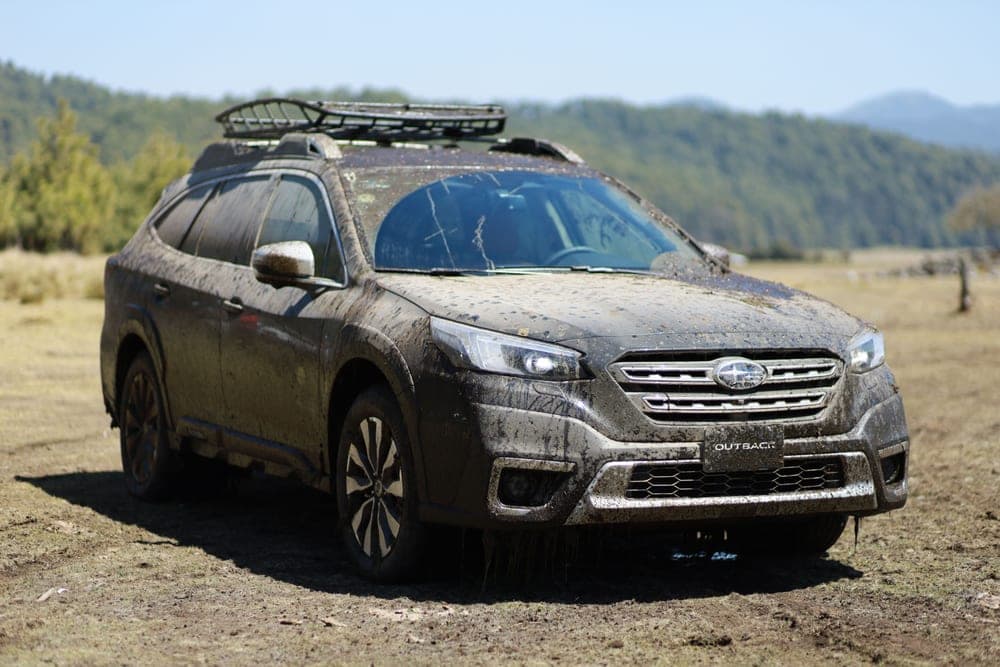
The Outback is the best-suited vehicle on this site for roof loading — low roof, factory rails on every trim, and a published load limit that actually changes with the model year in ways owners rarely notice.
Roof & Route is funded by affiliate commission. If you buy through a link on this page we may earn a commission at no extra cost to you. It never decides what we recommend or the order we recommend it in — read the full disclosure.
If you set out to design a car for roof loading, you would end up close to an Outback. The roof is low enough to load without a step, factory rails are standard across the range, and Subaru has published a roof load figure for every generation.
The catch is that the figure moves. An Outback is not one car with one limit — it is five generations with four different published numbers, and the 2014-2019 cars are rated higher than both the cars either side of them. Owners who upgrade from a 2018 to a 2021 and reuse the same loaded box are, without knowing it, over the newer car's published limit.
The second catch is the factory integrated crossbars on later cars. They are genuinely convenient and they are also lower-capacity and narrower-spread than a proper aftermarket bar set. For a loaded cargo box on a long trip, most owners are better served by dedicated bars.
Outback fitment data
Every figure below is attributed to the document it came from. Where we could not confirm a figure against manufacturer documentation, the row says so rather than estimating. Fitment data last verified September 25, 2026.
Roof type by model year
| Model years | Roof type | Notes |
|---|---|---|
| 2020 onward | Raised side rails with integrated swing-out crossbars | The crossbars stow inside the rails and swing across. Convenient for a bike or a light load; check the rail and crossbar ratings separately before you mount a full cargo box. |
| 2015-2019 | Raised side rails with integrated swing-in crossbars | The generation that introduced the stow-away bars. Same advice: fine for light loads, worth replacing with dedicated bars for a loaded box. |
| 2010-2014 | Raised side rails, separate crossbars | Conventional raised rails. Every major rack system has a rail-mount kit for these. |
Published roof load limit
2020 onward (non-Wilderness)
Verified against a manufacturer document- Dynamic (moving)
- 150 lb (68 kg) total, including bars and carrier
- Static (parked)
- Not published as a separate figure in the manual text we reviewed
Source: Subaru Outback owner's manual, roof rail section
Lower than the 2014-2019 cars. If you are moving up from an older Outback, re-check your loaded weight.
2022 onward, Wilderness trim
Verified against a manufacturer document- Dynamic (moving)
- 220 lb (100 kg) dynamic
- Static (parked)
- 700 lb (317 kg) static
Source: Subaru Outback Wilderness owner's manual, roof rail section
The Wilderness is the outlier — it is rated for a roof-top tent, which is what the 700 lb static figure is for. Do not apply these numbers to any other Outback.
2014-2019
Verified against a manufacturer document- Dynamic (moving)
- 176 lb (80 kg) total
- Static (parked)
- Not published as a separate figure in the manual text we reviewed
Source: Subaru Outback owner's manual, roof rail section
2010-2013
Verified against a manufacturer document- Dynamic (moving)
- 150 lb (68 kg) total
- Static (parked)
- Not published as a separate figure in the manual text we reviewed
Source: Subaru Outback owner's manual, roof rail section
Crossbar spread
Measure yours
Hitch receiver
Receiver availability
What fits a Outback
Crossbars & systems
Roof Racks
The factory integrated bars are fine for a bike. For a loaded box on a long trip, dedicated aero bars give you more spread and a higher rating.
Boxes, bags & baskets
Cargo Boxes
The best-suited vehicle here — low roof, long rails, easy loading. Check your model year's published limit first; it changes between generations.
Rear-mounted cargo
Hitch Carriers
No factory receiver on most trims, and aftermarket hitches are often Class I or II. Check the opening size before buying a carrier.
Carrying bikes
Bike Racks
A roof carrier works well because the roof is low enough to load onto. A hitch platform rack is better if your receiver allows it.
Boats & boards
Kayak Racks
An Outback is the archetypal kayak car. Low roof, long rails, and enough published capacity for two light boats.
Straps & nets
Tie-Downs
Cam straps and bow/stern lines. If you are carrying boats on an Outback, this is the purchase that matters most.
Quick picks
Tap any row to jump to the full write-up below. Scores are our editorial judgment on published specifications — not a star rating, and not a product we claim to have tested.
| # | Product | Best for | Score | Price |
|---|---|---|---|---|
| 1 | 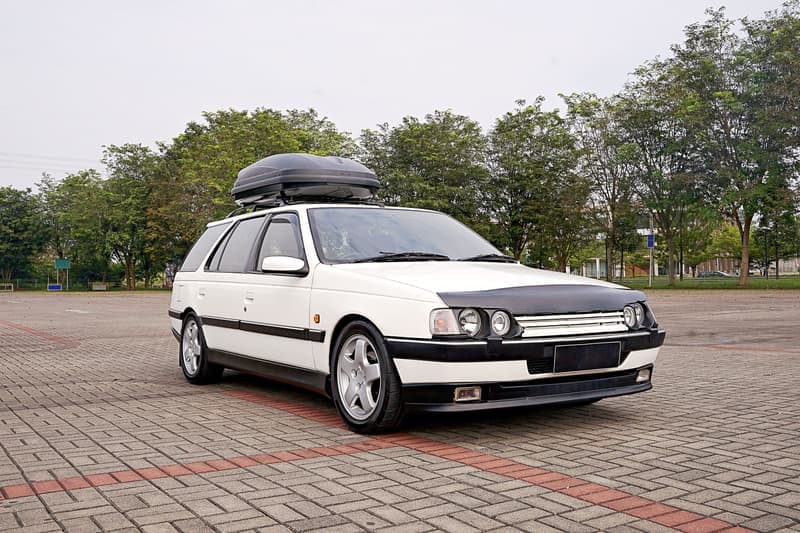 Thule Motion 3A low roof and long rails make the Outback the easiest car here to live with a full-size box on — and dual-side opening earns its keep. | The box an Outback is made for | 8.6 | |
| 2 | 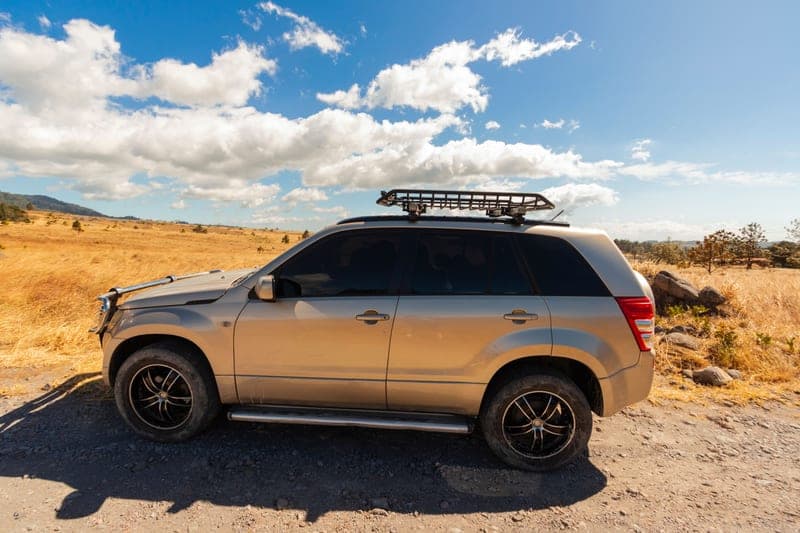 Yakima JetStreamThe factory stow-away bars are fine for a bike; for a loaded box on a long trip, dedicated bars give you more spread and a higher rating. | Better than the factory integrated bars | 8.4 | |
| 3 | 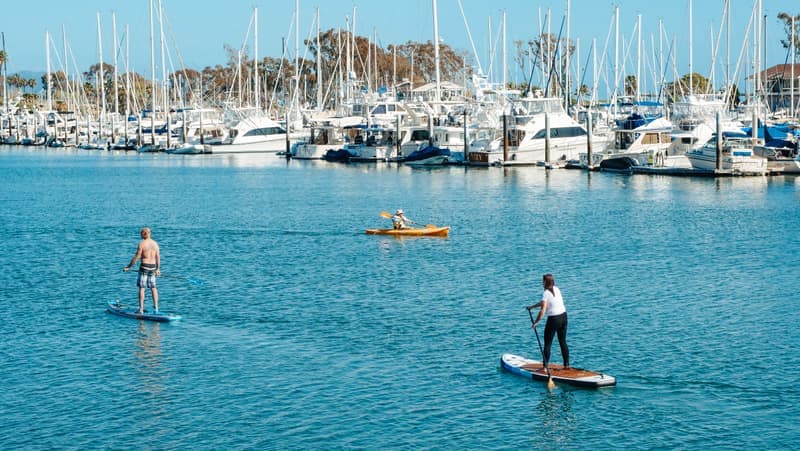 Malone SeaWingAn Outback is low enough that a hull-down saddle is genuinely loadable alone, and it adds almost no height. | Boats on a low roof | 8.1 | |
| 4 |  NRS Heavy-Duty Tie-Down StrapsOutbacks carry boats and boxes rather than dense freight, and both want hand tension rather than a ratchet. | The straps for an Outback's usual load | 8.7 |
Prices checked September 25, 2026. Product photographs are representative stock images, not the exact unit. Affiliate disclosure.
#1 · The box an Outback is made for
Thule Motion 3
A low roof and long rails make the Outback the easiest car here to live with a full-size box on — and dual-side opening earns its keep.
- Roof
- Raised rails, long
- Opening
- Both sides
- Notable
- Low-profile XL available
- Check
- Your model year's published limit
What works
- Loads from the ground on an Outback
- Dual-side opening
- Low XL for tight garages
What doesn’t
- Expensive
- Empty weight eats a 150 lb allowance
Our scoring
8.6overall
#2 · Better than the factory integrated bars
Yakima JetStream
The factory stow-away bars are fine for a bike; for a loaded box on a long trip, dedicated bars give you more spread and a higher rating.
- Roof type
- Raised rails
- Profile
- Wing aluminum
- Why here
- Spread and rating
- Needs
- Tower kit
What works
- Wider achievable spread than the factory bars
- Quieter
- Cheaper than the Thule equivalent
What doesn’t
- Tower kit separate
- Factory bars still useful for light loads
Our scoring
8.4overall
#3 · Boats on a low roof
Malone SeaWing
An Outback is low enough that a hull-down saddle is genuinely loadable alone, and it adds almost no height.
- Type
- V-style saddle
- Profile
- Very low
- Why here
- Low roof, long span
- Capacity
- One boat
What works
- Gentlest carry for a composite hull
- Minimal added height
- Quiet
What doesn’t
- Uses most of the bar
- One boat
Our scoring
8.1overall
#4 · The straps for an Outback's usual load
NRS Heavy-Duty Tie-Down Straps
Outbacks carry boats and boxes rather than dense freight, and both want hand tension rather than a ratchet.
- Type
- 1-inch cam buckle
- Buckle
- Padded
- Quantity
- Two per boat
- Plus
- Bow and stern lines
What works
- Cannot deform a hull
- Padded buckle
- Paddling standard
What doesn’t
- Costs more than generic
- Store out of UV
Our scoring
8.7overall
Outback cautions
- The rear hatch opens high and wide. A hitch carrier on a short shank can catch it — check the swing path with the hatch fully up.
- The factory integrated crossbars sit close together at their standard positions; a long box can overhang the windshield if you mount it too far forward.
- Outbacks with a factory sunroof lose very little clearance, but a tall box will still block the view out of it.
Common questions
How much weight can a Subaru Outback roof hold?
Are the Outback's factory crossbars good enough for a cargo box?
Do I need crossbars if my Outback already has rails?
Sources
Found an error in our fitment data?
Tell us and point us at the manufacturer documentation. Fitment is the thing this site most wants to get right, and the thing we most want to hear about when we have it wrong.