Skip to content
Roof & Route

Rear-mounted cargo

Hitch Cargo Carriers

If your car has a receiver, this is usually the right answer — and most people never consider it before buying a roof box.

By Janet H.Last reviewed September 25, 2026
A steel cargo basket mounted in the hitch receiver of a vehicle

Roof & Route is funded by affiliate commission. If you buy through a link on this page we may earn a commission at no extra cost to you. It never decides what we recommend or the order we recommend it in — read the full disclosure.

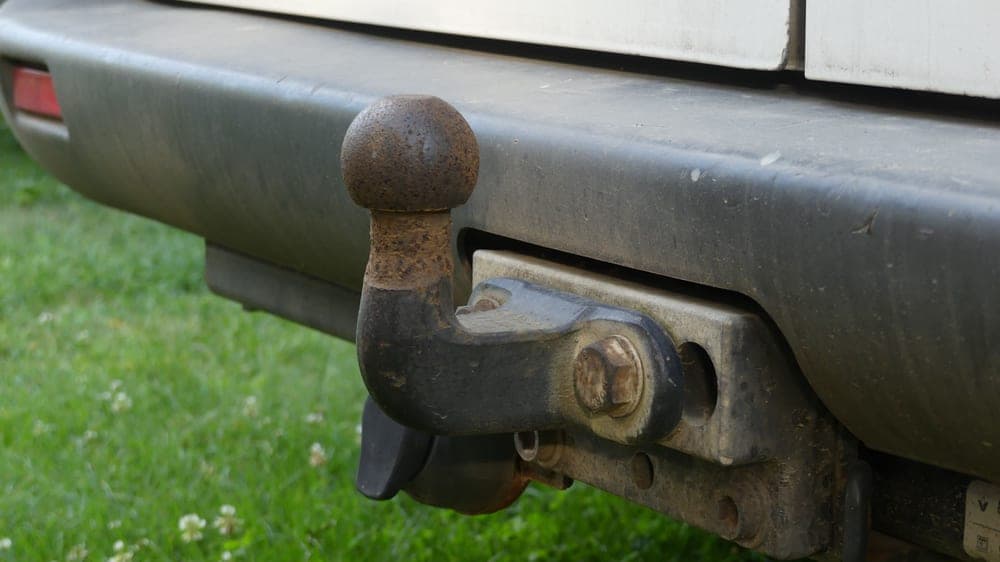
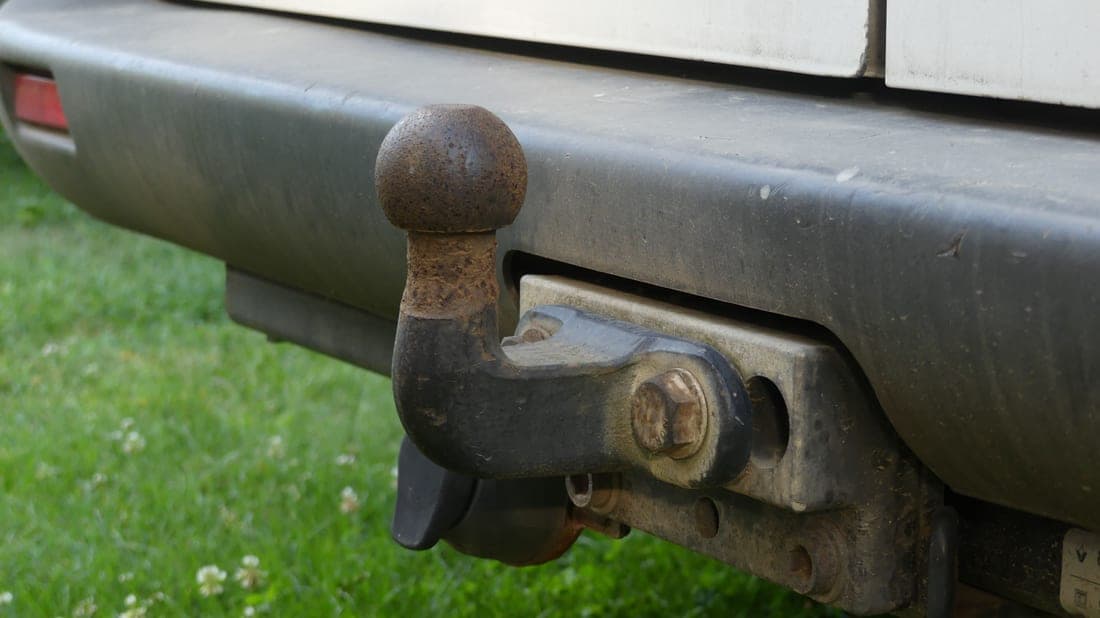
A hitch carrier does the same job as a roof box and beats it on almost every axis that matters. You load at waist height instead of over your head. A Class III receiver is commonly rated at 500 lb or more of tongue weight against a roof’s 100-176 lb. And the aerodynamic penalty is a fraction of a roof box’s, because the carrier sits in the low-pressure wake behind the vehicle rather than in clean air above it.

It loses on three things, all real: weather protection, security, and rear access. And it needs a receiver, which is the reason most people never get as far as considering it.

The number that governs everything here is not the carrier’s rating. It is your hitch’s tongue weight rating, minus the carrier’s own weight. Find it on the receiver sticker before you shop.
Quick picks

Tap any row to jump to the full write-up below. Scores are our editorial judgment on published specifications — not a star rating, and not a product we claim to have tested.

#ProductBest forScorePrice
1
Representative photo of a steel cargo basket mounted in a vehicle's hitch receiver
CURT 18153 Folding Cargo CarrierThe folding angled shank keeps a tall rear hatch usable and gives you back the parking space when empty.
Best overall8.5
2
Representative photo of a powder-coated steel hitch cargo basket
MaxxHaul 70107Same 500 lb rating for a fraction of the money, and light enough that more of your tongue rating stays available for cargo.
Best value7.9
3
Representative photo of a folding aluminum hitch carrier with a ramp stored flat
Black Widow AMC-400-FA self-storing ramp and a folding shank — the answer for an e-bike, a scooter or a dirt bike.
Rolling a load on instead of lifting it8.3
4
Representative photo of a lightweight aluminum hitch cargo tray
MaxxHaul 70108 Aluminum CarrierAluminum instead of steel: you pay more and get a third of the weight back as usable cargo.
Lightest, and for low-rated receivers7.8

Prices checked September 25, 2026. Product photographs are representative stock images, not the exact unit. Affiliate disclosure.

#1 · Best overall

CURT 18153 Folding Cargo Carrier

Representative photo of a steel cargo basket mounted in a vehicle's hitch receiver
Representative photo — not the exact unit.

The folding angled shank keeps a tall rear hatch usable and gives you back the parking space when empty.

Basket
60 x 20 inches
Shank
Folding, angled
Material
Steel
Receiver
2-inch

What works

  • Folds flat against the car
  • Angled shank clears tall hatches
  • Robust steel

What doesn’t

  • Heavy, which costs usable capacity
  • Several times the price of a basic carrier

Our scoring

Capacity9.0
Hatch access9.5
Build9.0
Assembly7.0
Value7.5

8.5overall

#2 · Best value

MaxxHaul 70107

Representative photo of a powder-coated steel hitch cargo basket
Representative photo — not the exact unit.

Same 500 lb rating for a fraction of the money, and light enough that more of your tongue rating stays available for cargo.

Basket
60 x 20 inches
Rated capacity
500 lb
Material
Powder-coated steel
Shank
Fixed

What works

  • Very cheap
  • Light for a steel basket
  • No unknowns — the most-bought carrier there is

What doesn’t

  • Does not fold
  • Powder coat wears on salted roads
  • No anti-rattle device included

Our scoring

Capacity8.5
Hatch access6.0
Build7.5
Assembly7.5
Value9.5

7.9overall

#3 · Rolling a load on instead of lifting it

Black Widow AMC-400-F

Representative photo of a folding aluminum hitch carrier with a ramp stored flat
Representative photo — not the exact unit.

A self-storing ramp and a folding shank — the answer for an e-bike, a scooter or a dirt bike.

Material
Aluminum
Rated capacity
400 lb
Ramp
Self-storing
Receiver
2-inch Class III or IV

What works

  • You push rather than lift
  • Ramp stores on the carrier
  • Folds up when empty

What doesn’t

  • Needs Class III or IV
  • Costs more
  • Generally one machine at a time

Our scoring

Capacity9.0
Hatch access9.0
Build9.0
Assembly7.5
Value7.0

8.3overall

#4 · Lightest, and for low-rated receivers

MaxxHaul 70108 Aluminum Carrier

Representative photo of a lightweight aluminum hitch cargo tray
Representative photo — not the exact unit.

Aluminum instead of steel: you pay more and get a third of the weight back as usable cargo.

Material
Aluminum
Weight
Far lighter than steel
Corrosion
Does not rust
Receiver
2-inch

What works

  • More of a low rating stays usable
  • No rust
  • Fits and removes single-handed

What doesn’t

  • Costs more than steel
  • Dents where steel bends back

Our scoring

Capacity8.0
Hatch access6.5
Build8.0
Assembly8.5
Value7.5

7.8overall

Tongue weight, not towing capacity

A hitch quotes two numbers. Gross trailer weight is what it can pull. Tongue weight is what it can support downward at the receiver. A cargo carrier pulls nothing, so only tongue weight applies — and reading the towing figure instead is a genuine and common mistake.

Then subtract the carrier. A steel basket can be 60-70 lb, which comes straight off your allowance. On a Class II hitch rated at 350 lb, that leaves under 300 lb of cargo.

One further subtlety: a carrier’s load sits on a lever extending 20 inches or more behind the receiver, which is a harder load than a trailer’s coupler at the ball. Some manufacturers publish a reduced rating specifically for cargo carriers. If yours does, use it. Our hitch classes guide has the full picture.

Check your rear hatch before you order

The most common regret with a hitch carrier is a rear hatch that no longer opens. Two minutes of measuring prevents it.

Open the hatch fully. Measure from the receiver to the lowest point of the open hatch, and how far back that point sits. Compare against the carrier’s shank length and basket height — and remember a basket that clears empty may not clear with a cooler strapped on top.

A folding shank buys margin and a parking space. An angled folding shank buys more, because it drops the basket lower relative to the hatch arc.

Rattle, plates and lights

Rattle. Every shank has clearance in the receiver, and loaded, that clearance becomes a knock over every expansion joint. An anti-rattle clamp costs very little and fixes it completely. Most carriers do not include one.

Plates and lights. A loaded carrier can obscure your license plate and rear lights, and requirements vary by state. Plate relocation brackets and light bars exist for exactly this. Check before the first long trip, not at the roadside.

Straps. Carriers rarely include anything you should trust. Our ratchet strap picks cover what to buy.

When to use the roof instead

For long items — kayaks, lumber, ladders — because a roof is ten feet long and a basket is twenty inches deep. For weather protection and security, because a locked hard box is far better than anything on a hitch. When the receiver is already committed to a trailer or a bike rack. And when maneuvering matters, because a carrier adds real length behind the car.

On a full family trip, both is often right: bulky and light up top, heavy and dense on the back. See roof rack or hitch carrier.

Find it for your vehicle

Every vehicle page carries the published roof load limit, the roof type by model year, and what actually mounts to it — cited, and honest about what the manufacturer does not publish.

Common questions

How much weight can a hitch cargo carrier hold?
The carrier is usually rated 400-500 lb, but your limit is your hitch's tongue weight rating minus the carrier's own weight. On a Class I or II hitch that can leave well under 200 lb of usable cargo.
Do hitch cargo carriers hurt gas mileage?
Far less than a roof box does. A carrier sits in the low-pressure wake behind the vehicle rather than in the clean fast air above it, so the aerodynamic penalty is much smaller.
Will a hitch carrier block my tailgate?
It can. Measure the hatch's open arc against the carrier's shank length and basket height, allowing for the load on top. A folding shank, especially an angled one, gives you the most margin.

Sources

Read the guides before you buy

What it costs you in mpg, whether it will be noisy, and how much your roof is actually allowed to carry — sourced, dated and honest about what nobody publishes.