Guides
Do Roof Racks Affect Gas Mileage?
The short answer is yes, substantially, and the published tests are worse than the guesses people make.
Roof & Route is funded by affiliate commission. If you buy through a link on this page we may earn a commission at no extra cost to you. It never decides what we recommend or the order we recommend it in — read the full disclosure.
Yes. Published testing by Consumer Reports found a rooftop carrier cut fuel economy by 19% on a sedan and 13% on an SUV, and an empty roof rack alone cost around 11% on the sedan. Car and Driver measured a 12% drop from crossbars alone. Expect double-digit percentage losses at highway speed, and the largest losses on the most aerodynamic vehicles.
That is worse than most people assume, and the reason is that aerodynamic drag rises with the square of speed. At 30 mph almost nothing on your roof matters. At 70 mph it is the single largest force your engine is working against, and a box or a bike changes the shape of the car exactly where the air is moving fastest.
Quick picks
Tap any row to jump to the full write-up below. Scores are our editorial judgment on published specifications — not a star rating, and not a product we claim to have tested.
| # | Product | Best for | Score | Price |
|---|---|---|---|---|
| 1 | 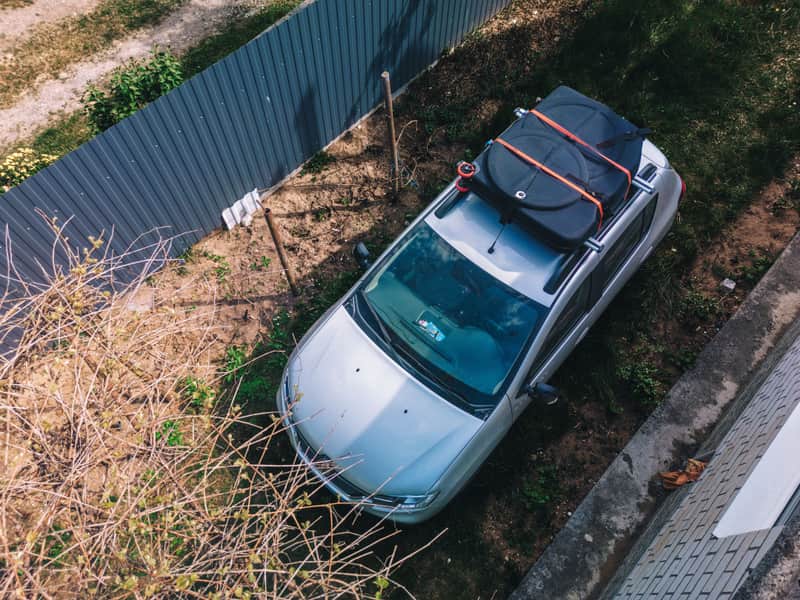 MaxxHaul 70107Moving the load from the roof to the hitch is the single biggest aerodynamic saving available, and this is the cheapest way to do it. | The cheapest way to stop paying the roof penalty | 7.9 | |
| 2 | 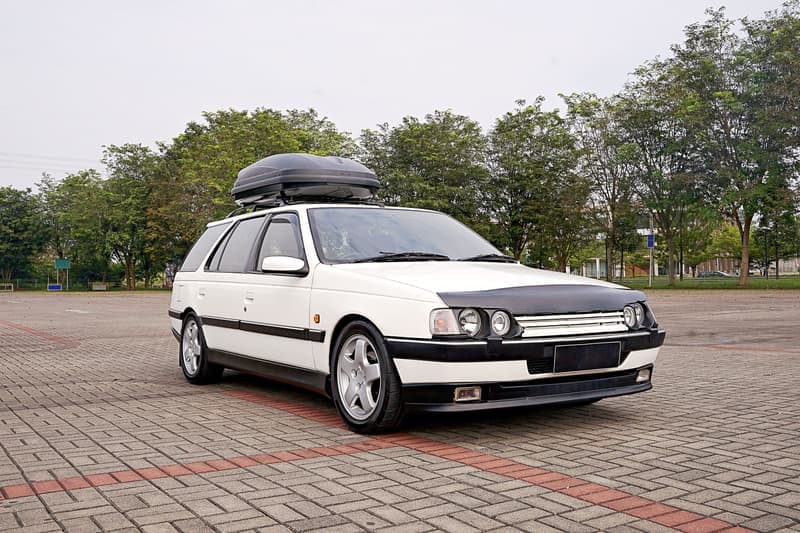 INNO Shadow 16If the load has to go on the roof, less height is less drag — and this is the lowest mainstream box. | Lowest frontal area if the roof is the only option | 8.1 | |
| 3 | Thule Motion 3The low-profile XL gets close to full volume without full height — the best compromise if you need both. | Volume with the lowest drag penalty available | 8.6 |
Prices checked September 25, 2026. Product photographs are representative stock images, not the exact unit. Affiliate disclosure.
#1 · The cheapest way to stop paying the roof penalty
MaxxHaul 70107
Moving the load from the roof to the hitch is the single biggest aerodynamic saving available, and this is the cheapest way to do it.
- Basket
- 60 x 20 inches
- Rated capacity
- 500 lb
- Position
- In the vehicle's wake, not above it
- Receiver
- 2-inch
What works
- Far smaller aerodynamic penalty than a roof box
- Loads at waist height
- Costs a fraction of a box plus bars
What doesn’t
- Needs a 2-inch receiver
- No weather protection
- Does not fold
Our scoring
7.9overall
#2 · Lowest frontal area if the roof is the only option
INNO Shadow 16
If the load has to go on the roof, less height is less drag — and this is the lowest mainstream box.
- Profile
- Genuinely low
- Type
- Hard shell
- Benefit
- Less frontal area than a tall box
- Bonus
- Clears more garages
What works
- Lower frontal area directly reduces drag
- Also solves garage clearance
- Suits low cars as well as SUVs
What doesn’t
- Less volume than a tall box
- Single-side opening on most variants
Our scoring
8.1overall
#3 · Volume with the lowest drag penalty available
Thule Motion 3
The low-profile XL gets close to full volume without full height — the best compromise if you need both.
- Type
- Hard shell
- Notable variant
- Low-profile XL
- Opening
- Both sides
- Shape
- Tapered, smooth shell
What works
- Low variant keeps frontal area down at near-full volume
- Smooth shell rather than a textured one
- Dual-side opening
What doesn’t
- Expensive
- Still a real fuel penalty — nothing on a roof is free
Our scoring
8.6overall
What the published tests actually measured
Consumer Reports tested a sedan and an SUV with and without roof gear. On the sedan, adding just the roof rack dropped fuel economy by almost 11%, about 5 mpg. Adding a rooftop carrier on top of the rack took the total loss to 19%, about 9 mpg.
On the SUV the pattern was the same but the percentages were smaller: the empty rack cost nearly 2%, and the rack plus carrier cost 13%, just over 5 mpg.
Car and Driver separately measured a 12% efficiency drop from crossbars alone.
| Configuration | Sedan (Consumer Reports) | SUV (Consumer Reports) |
|---|---|---|
| Empty roof rack | ~11% loss (about 5 mpg) | ~2% loss |
| Rack plus rooftop carrier | 19% loss (about 9 mpg) | 13% loss (just over 5 mpg) |
Two things to take from that table. The carrier costs far more than the rack, which is obvious. And the slippery car loses a bigger percentage than the boxy one, which is not — a sedan is efficient precisely because its airflow is clean, and a box on the roof destroys that advantage in a way it cannot on a vehicle that was never slippery.
Why the losses are this large
Aerodynamic drag scales with the square of speed. Double your speed and drag quadruples. At town speeds the engine spends most of its effort on rolling resistance and acceleration; at 70 mph it spends most of it pushing air aside.
A roof box does three things at once, all bad. It adds frontal area. It disturbs the airflow along the roof, which is where a car’s carefully designed attached flow lives. And it creates a turbulent wake that the rest of the car then has to drag along with it.
An empty rack does the last two without the first, which is why a bare set of crossbars still costs you real money. There is no such thing as a free rack left on the car.
How to cut the loss
- Take the rack off between trips. The single largest saving available to most people. An empty rack you use four times a year costs you fuel for 361 days.
- Use the hitch instead of the roof. A hitch carrier sits in the low-pressure wake behind the car rather than in clean air above it. The penalty is far smaller.
- Choose a low-profile box. Less frontal area is less drag, directly.
- Mount the box as far back as the bars allow. Air that has already been disturbed by the windshield costs less to disturb again.
- Slow down. Because drag is a square law, dropping from 75 to 65 mph is a disproportionately large saving with a loaded roof.
- Empty the box before you put the car away. Weight matters far less than shape, but there is no reason to carry it.
Electric vehicles lose more, and it matters more
An EV at highway speed is spending almost all of its energy on aerodynamic drag — there is no idling loss, no gearbox loss, and regenerative braking recovers much of the rest. Which means a roof box takes a bigger proportional bite out of an EV’s range than out of a combustion car’s fuel tank.
It also matters more practically. Losing 15% of a fuel tank means one extra stop at a station that takes five minutes. Losing 15% of range means re-planning where you charge.
We have not measured this and will not publish a figure we did not produce. Drive the first loaded leg watching consumption, and plan the rest of the trip on that real number rather than the EPA one. Our Model Y page goes into the specifics.
Common questions
How much does a roof box affect gas mileage?
Does an empty roof rack affect gas mileage?
Does a hitch cargo carrier affect gas mileage as much as a roof box?
Does driving slower help with a roof box?
Sources
Not sure it fits your car?
Our vehicle pages carry the published roof load limit, the roof type by model year, and what actually mounts to it — cited, and honest about what the manufacturer does not publish.
Read next
Roof Rack or Hitch Carrier?
Bulky and light goes up top; heavy and dense goes on the back. The full comparison.
Are Roof Racks Noisy? And How to Stop It
What makes a roof rack whistle, and the fixes that actually work, in order of effectiveness.
The Best Hitch Cargo Carriers for SUVs
Hitch carriers for SUVs, ranked — plus the tongue weight figure that really decides your load.
The Best Cargo Box for an SUV
Hard-shell boxes for SUVs, ranked — plus the weight arithmetic that decides your size before volume does.