Guides
How a Roof Rack Affects Your Car
Most of what a rack changes is harmless. Two of the four things it changes are worth driving differently for, and nobody tells you which two.

Roof & Route is funded by affiliate commission. If you buy through a link on this page we may earn a commission at no extra cost to you. It never decides what we recommend or the order we recommend it in — read the full disclosure.
A roof rack affects your car in four ways, and only two of them should change how you drive. It raises the center of gravity, which makes the car less settled in crosswinds and in fast direction changes. It adds drag, which costs fuel and gets worse with speed. It adds height, which is the one that actually damages cars. And it adds noise, which is annoying and harmless.
What it does not do, on a correctly fitted rack within the published load limit: weaken the roof, void your warranty, or make the car unsafe. Those are the three fears people arrive with and all three are misplaced. What goes wrong is far more boring — garage doors, missed latches and loads that were never strapped properly.
The honest hierarchy, in the order worth worrying about:
- Clearance. Garages, drive-throughs, parking structures, low branches. By far the most common real-world damage.
- Handling in crosswinds. Real and noticeable on a tall vehicle with a loaded roof, especially on exposed bridges and when a truck passes you.
- Fuel. Real, measurable, and worse the faster you go.
- Noise. Mostly a bar-position problem, and mostly fixable.
The rest of this page takes those one at a time, says what changes and by how much where a figure is published, and ends with the three habits that remove most of the downside. If your question is specifically about paint and bodywork, that is a separate guide.
Quick picks
Tap any row to jump to the full write-up below. Scores are our editorial judgment on published specifications — not a star rating, and not a product we claim to have tested.
| # | Product | Best for | Score | Price |
|---|---|---|---|---|
| 1 | 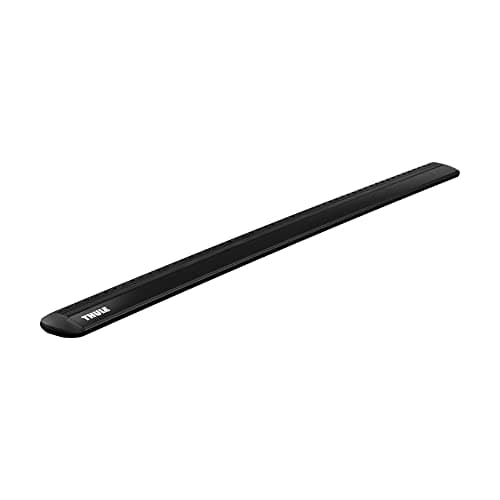 Thule WingBar EvoIf you are buying bars and want the smallest effect on the car, an aero section with a closed channel is the right starting point. | Lowest-impact aero bar | 9.0 | |
| 2 | 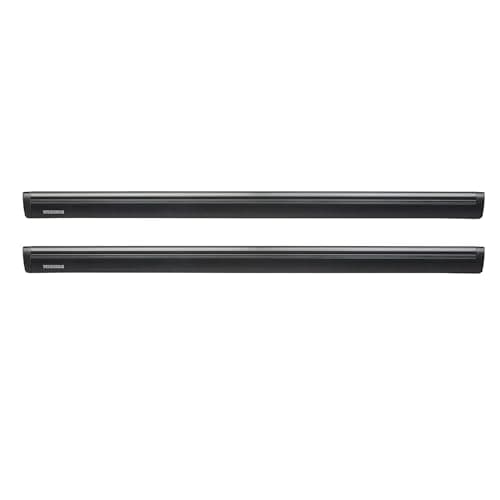 Yakima JetStreamThe push-down strip that closes the top channel removes the whistle an empty channel makes, which is the noise most people notice. | Lowest-noise alternative | 8.9 | |
| 3 | 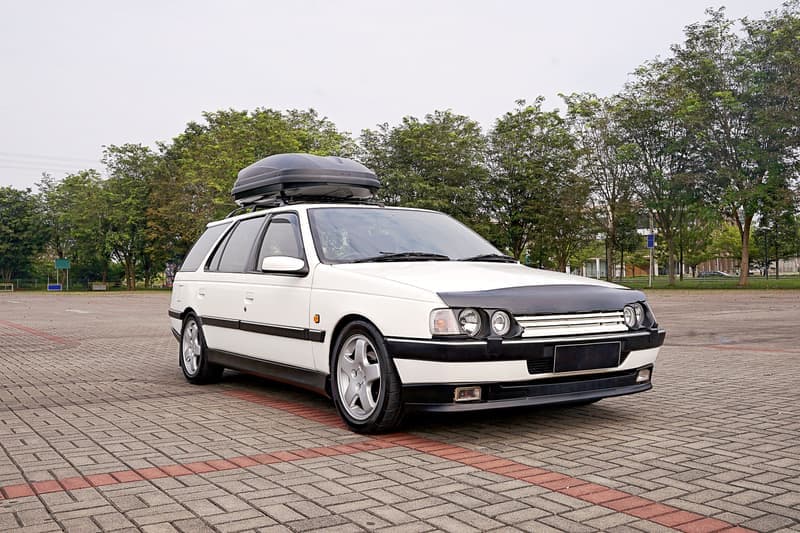 INNO Shadow 16If a box is going on anyway, a flat one costs you less in clearance, less in fuel and less in crosswind behavior than a tall one. | Lowest-impact cargo box | 8.4 |
Prices checked October 17, 2026. Product photographs come from Amazon where the listing is matched, and are representative stock images otherwise. Affiliate disclosure.
#1 · Lowest-impact aero bar
Thule WingBar Evo
If you are buying bars and want the smallest effect on the car, an aero section with a closed channel is the right starting point.
- Profile
- Aero aluminum
- Channel
- T-slot for direct-mount accessories
- Sold as
- Bars, plus a separate foot pack and fit kit
- Why it matters here
- Less frontal area means less drag and less noise
What works
- Smaller frontal area than a square bar, so a smaller standing fuel cost
- Quieter at highway speed, which is the complaint most people actually have
- Light, so it adds little to the roof load you are allowed
- T-slot keeps accessories low rather than perched on top of the bar
What doesn’t
- Costs more than a steel bar that carries the same load
- Three purchases — bars, foot pack, fit kit
- Still adds height, which is the effect that damages cars
Our scoring
9.0overall
#2 · Lowest-noise alternative
Yakima JetStream
The push-down strip that closes the top channel removes the whistle an empty channel makes, which is the noise most people notice.
- Profile
- Aero aluminum
- Channel
- Full-length top channel with push-down strip
- Needs
- Yakima towers plus, on a bare roof, a vehicle clip
- Why it matters here
- A closed channel is the main cure for rack whistle
What works
- The closed channel removes the single most common rack noise
- Full-length channel means accessories sit where you want them
- Aero section, so the drag penalty is at the lower end
- Towers transfer to another car with a new clip
What doesn’t
- Bars and towers are separate purchases
- Fixed length chosen at purchase
- Costs more than the steel bar on the same towers
Our scoring
8.9overall
#3 · Lowest-impact cargo box
INNO Shadow 16
If a box is going on anyway, a flat one costs you less in clearance, less in fuel and less in crosswind behavior than a tall one.
- Profile
- Genuinely low
- Best for
- Garages and height-restricted parking
- Bonus
- Less frontal area than a tall box
- Needs
- Crossbars
What works
- Flat shell presents less frontal area, so a smaller fuel and crosswind penalty
- Clears garages that a tall box does not
- Keeps the load lower, which limits the center-of-gravity change
- Reachable from the ground on a tall vehicle
What doesn’t
- No live Amazon listing matched this model, so we show no price for it
- Less interior height, so no coolers and no rigid suitcases
- Single-side opening on most variants
Our scoring
8.4overall
Handling: what actually changes
Weight on the roof sits further from the ground than any other weight in the car, so it has more leverage over the body. That produces three effects, in descending order of how much you will notice them.
Crosswind sensitivity goes up. This is the big one and the only one most drivers feel. A loaded box or a boat is a sail, and a gust or a passing truck will push the car more than you expect. It is most obvious on exposed bridges and in the first mile after leaving a sheltered road.
Body roll increases slightly. The car leans a little more in a fast direction change — a freeway on-ramp, an avoidance swerve. Within the published load limit this is a change in feel, not a change in stability.
Nothing happens to the steering or the brakes directly. The car has more mass and more drag; the systems themselves work exactly as before.
The fix is free and it is a habit rather than a purchase: put the heavy items low in the cabin and the light bulky ones on the roof, and keep the roof load centered between the bars. A box full of sleeping bags barely moves the center of gravity. A box with a toolbox in it does.
The published number you have to respect is your vehicle’s dynamic roof load limit, which includes the bars and the carrier. Our weight limits guide has the arithmetic, and our vehicle fit pages carry the published figure where the manufacturer publishes one.
Braking and speed
A roof load adds mass, and mass lengthens stopping distance. The effect is small in the context of a car plus passengers — a loaded box is a fraction of your gross weight — but it is real, and it arrives at the same time as the extra crosswind sensitivity.
The more useful thing to know is that drag rises with the square of speed. That is why everything about a roof load is worse the faster you drive: the fuel cost, the noise and the force trying to move the car sideways all grow much faster than the speed does.
Which gives the single most effective habit on this page: on a long trip with a loaded roof, drop your cruising speed a few miles per hour. It reduces the fuel penalty, the noise and the crosswind push together, and it costs you almost nothing in arrival time.
There is also usually a manufacturer-stated speed limit for a roof box specifically, printed in its instructions. It exists and it is enforceable advice — our speed guide covers what the box makers actually say rather than what forums claim.
Clearance: the effect that actually damages cars
This is where the money goes. Not handling, not fuel — a garage door. A rack adds a few inches, a box adds many more, and a car that has lived in your garage for five years suddenly does not fit.
Measure it once, properly, and the problem goes away:
- Measure your garage opening at its lowest point, which is usually the door track or the opener rail rather than the frame.
- Measure ground to roof skin on the car, then add the crossbar height above the skin and the carrier height above that.
- Keep about two inches in hand for the suspension rising as the car empties.
- Write the total on a sticky note on the dashboard. Everyone who drives the car needs the number, not just you.
The same applies to drive-throughs, parking structures, car washes and the tree in your street. Believe the posted clearance sign — it exists because the ceiling behind it does not forgive. Our car wash guide covers the one you will be tempted by.
If your garage is the binding constraint, the fix is the box rather than the car: our low-profile box roundup exists for exactly this, and a hitch carrier clears every garage you can drive into.
Fuel and noise, in proportion
Fuel. A roof load costs fuel, the penalty grows sharply with speed, and shape matters more than weight. An empty rack costs less than a loaded box, and a flat box costs less than a tall one. Consumer Reports has published testing on rooftop carriers and fuel economy, and our gas mileage guide works from that rather than from a manufacturer claim.
The practical consequence is a habit, not a product: take the bars off when the season ends. An empty rack left on the car all year is the purest waste in this category — you pay the fuel penalty for eleven months of carrying nothing.
Noise. Mostly a bar-position problem. The whistle you hear is usually air passing through an empty accessory channel or across a bar sitting in a bad spot in the airflow. Moving the front bar an inch or two often fixes more than any accessory. Our wind noise guide has the fixes in the order worth trying, cheapest first.
Neither of these is a reason not to fit a rack. They are reasons to fit the right one and to take it off when you are done, which is why the bars worth paying for are the ones one person can lift.
The three habits that cancel most of it
If you do nothing else from this page, do these.
- Heavy low, light high. Dense items in the cabin or the trunk; bulky light items on the roof. This single rule removes most of the handling change and most of the load-limit anxiety.
- Know your loaded height and tell everyone. Write it down. Garage doors and parking structures cause more roof-rack damage than every other cause combined.
- Take the bars off when the trip is over. Fuel, noise and theft risk all go to zero, and the rack lasts longer. This is why a rack a single person can handle is worth paying for.
Add one pre-trip ritual to that: a walk around the loaded car pressing on each latch and tugging each strap, before you leave and again at the first gas stop. Our pre-trip safety check is the two-minute version, and our safe-fitting guide covers why a correctly installed rack still needs it.
Common questions
Does a roof rack affect your car?
Does a roof rack affect handling?
Does a roof rack affect braking?
Should I take my roof rack off when not in use?
Will a roof rack damage my car?
Sources
Not sure it fits your car?
Our vehicle pages carry the published roof load limit, the roof type by model year, and what actually mounts to it — cited, and honest about what the manufacturer does not publish.
Read next
Do Roof Racks Damage Your Car?
The three habits that cause rack damage, and how to avoid all of them.
Do Roof Racks Affect Gas Mileage?
What the published tests measured, why an empty rack still costs you, and how to cut the loss.
Are Roof Racks Noisy? And How to Stop It
What makes a roof rack whistle, and the fixes that actually work, in order of effectiveness.
How Much Weight Can a Car Roof Rack Hold?
Dynamic versus static limits, what the figure includes, and why the rack's rating is not yours.