Cargo Boxes
The Best Low-Profile Cargo Boxes
A low box clears the garage, reaches easier on a tall car and costs less fuel. What it gives up is the one bag you wanted to stand upright.

Roof & Route is funded by affiliate commission. If you buy through a link on this page we may earn a commission at no extra cost to you. It never decides what we recommend or the order we recommend it in — read the full disclosure.
The low-profile box to buy is the INNO Shadow 16: a genuinely flat shell designed for exactly this problem, and the one on this list whose whole reason to exist is clearing a height restriction. If you want a Thule and a low roofline, the Thule Pulse in the smaller sizes is the sensible route, and the Thule Force 3 is the compromise that is still low enough for most garages while carrying more.
The direct answer to the question behind the search: a low box buys you three things. It clears a garage or a parking structure. It is reachable without standing on a sill, which matters more than people expect on an SUV. And it presents less frontal area, so it costs less fuel than a tall box of the same volume.
What it costs you is interior height. A flat box swallows duffels, sleeping bags, ski gear and soft luggage beautifully, and refuses a cooler, a hard suitcase on its side or anything with a rigid corner. If your packing list has a rigid box in it, a low box is the wrong product and no amount of ranking will change that.
Before you buy anything, do the measurement in the next section. It takes four minutes, it needs a tape and a step, and it is the difference between a box that lives on the car and a box that lives in the garage because the car cannot get into the garage. Our box sizing guide covers the volume side of the same question.
One number governs everything regardless of which box you pick: your vehicle’s published dynamic roof load, which includes the crossbars and the empty box as well as the contents. Our weight limits guide has the arithmetic, and it is usually a smaller number than people assume.
Quick picks
Tap any row to jump to the full write-up below. Scores are our editorial judgment on published specifications — not a star rating, and not a product we claim to have tested.
| # | Product | Best for | Score | Price |
|---|---|---|---|---|
| 1 | 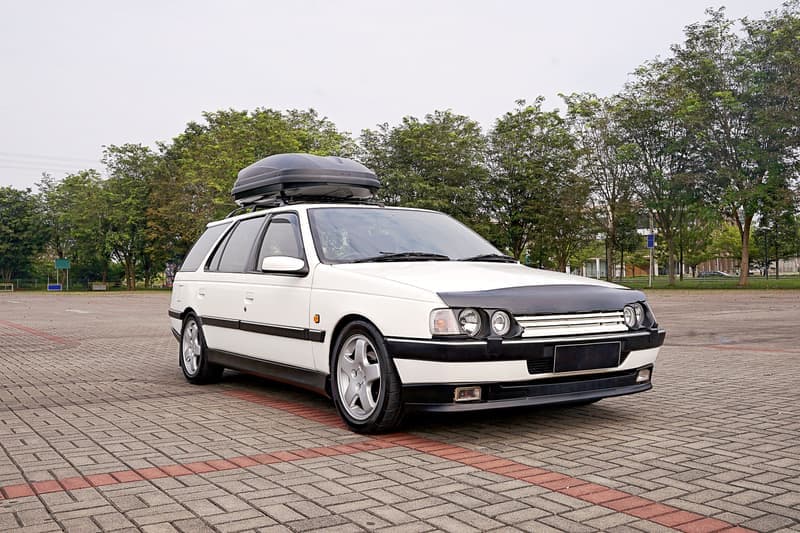 INNO Shadow 16The box on this list built specifically to be flat. If the constraint is a height restriction, this is the honest first choice. | Best low-profile box overall | 8.4 | |
| 2 | 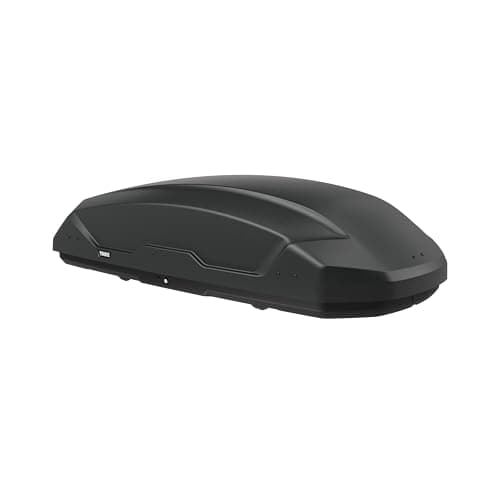 Thule Pulse 2In the smaller sizes it is the cheapest route to a box that clears most garages, with PowerClick mounting and a central lock. | Best low-profile Thule | 8.1 | |
| 3 | 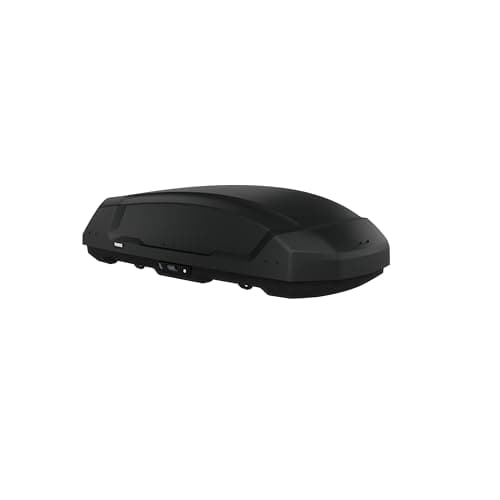 Thule Force 3Not a low-profile box by design, but low enough for a lot of garages and far more useful inside. Measure before you commit. | Best compromise between low and roomy | 8.3 | |
| 4 | 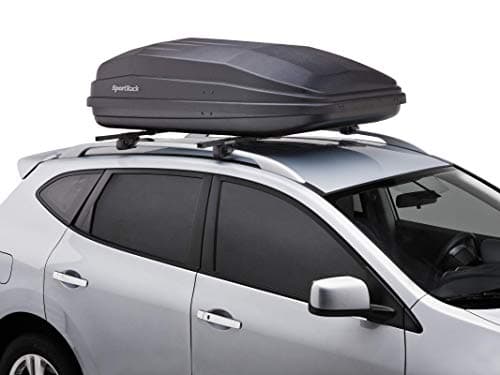 SportRack Vista XLThule's value label. A large hard shell at a much lower price, single-side opening, and the pick if the budget is the binding constraint. | Best budget hard shell | 7.9 |
Prices checked October 17, 2026. Product photographs come from Amazon where the listing is matched, and are representative stock images otherwise. Affiliate disclosure.
#1 · Best low-profile box overall
INNO Shadow 16
The box on this list built specifically to be flat. If the constraint is a height restriction, this is the honest first choice.
- Profile
- Genuinely low
- Best for
- Garages and height-restricted parking
- Opening
- Single side on most variants
- Bonus
- Lower drag than a tall box of similar volume
- Needs
- Crossbars
What works
- The flattest shell here, which is the entire point of the category
- Less frontal area than a tall box, so a smaller fuel penalty
- Reachable on a tall vehicle without standing on the sill
- Looks right on a low car instead of looming over it
What doesn’t
- No live Amazon listing matched this model, so we show no price for it
- Single-side opening on most variants, so loading side is fixed
- Interior height refuses coolers and rigid suitcases
- Smaller interior than a tall box of the same footprint
Our scoring
8.4overall
#2 · Best low-profile Thule
Thule Pulse 2
In the smaller sizes it is the cheapest route to a box that clears most garages, with PowerClick mounting and a central lock.
- Sizes
- M, L and XL
- Mounting
- PowerClick
- Lock
- Central
- Opening
- Dual side
- Needs
- Crossbars
What works
- Dual-side opening, which the dedicated low boxes usually give up
- PowerClick gives an audible confirmation the clamp is tight
- Three sizes, so you can trade volume for height deliberately
- Cheapest Thule box we would put on a car
What doesn’t
- Only the smaller sizes are genuinely low — the XL is not a low box
- No key retention, so latch checking is your job
- Plain shell
Our scoring
8.1overall
#3 · Best compromise between low and roomy
Thule Force 3
Not a low-profile box by design, but low enough for a lot of garages and far more useful inside. Measure before you commit.
- Finish
- Matte
- Opening
- Dual side
- Mounting
- Quick-mount clamps
- Position
- Mid-tier
- Needs
- Crossbars
What works
- Carries noticeably more than a dedicated low box of the same footprint
- Matte finish hides the scrapes that height-restricted parking produces
- Dual-side opening and the strongest used market in the category
- Still clears many standard residential garage doors — but measure
What doesn’t
- Taller than the dedicated low boxes, which is the one thing you came here for
- More frontal area, so a larger fuel penalty
- Needs a genuine measurement rather than optimism
Our scoring
8.3overall
#4 · Best budget hard shell
SportRack Vista XL
Thule's value label. A large hard shell at a much lower price, single-side opening, and the pick if the budget is the binding constraint.
- Brand
- Thule's value label
- Type
- Hard shell
- Size
- Large
- Opening
- Single side
- Needs
- Crossbars
What works
- By far the cheapest hard shell here
- Large volume for the money
- Backed by Thule's value label rather than an unknown brand
- Hard shell, so it locks and sheds weather properly
What doesn’t
- Not a low-profile box — include it only if budget outranks clearance
- Single-side opening fixes which side of the car you load from
- Plainer latching and finish than the boxes above it
Our scoring
7.9overall
The four-minute measurement that decides this
Do this before you read another review. You need a tape measure and somewhere to write three numbers.
- Measure your garage opening at its lowest point — which is usually the door track or the opener rail, not the door frame. Write it down.
- Measure your car’s roof height from the ground to the top of the roof skin, not to the top of the rails.
- Add the crossbar height above the roof skin. On a raised-rail setup that is more than people think.
- Subtract from the opening and you have the box-height budget you are shopping with. Keep two inches in hand for the suspension rising as the car empties.
If the budget comes out under about eight inches, a hard box is unlikely to work and a soft bag or a roof basket is the realistic answer. If it comes out generous, you do not need this page — go read the main cargo box roundup and buy on volume instead.
Measure parking structures the same way and believe the posted sign rather than your estimate. A clearance bar exists because the ceiling beyond it does not forgive.
What actually fits in a flat box
This is where low-profile boxes are either perfect or useless, so be honest about your packing list.
| Item | In a low box |
|---|---|
| Duffels and soft holdalls | Ideal — they take the shape of the shell |
| Sleeping bags, pillows, bedding | Ideal, and this is the best use of a roof box generally |
| Skis and snowboards | Good — length matters far more than height |
| Camp chairs, mats, tents | Usually fine if laid flat |
| Hard suitcases | Only laid flat, and often not at all |
| Coolers | No. Keep them in the cabin anyway |
The rule that follows from the table: a roof box is for bulky and light, not heavy and rigid. That is true of every box, and a low one just enforces it. Heavy items belong low in the car or on the hitch — our roof-or-hitch guide has the reasoning and the fuel comparison.
For skis specifically, length and the crossbar spread matter more than height, which is why we built a separate ski-box roundup.
The quiet, cheap side of being flat
A low box is less of an aerodynamic event than a tall one. Frontal area is the dominant term in the drag a roof load adds, and a flat shell presents less of it for the same footprint.
Consumer Reports’ published testing on rooftop carriers is the reference we use for the scale of that effect, and our gas mileage guide works it through on a real car. The short version: the penalty is real, it is worse the faster you drive, and shape matters.
Noise follows the same logic. A tall box with a blunt leading edge generates more of the low hum you notice at 70 mph. A flat box with a tapered nose generates less. Bar position still matters more than box shape for the sharper whistles — our wind noise guide has the fixes in the order worth trying.
And there is a plain usability win. You can reach into a low box standing on the ground. On a crossover or an SUV, a tall box means packing blind at arm’s length over your head, which is how latches get missed. Our loading guide covers the routine that stops that.
If even a low box will not clear
A soft bag. Packs down to nothing, adds very little height when half full, and costs a fraction of a hard shell. It is not lockable and it is not as weatherproof. Our bag roundup and the box-versus-bag guide cover the trade honestly.
A roof basket. Open, so the height is whatever you put in it, and it carries awkward shapes a box never will. Louder and wetter. See the basket roundup and box versus basket.
Move the load to the back of the car. The honest answer for a tight garage, and usually the cheaper one in fuel. A hitch carrier loads at waist height and clears every garage you can drive into. Start with the carrier roundup and the carrier safety guide.
Common questions
What is the best low-profile cargo box?
How do I know if a cargo box will fit in my garage?
Do low-profile cargo boxes hold less?
Is a low-profile box better for gas mileage?
Do low-profile cargo boxes need crossbars?
Sources
Not sure it fits your car?
Our vehicle pages carry the published roof load limit, the roof type by model year, and what actually mounts to it — cited, and honest about what the manufacturer does not publish.
Read next
Thule Force 3 vs Motion 3
The within-Thule box decision: what the Motion 3 premium buys over the Force 3, and when the Pulse is enough.
The Best Cargo Boxes for Sedans
Cargo boxes that suit a sedan's short bar spread and lower roof limit, not an SUV's.
What Size Cargo Box Do I Need?
Roof box liters by family size, and the four measurements that constrain the choice.
Cargo Box vs Roof Basket
Box or basket: weather, noise and security against awkward, dirty and oversized loads.