Guides
What Size Cargo Box Do I Need?
Volume is the number on the box. Length, height and your roof limit are the numbers that decide it.

Roof & Route is funded by affiliate commission. If you buy through a link on this page we may earn a commission at no extra cost to you. It never decides what we recommend or the order we recommend it in — read the full disclosure.
For most families the answer is a medium-to-large box, broadly 400 to 500 liters: enough for a family of four’s soft luggage on a week’s trip, short enough to clear most tailgates, and low enough to clear most garages. A family of two wants 300 to 400; a family of five with skis wants 500 and up, in a long shape.
But volume is the least constraining number in the decision, which is why starting there leads people wrong. Four other figures bound the choice before liters do: your published dynamic roof load limit, your crossbar spread, your garage or structure clearance, and your tailgate or trunk swing. A box that fails any one of those is the wrong box at any volume.
Below: liters by household, then each of the four constraints and how to measure it, then the boxes we would pick at each size.
Quick picks
Tap any row to jump to the full write-up below. Scores are our editorial judgment on published specifications — not a star rating, and not a product we claim to have tested.
| # | Product | Best for | Score | Price |
|---|---|---|---|---|
| 1 | 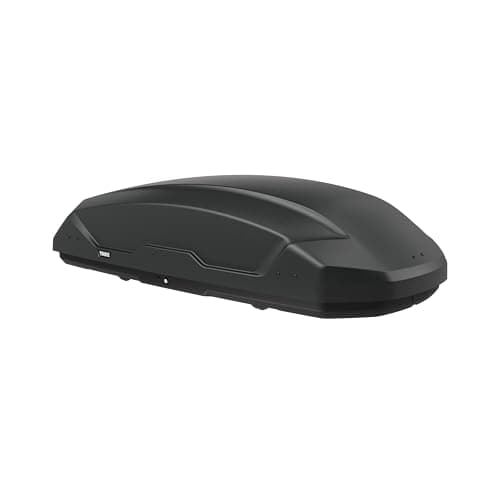 Thule Pulse 2Sold in M, L and XL with PowerClick mounting and dual-side opening — the M and L cover small households without overbuying. | Two or three people | 8.3 | |
| 2 | 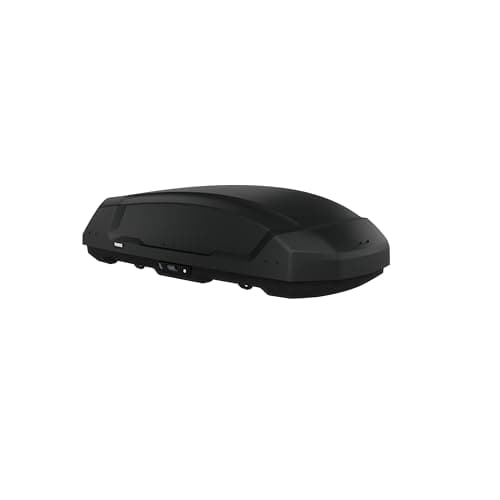 Thule Force 3Roughly 300 to 610 liters across the family, so the mid sizes land exactly where a family of four needs to be. | A family of four | 8.3 | |
| 3 | 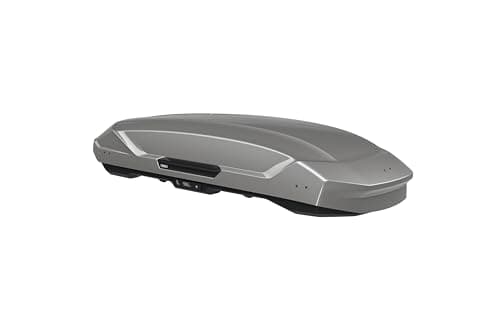 Thule Motion 3Several sizes including a low-profile XL — the way to get near-maximum volume without maximum height. | Five people, or skis | 8.6 | |
| 4 | 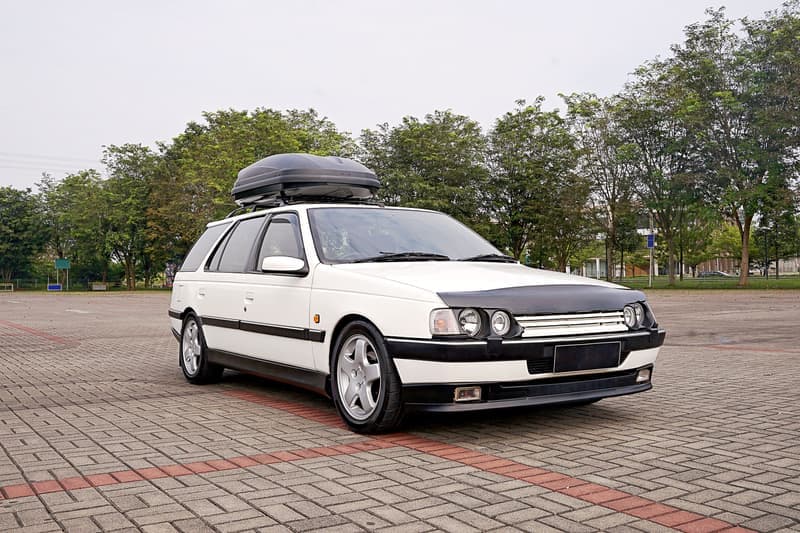 INNO Shadow 16Genuinely low-slung — often the only box that clears a domestic garage door once it is on the bars. | A tight garage | 8.1 |
Prices checked October 11, 2026. Product photographs come from Amazon where the listing is matched, and are representative stock images otherwise. Affiliate disclosure.
#1 · Two or three people
Thule Pulse 2
Sold in M, L and XL with PowerClick mounting and dual-side opening — the M and L cover small households without overbuying.
- Sizes
- M, L and XL
- Mounting
- PowerClick
- Opening
- Dual side
- Lock
- Central
What works
- A size range that lets you buy down rather than overbuy
- PowerClick confirms clamp tension audibly
- Dual-side opening at an entry price
What doesn’t
- Entry shell flexes more than premium boxes
- XL is the wrong proportion for a small car
Our scoring
8.3overall
#2 · A family of four
Thule Force 3
Roughly 300 to 610 liters across the family, so the mid sizes land exactly where a family of four needs to be.
- Sizes
- Roughly 300 to 610 liters
- Shell
- Hard
- Opening
- Dual side
- Position
- Mid-tier
What works
- The size range that covers the most common household
- Mid-tier pricing for most of the flagship's function
- Dual-side opening
What doesn’t
- Taller than low-profile boxes, so more drag
- The small sizes in this family are not family boxes
Our scoring
8.3overall
#3 · Five people, or skis
Thule Motion 3
Several sizes including a low-profile XL — the way to get near-maximum volume without maximum height.
- Sizes
- Several, including a low-profile XL
- Shell
- Hard, smooth
- Opening
- Dual side
- Shape
- Tapered
What works
- Low-profile XL is the best volume-to-height trade available
- Long enough for adult skis in the larger sizes
- Smooth shell stays cleaner than a textured one
What doesn’t
- Expensive
- Long boxes need the tailgate swing checked
Our scoring
8.6overall
#4 · A tight garage
INNO Shadow 16
Genuinely low-slung — often the only box that clears a domestic garage door once it is on the bars.
- Profile
- Genuinely low
- Shell
- Hard
- Strength
- Clearance and drag
- Opening
- Single side on most variants
What works
- Clears garage doors taller boxes do not
- Least frontal area, so the smallest fuel penalty
- Suits low cars as well as SUVs
What doesn’t
- Less volume for the footprint
- Single-side opening on most variants
Our scoring
8.1overall
Liters by household
| Who is traveling | Typical size | What it holds |
|---|---|---|
| Two adults, long weekend | 300-400 liters | Two soft bags, coats, a cooler |
| Family of four, one week | 400-500 liters | Four soft bags plus bedding and bulky coats |
| Family of five, or camping | 500 liters and up | Sleeping bags, tent, chairs, bags |
| Skis or snowboards | Length over liters | Internal length is the only figure that matters |
Treat these as a starting point, then apply the constraints below — they will usually push you down a size rather than up. For skis specifically, length overrides everything, and we cover it in cargo boxes for skis.
Constraint one: your roof load limit
The published dynamic roof load limit covers the crossbars, the box and the cargo together. Subtract the first two and what remains is your real payload — which on many cars is less than the box’s volume would suggest you could carry.
This is why a bigger box is not automatically better. A 600-liter shell on a roof with a modest limit simply gives you more space you are not allowed to fill, at the cost of extra weight and extra drag.
Find your figure in the owner’s manual, under the roof rack section, and read our weight limits guide for the dynamic-versus-static distinction before you interpret it.
Constraints two and three: bar spread and clearance
Every box states a minimum and maximum crossbar spread, and its mounting points must land inside your bars. Short roofs can fall below a large box’s minimum, which no amount of goodwill fixes. Measure bar center to bar center; the method and the numbers are in crossbar spread and length.
Clearance is simpler and more often forgotten. Measure your garage opening, measure the car’s height, and buy inside the difference — remembering the bars add height before the box does. Then think about the parking structure you use and the drive-through on the way out of town.
A low-profile box at the same volume is the usual answer to a clearance problem, and it also costs less fuel. It is the one place where the clearance constraint and the efficiency argument point the same way.
Constraint four: the tailgate
A long box pushed back on the bars can be caught by a tailgate or trunk lid as it rises. On hatchbacks and SUVs with steeply raked rear glass this is common and it is not always obvious until the lid taps the box.
Check it before you buy by measuring the rear overhang you would need, and check it again after fitting by opening the tailgate slowly with a hand on it. If it does foul, moving the box forward is the fix — at the cost of more noise and more drag, because the box moves into cleaner, faster air.
Dual-side opening mitigates a lot of practical annoyance here, and it is worth paying for on any box you will load in a car park.
Packing to the size you bought
Soft bags, not hard suitcases. A roof box’s usable volume is its shape, and soft luggage fills a tapered molding in a way rigid cases never will. Two large soft bags will beat three small hard ones in the same box.
Light and bulky up, heavy and dense down. Sleeping bags, coats, towels and empty coolers belong in the box; tools, books, tinned food and anything with a motor belong in the trunk, where they do not count against the roof limit.
And load it so nothing can move. A box with a shifting load is noisier and changes the car’s balance mid-corner — the method is in how to load a cargo box.
Common questions
What size cargo box do I need for a family of four?
Is a bigger roof box always better?
How many liters is a big enough roof box?
Will a roof box stop my tailgate opening?
Sources
Not sure it fits your car?
Our vehicle pages carry the published roof load limit, the roof type by model year, and what actually mounts to it — cited, and honest about what the manufacturer does not publish.
Read next
The Best Cargo Box for an SUV
Hard-shell boxes for SUVs, ranked — plus the weight arithmetic that decides your size before volume does.
What Size Crossbars Do I Need?
How to measure crossbar spread and length, and what each carrier type needs.
How to Load a Cargo Box
What goes in, what stays out, how to distribute the weight, and the pre-drive checks.
The Best Cargo Boxes for Sedans
Cargo boxes that suit a sedan's short bar spread and lower roof limit, not an SUV's.