Guides
What Size Crossbars Do I Need?
Two numbers decide it: how far apart the bars sit, and how wide they are. Carriers care about both, and they care differently.
Roof & Route is funded by affiliate commission. If you buy through a link on this page we may earn a commission at no extra cost to you. It never decides what we recommend or the order we recommend it in — read the full disclosure.
Crossbar spread is the front-to-back distance between the two bars, measured center to center. Crossbar length is how wide each bar is, side to side. Spread is set by your vehicle and decides which carriers will mount; length is a choice, and it decides how much you can put side by side.
Almost every carrier publishes a minimum spread, and some publish a maximum. Cargo boxes and bike trays are the fussiest: both mount at two points and need the bars inside a stated window. Kayak cradles and ski mounts are more tolerant. If your roof’s spread falls below a carrier’s minimum, that carrier is out — no amount of improvising fixes it, and mounting it anyway puts the load on one bar.
Length is where people under-buy. A bar that only just spans the roof leaves no room for a second carrier, and a box plus a kayak on the same bars needs real width. Buy the longest bar your vehicle’s fit guide offers unless you have a reason not to — the penalty is a little noise, and the gain is every future configuration.
Quick picks
Tap any row to jump to the full write-up below. Scores are our editorial judgment on published specifications — not a star rating, and not a product we claim to have tested.
| # | Product | Best for | Score | Price |
|---|---|---|---|---|
| 1 | 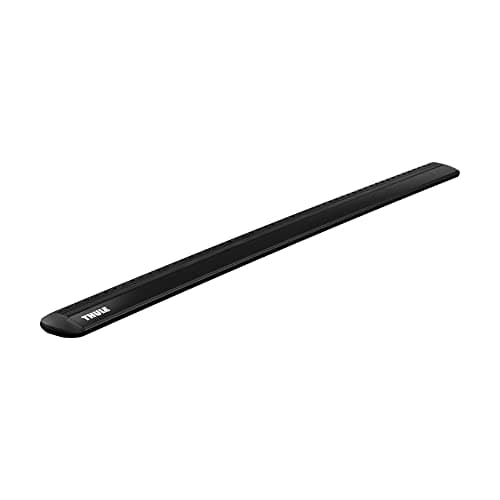 Thule WingBar EvoAero aluminum bars in fixed lengths, paired with a vehicle-specific foot pack and fit kit — and the deepest accessory ecosystem anywhere. | Widest fit and accessory coverage | 8.5 | |
| 2 | 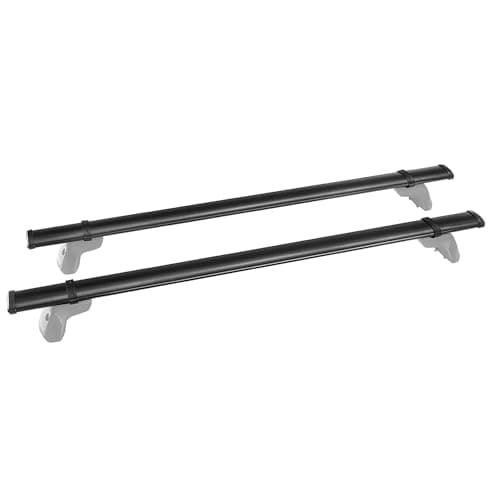 Yakima CoreBarYakima's steel entry bar — heavier and noisier than the JetStream, and considerably cheaper, which makes buying the longer size painless. | Cheapest way to get the right length | 7.9 | |
| 3 | 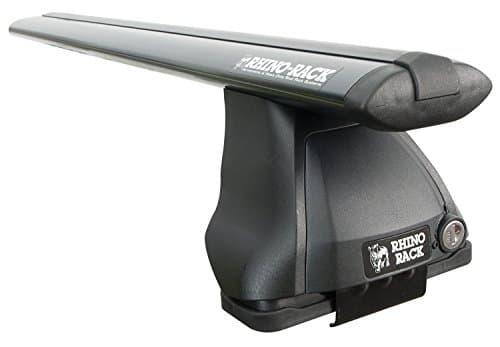 Rhino-Rack Vortex AeroSold as a complete vehicle-specific kit rather than bars plus separate feet, so spread and length arrive already resolved. | One kit, correct by construction | 8.4 |
Prices checked October 11, 2026. Product photographs come from Amazon and are refreshed with the prices. Affiliate disclosure.
#1 · Widest fit and accessory coverage
Thule WingBar Evo
Aero aluminum bars in fixed lengths, paired with a vehicle-specific foot pack and fit kit — and the deepest accessory ecosystem anywhere.
- Profile
- Aero aluminum
- Lengths
- Fixed — choose at purchase
- Needs
- Foot pack plus fit kit
- Channel
- T-slot for direct-mount accessories
What works
- Published fit coverage for more vehicles than any rival
- T-slot channel lets accessories bolt in rather than clamp on
- Quiet for an aero bar
- Feet and bars often carry over to a new vehicle
What doesn’t
- Fixed lengths — the wrong choice is not adjustable later
- Three part numbers to get right
- Premium pricing once the full setup is costed
Our scoring
8.5overall
#2 · Cheapest way to get the right length
Yakima CoreBar
Yakima's steel entry bar — heavier and noisier than the JetStream, and considerably cheaper, which makes buying the longer size painless.
- Material
- Steel
- Position
- Entry level
- Lengths
- Several
- Needs
- Towers plus a vehicle clip
What works
- Low enough cost that buying the longer bar is easy
- Yakima's tower and clip system has broad coverage
- Steel is indifferent to abuse
What doesn’t
- Noisier than an aero bar, noticeably
- Heavier, which counts against your roof load limit
- No T-slot channel
Our scoring
7.9overall
#3 · One kit, correct by construction
Rhino-Rack Vortex Aero
Sold as a complete vehicle-specific kit rather than bars plus separate feet, so spread and length arrive already resolved.
- Profile
- Aero
- Sold as
- Complete vehicle-specific kit
- Spread
- Set by the kit
- Length
- Matched to the vehicle
What works
- The spread-and-length problem is solved before it reaches you
- One part number, arriving complete
- Strong load-carrying reputation
What doesn’t
- Less flexible — no choosing a longer bar
- Does not carry over to a different vehicle
- Narrower fit coverage than Thule or Yakima
Our scoring
8.4overall
How to measure both numbers
- Spread: measure from the center of the front bar to the center of the rear bar. Center to center, not edge to edge — every published figure uses centers.
- Length: measure the bar end to end. If you have no bars yet, the fit guide gives you the lengths offered for your roof.
- Available spread range: if your roof has rails or fixed points, the spread may be adjustable within a window. Note the minimum and maximum your roof type allows.
- Overhang: measure how far each bar end extends past the roof edge. Too much and it is a head hazard and a noise source.
Write all four down before you shop for a carrier. Every box, tray and cradle listing states what it needs, and having your numbers to hand converts an hour of guessing into a two-minute check.
What each carrier type needs
| Carrier | Cares about spread | Cares about length |
|---|---|---|
| Cargo box | Yes — states a minimum and often a maximum | Only if sharing the bars |
| Roof basket or platform | Yes — mounts at multiple points | Yes — the deck must fit between bar ends |
| Bike tray | Yes — the tray spans both bars | Yes, for two trays side by side |
| Kayak cradle or saddle | Tolerant — wider is better for stability | Yes, for two boats |
| Ski and board mount | Tolerant | Yes, for the number of pairs |
Two patterns to take away. Anything that mounts at two points along the car cares about spread. Anything you might want two of cares about length.
Too short, and too long
Spread too short is a hard stop. A box designed for a wider spread mounted on narrow bars concentrates load and can leave one mount unsupported. The carrier is simply not compatible, and the right response is a different carrier.
Spread too long is rarer and usually only matters for boxes with a stated maximum, where the mounting points run out of shell to clamp to.
Bars too long costs you noise and head clearance, and it looks wrong, but it does not stop anything working. Bars too short permanently limits what you can carry. Given a choice, err long — and if noise is the worry, a fairing and an aero profile do more about it than bar length does. The mechanism is in the wind noise guide.
Your roof type sets the spread before you do
Naked roofs, raised rails, flush rails and fixed points each constrain where the feet can go, and therefore what spread is available. On fixed points you usually have no choice at all; on raised rails you often have several inches of adjustment.
Identify your roof type first — the roof rail types guide has the pictures and the terminology — then use the manufacturer fit guide for your exact model year, which will tell you both the bars offered and the spread they produce.
If you are not sure you need crossbars at all, start at do I need crossbars. Factory side rails on their own carry nothing — they are the anchor, not the rack.
Common questions
What is crossbar spread?
What size crossbars do I need?
Can crossbar spread be too narrow for a cargo box?
Does crossbar length affect wind noise?
Sources
Not sure it fits your car?
Our vehicle pages carry the published roof load limit, the roof type by model year, and what actually mounts to it — cited, and honest about what the manufacturer does not publish.
Read next
Do I Need Crossbars for a Roof Rack?
Rails versus crossbars, how to tell what you have, and the one case where rails alone work.
Roof Rail Types: Flush, Raised, Fixed Point and Bare
Four roof types, the hand test that tells them apart, and which fit kit each needs.
What Size Cargo Box Do I Need?
Roof box liters by family size, and the four measurements that constrain the choice.
The Best Roof Racks for SUVs
Crossbars for SUVs with raised rails, flush rails or a bare roof — and how to tell which you have.