Guides
How Much Weight Can a Car Roof Rack Hold?
There are two limits, they differ by a factor of four, and the one printed on your rack is not either of them.
Roof & Route is funded by affiliate commission. If you buy through a link on this page we may earn a commission at no extra cost to you. It never decides what we recommend or the order we recommend it in — read the full disclosure.
Most cars publish a dynamic roof load limit between 100 and 176 lb, and that figure includes the crossbars and the carrier as well as the cargo. The static limit — what the roof holds when parked — is often several times higher. Your vehicle’s figure always governs, even if the rack you fitted is rated higher.
That paragraph contains the three mistakes people make: using the static figure while driving, forgetting the bars and the carrier count, and assuming a 220 lb rack means a 220 lb roof.
Quick picks
Tap any row to jump to the full write-up below. Scores are our editorial judgment on published specifications — not a star rating, and not a product we claim to have tested.
| # | Product | Best for | Score | Price |
|---|---|---|---|---|
| 1 | 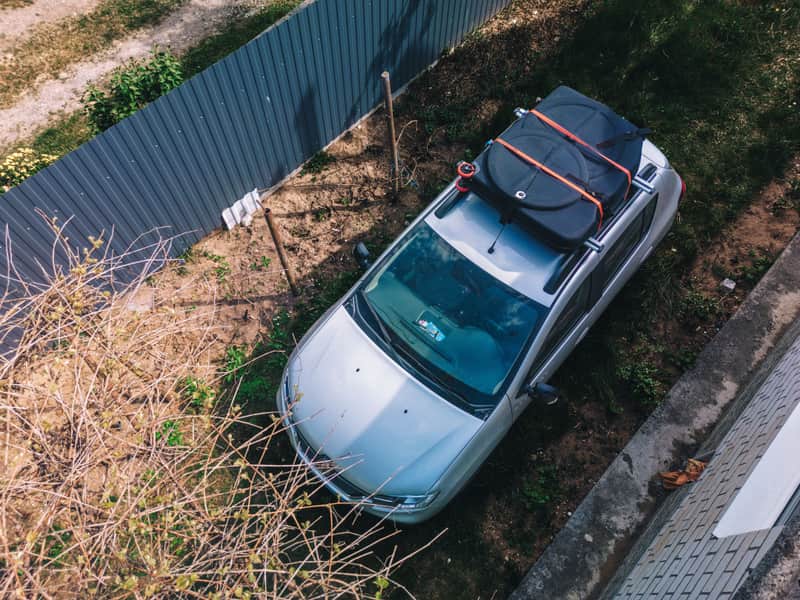 MaxxHaul 70108 Aluminum CarrierMoving the weight to the hitch sidesteps a low roof limit entirely, and aluminum keeps the carrier's own weight down. | When the roof limit is the problem | 7.8 | |
| 2 | 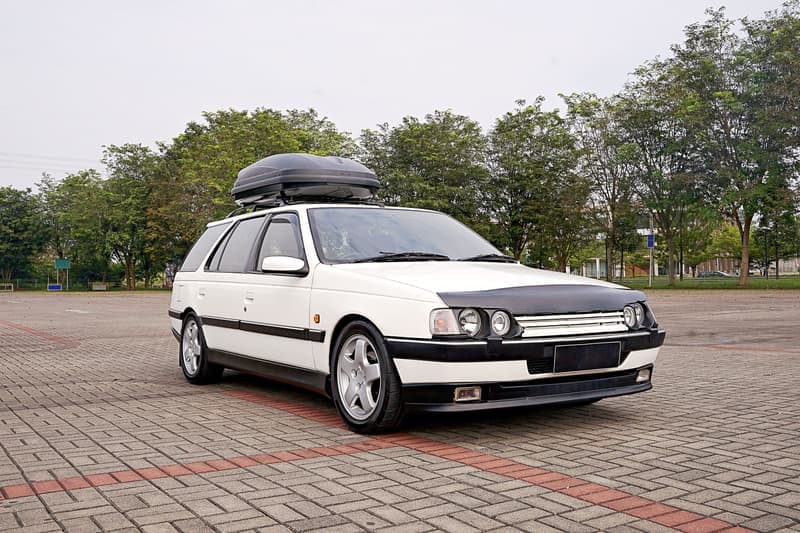 INNO Shadow 16A lower, lighter box leaves more of a modest roof allowance for actual cargo. | Lightest way to add roof volume | 8.1 | |
| 3 |  Malone SeaWingA low V-cradle adds very little weight and height, which matters when the published limit is tight. | Lightest way to carry a boat | 8.1 |
Prices checked September 25, 2026. Product photographs are representative stock images, not the exact unit. Affiliate disclosure.
#1 · When the roof limit is the problem
MaxxHaul 70108 Aluminum Carrier
Moving the weight to the hitch sidesteps a low roof limit entirely, and aluminum keeps the carrier's own weight down.
- Material
- Aluminum
- Position
- Hitch receiver, not roof
- Benefit
- Roof limit no longer applies
- Receiver
- 2-inch
What works
- Sidesteps a restrictive roof limit completely
- Light for a hitch carrier, so more of the tongue rating is cargo
- Loads at waist height
What doesn’t
- Needs a receiver
- Tongue weight becomes the new limit
Our scoring
7.8overall
#2 · Lightest way to add roof volume
INNO Shadow 16
A lower, lighter box leaves more of a modest roof allowance for actual cargo.
- Type
- Hard shell
- Profile
- Low
- Benefit
- Less empty weight to subtract
- Bonus
- Lower drag
What works
- Less of your allowance spent on the box itself
- Lower drag too
What doesn’t
- Less volume than a full-size box
- Single-side opening on most variants
Our scoring
8.1overall
#3 · Lightest way to carry a boat
Malone SeaWing
A low V-cradle adds very little weight and height, which matters when the published limit is tight.
- Type
- V-style saddle
- Profile
- Very low
- Weight
- Light for a carrier
- Capacity
- One boat
What works
- Minimal weight added to a tight allowance
- Gentle on the hull
What doesn’t
- Uses most of the bar
- Still a side lift
Our scoring
8.1overall
Dynamic versus static
Dynamic load is the limit while the vehicle is moving. It is the smaller number and it is the one that applies to a cargo box, a kayak or a bike. It is smaller because a moving car applies forces the load does not: vertical shock over bumps, lateral force in corners, and aerodynamic lift.
Static load is the limit while parked. It is often three or four times the dynamic figure. It exists for roof-top tents, which sit on a stationary car with people in them.
The Subaru Outback Wilderness is a clear published example: 220 lb dynamic, 700 lb static. Two entirely different numbers for the same roof, and using the second while driving would be a serious mistake.
| Dynamic | Static | |
|---|---|---|
| When it applies | Vehicle moving | Vehicle parked |
| Typical range | 100-176 lb on most cars | Often 400-700 lb where published |
| What it is for | Boxes, boats, bikes, baskets | Roof-top tents |
What the figure includes
Everything above the roof skin. Manufacturers are usually explicit about this and owners usually miss it.
- Crossbars and feet — commonly 12-18 lb
- The carrier — a full-size hard box is often 45-55 lb empty
- Your cargo
Worked example on a car published at 150 lb dynamic: 15 lb of bars plus a 50 lb box leaves 85 lb of packing allowance. That is the number to plan against, not 150.
Tesla states this particularly clearly for the Model Y — the manual gives maximum roof load as the weight of the roof rack plus accessory racks plus the load. Same arithmetic, spelled out.
Finding your vehicle's figure
- Owner’s manual, cargo and luggage section. This is the authoritative source and it is where the figure lives on most vehicles.
- A sticker or molded mark near the roof rail. Some manufacturers print it there.
- Our vehicle fitment pages. We publish the figure for every vehicle we have been able to verify, cited, with the model-year range — and we say plainly where we could not verify one. See the vehicle index.
If you cannot find a figure anywhere, treat the roof conservatively and put the weight somewhere else. An unknown limit is not a high one.
Why the rack's rating does not help you
Crossbars carry published load ratings too — retailer specifications put the Thule WingBar Evo at 220 lb and the Yakima JetStream at 165 lb. Those describe the bar, not the roof under it.
When they disagree, the lower number always wins, and on most cars the lower number is the vehicle’s. Which means that on a car published at 150 lb, a 220 lb bar and a 165 lb bar are functionally identical — you will never be allowed to use the difference. We cover that specific comparison in Thule vs Yakima.
Common questions
How much weight can a car roof rack hold?
What is the difference between dynamic and static roof load?
Does the roof weight limit include the rack itself?
My roof rack is rated higher than my car. Which applies?
Sources
Not sure it fits your car?
Our vehicle pages carry the published roof load limit, the roof type by model year, and what actually mounts to it — cited, and honest about what the manufacturer does not publish.
Read next
Roof Rack or Hitch Carrier?
Bulky and light goes up top; heavy and dense goes on the back. The full comparison.
Thule vs Yakima Roof Racks
Bar profile, load rating, accessory interface, fit coverage and price — compared on published specs.
The Best Cargo Box for an SUV
Hard-shell boxes for SUVs, ranked — plus the weight arithmetic that decides your size before volume does.