Roof Racks
The Best No-Drill Roof Platform Racks
A flat roof tray is the most useful thing you can bolt to a car roof. It is also the easiest place to get talked into drilling holes you do not need.
Roof & Route is funded by affiliate commission. If you buy through a link on this page we may earn a commission at no extra cost to you. It never decides what we recommend or the order we recommend it in — read the full disclosure.
A roof platform is a flat tray with slots all over it. That is the whole idea, and it is why people who have owned one rarely go back to loose crossbars: the tray gives you somewhere to bolt a shovel mount, a tent, an awning, a fuel can or a cargo bag, instead of improvising around two round bars.
The problem is how platforms get sold. Open any overland forum and the advice runs straight to a drilled-in rack: a bolt-through tray on a pickup cab, a third-brake-light bracket, a set of holes in a Jeep hardtop. That is a legitimate choice if you are building a vehicle. It is a bad first choice if you just want a tray on the family SUV, because a drilled roof is permanent, voids nothing on paper but worries every future buyer, and is almost never necessary.
Every platform below mounts to something your vehicle already has — raised rails, flush rails, factory fixed points, a track, or crossbars you already own. No new holes. We ranked them on what the manufacturers actually publish (load rating, size, weight) rather than on how they look on a lightbar-lit Tacoma, and we were blunt about the second invoice — on most of these, the tray is not the whole purchase.
Quick picks
Tap any row to jump to the full write-up below. Scores are our editorial judgment on published specifications — not a star rating, and not a product we claim to have tested.
| # | Product | Best for | Score | Price |
|---|---|---|---|---|
| 1 | 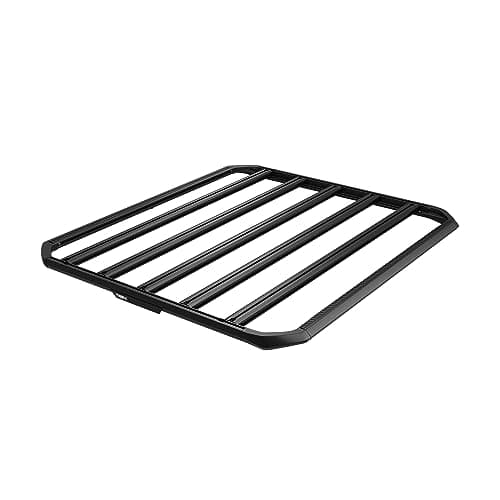 Thule Caprock XLThe highest published load of the mainstream platforms and the widest set of mounting routes — including straight onto Thule Evo feet, with no crossbars in between. | Most vehicles, most uses | 8.4 | |
| 2 | 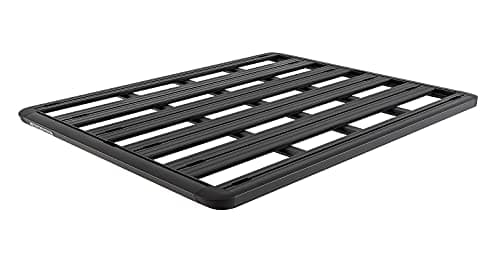 Rhino-Rack Pioneer Platform 52 x 56Five bars, a full perimeter of slots, and a price that leaves budget for the brackets — the platform to pick if the point is what you will mount to it. | Bolting accessories on, cheaply | 8.1 | |
| 3 | 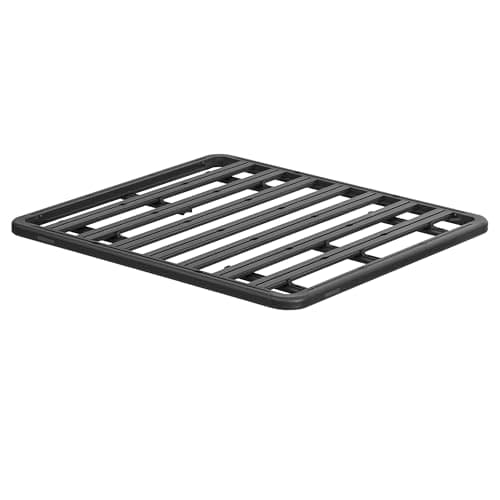 Yakima LockNLoad Platform 60 x 54The slats are spaced and shaped to act as crossbars, so ordinary bike and kayak mounts clamp to them. On a platform, that is rarer than it sounds. | Carrying bikes, boats and skis as well as cargo | 8.0 | |
| 4 | 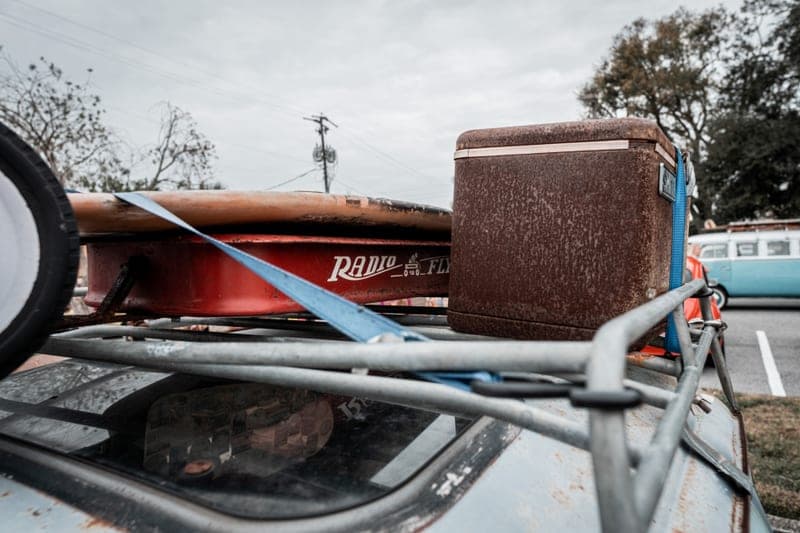 Front Runner Slimline IISold as vehicle-specific kits rather than sizes, and the Grab-On rail versions clamp to factory rails without a single hole. The honest answer for a modern crossover. | A tray cut to your exact roof | 7.9 | |
| 5 | 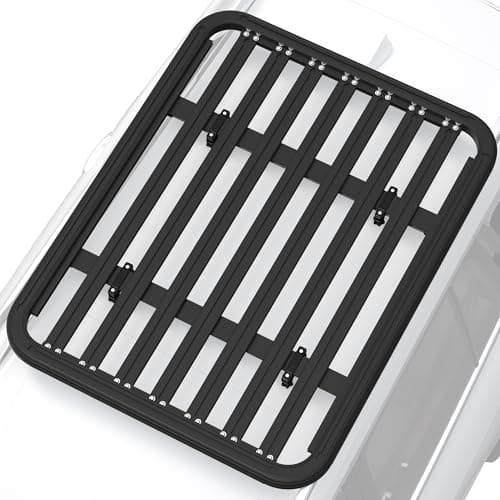 WILDROAD Aluminum Roof Platform 63 x 47A flat aluminum tray with eye bolts and T-screws in the box, for a fifth of the money. Buy it for the tray, and ignore the load figure. | Adding a tray to crossbars you already own | 6.8 |
Prices checked October 10, 2026. Product photographs come from Amazon where the listing is matched, and are representative stock images otherwise. Affiliate disclosure.
#1 · Most vehicles, most uses
Thule Caprock XL
The highest published load of the mainstream platforms and the widest set of mounting routes — including straight onto Thule Evo feet, with no crossbars in between.
- Size
- 65 x 59 in (XL)
- Weight
- 57.7 lb
- Max load
- 330 lb
- Mounting
- Thule Evo foot packs, or any crossbars via the Caprock crossbar kit
What works
- 330 lb published rating is higher than almost any car roof is itself rated for
- Mounts directly to Evo foot packs, which removes the crossbars and the height they add
- T-slots along every slat, so accessories bolt anywhere rather than at fixed points
- Railing, eye-bolt and cargo-box kits all bolt to the same tray
What doesn’t
- The tray is only part of the price — you still need Evo feet and a fit kit, or the crossbar kit
- At 57.7 lb the tray alone eats a large slice of a typical 150-165 lb roof limit
- Sized in four lengths, so the XL is wasted on a short hatchback roof
Our scoring
8.4overall
#2 · Bolting accessories on, cheaply
Rhino-Rack Pioneer Platform 52 x 56
Five bars, a full perimeter of slots, and a price that leaves budget for the brackets — the platform to pick if the point is what you will mount to it.
- Size
- 52 x 56 in
- Weight
- 55 lb
- Max load
- 220 lb on the move
- Material
- Reinforced nylon and aluminum
What works
- Five crossbars included, so there is always a bar where you need one
- Rhino-Rack's accessory range is the broadest of the three, from shovel holders to awning brackets
- Nylon-and-aluminum construction keeps the weight at 55 lb despite the five bars
- Five-year warranty
What doesn’t
- 220 lb dynamic rating is a third lower than the Caprock's
- Mounting legs or a Backbone system are a separate purchase and can cost as much as the tray
- 52 in is short — a long roof will look half-used
Our scoring
8.1overall
#3 · Carrying bikes, boats and skis as well as cargo
Yakima LockNLoad Platform 60 x 54
The slats are spaced and shaped to act as crossbars, so ordinary bike and kayak mounts clamp to them. On a platform, that is rarer than it sounds.
- Size
- 60 x 54 x 4 in
- Weight
- 65.1 lb
- Max load
- 165-330 lb depending on vehicle and roof type
- Mounting
- Yakima towers and tracks; T-slots in every slat
What works
- Side-to-side slats take most standard bike, ski and kayak mounts directly
- T-slots in every slat and in the outer frame
- Limited lifetime warranty
- Textured powder coat holds up better than anodizing on a gritty roof
What doesn’t
- 65.1 lb is the heaviest tray here, and it is dead weight before you load anything
- The 165-330 lb range is a fitment figure, not a product figure — yours may be the low end
- Needs Yakima towers or a track system underneath
Our scoring
8.0overall
#4 · A tray cut to your exact roof
Front Runner Slimline II
Sold as vehicle-specific kits rather than sizes, and the Grab-On rail versions clamp to factory rails without a single hole. The honest answer for a modern crossover.
- Sold as
- Vehicle-specific kits, many sizes
- Grab-On rail kit load
- 110 lb evenly distributed
- Mounting
- Grab-On feet clamp to factory flush or raised rails, no drilling
- Interface
- T-slots top and bottom, standard 8 mm bolts
What works
- Kits are built for one vehicle, so the tray matches the roof instead of nearly fitting it
- Grab-On rail feet need no drilling and no permanent modification
- The slat-and-T-slot interface is the de facto standard for overland accessories
- Limited lifetime warranty
What doesn’t
- 110 lb on the Grab-On rail kits is the lowest published figure in this roundup
- Front Runner is explicit that these clamp-on kits are a light-duty design, not for hard off-road use
- Price varies enormously by vehicle because every kit is different — check your own before budgeting
- Not every Slimline II kit is drill-free; the track-mount versions for pickup cabs are a different product
Our scoring
7.9overall
#5 · Adding a tray to crossbars you already own
WILDROAD Aluminum Roof Platform 63 x 47
A flat aluminum tray with eye bolts and T-screws in the box, for a fifth of the money. Buy it for the tray, and ignore the load figure.
- Size
- 63 x 47 in
- Mounting
- Bolts to existing crossbars with the supplied eye bolts and T-screws
- Included
- 10 sets of eye bolts, nuts and T-screws
- Published load
- Not consistently stated — see below
What works
- A real flat platform at roughly a quarter of the price of the brand trays
- Anchoring hardware is in the box, which is usually a separate line on the premium platforms
- Mounts to crossbars you already have, so there is no second fit-kit invoice
What doesn’t
- We could not verify a single consistent load rating: retailer listings for the 63 x 47 in size quote figures from 150 lb to over 400 lb, which means none of them should be trusted
- No published fit guide, so bar spacing and clamp clearance are on you to measure
- No meaningful warranty or accessory ecosystem behind it
- A bare aluminum tray with open ends is noisier than the shaped brand platforms
Our scoring
6.8overall
How we ranked them
Five things decide whether a platform is a good buy, and only one of them is the tray itself.
No holes. Every pick above mounts to rails, fixed points, a factory track or existing crossbars. We excluded anything whose only honest installation involves drilling the roof skin or a hardtop, because that is a different decision with different consequences and it should never be the default.
Published load, not implied load. We used the manufacturer’s own dynamic (on-the-move) figure. Where a brand publishes a range rather than a number — Yakima quotes 165-330 lb depending on vehicle and roof type — we said so rather than quoting the flattering end.
Tray weight. This is the specification buyers skip and then regret. A roof limit includes the rack. At 57.7-65.1 lb, these trays consume a third to a half of a typical passenger-car roof allowance before anything goes on top. Our roof rack weight limits guide explains how that arithmetic actually works.
What the fitting hardware adds. A platform is rarely a single purchase. Feet, legs, towers, a crossbar adapter kit or a Backbone system can equal or exceed the price of the tray. We flagged that on every pick instead of pretending the sticker is the price.
What bolts to it. A tray with T-slots along every slat takes accessories anywhere. A tray with slots only around the perimeter does not. And a tray whose slats double as crossbars — the LockNLoad is the clearest example — lets you keep using the bike and kayak mounts you already own.
Platform or basket? They are not the same purchase
A roof basket has walls. A platform is flat. That one difference changes what each is good for, and the product listings blur it constantly.
A basket contains loose cargo. Firewood, coolers, bags of camping gear, a bag of soil from the garden center — things that would slide off a flat surface and that you do not want to strap individually. If that is your load, you want walls, and you want our roof cargo basket roundup instead of this page.
A platform is a mounting surface. Its job is to give hard accessories a place to bolt: a tent, an awning, a traction board bracket, a recovery shovel, a jerry can holder, a solar panel. Loose cargo on a flat platform needs a cargo bag or a net, which is an extra purchase. Several platforms, including the Caprock, sell a railing kit that converts the tray into a basket — which tells you how often people buy the wrong one first.
If the honest answer is “I want to carry duffel bags twice a year,” neither is the cheapest route. A soft bag on ordinary crossbars costs a tenth as much; our rooftop cargo bag roundup covers that path.
The four ways a platform mounts without drilling
Which of these applies to you is decided entirely by your roof, so look at it before you shop. Our roof rail types guide has photos of each.
Raised rails. Rails with a visible gap underneath. The easiest case: clamp-around feet (Thule Evo Raised Rail, Front Runner Grab-On Raised Rail, Rhino-Rack legs) wrap the rail and tighten. Nothing is modified.
Flush rails. Rails sitting tight on the roof with no gap. Needs a flush-rail-specific foot that grabs the rail’s inner lip. Front Runner’s Grab-On Flush Rail kits and Thule’s Evo Flush foot pack both do this; a raised-rail foot will not fit.
Fixed points. Threaded mounting points hidden under plastic covers or inside the door frame. The vehicle was designed for a rack and you are using the holes the factory already put there — which is the opposite of drilling.
Existing crossbars. If you already run bars, the cheapest route is a tray that bolts to them: the Thule Caprock crossbar kit for a brand tray, or the supplied eye bolts and T-screws on a universal one. You lose a little height advantage and gain a lot of budget.
A bare roof with none of the above is the one case where a platform gets expensive, because you have to build a crossbar system first. Our bare-roof rack roundup covers what clamps to a naked roof.
If the plan is a rooftop tent, read the dynamic figure twice
Rooftop tents are why most people start looking at platforms, and they are where load ratings get misread most often.
Racks and vehicles publish a dynamic rating — what the roof can carry while moving. That is the number that matters when you are choosing a platform, and it is the number we quoted above. A hard-shell tent that weighs 130 lb on a 220 lb tray leaves 90 lb for bedding, the tray’s own 55 lb having already been counted against your vehicle’s limit, not the tray’s.
The much larger static rating — what the roof holds parked, with people in the tent — is a separate figure, and most car manufacturers do not publish one at all. Where a vehicle has no published static figure, treat a rooftop tent as a decision to make with the rack manufacturer’s fit guide open, not from a forum thread.
Do the arithmetic before you buy either. Vehicle roof limit, minus tray weight, minus foot or leg weight, is your real cargo allowance — and on a typical crossover that result is smaller than people expect.
What a platform costs you every mile
A platform is a large flat obstruction in the airflow over the roof, and it is on the car whether or not you are carrying anything. That is the real difference between a platform and a cargo box: the box comes off between trips, and the tray usually does not.
Expect more noise than bars alone and a measurable fuel penalty. Thule markets the Caprock’s low profile as redirecting airflow to cut noise and drag, which is a real design difference between a shaped tray and a bare universal one — but a shaped platform is still a platform. Our gas mileage guide has the published figures for roof loads, and our wind noise guide covers what actually quietens one down.
The practical answer: if the tray lives on the car all year, buy the shaped one and fit the wind deflector it comes with. If it only goes on for two trips a year, a cheaper tray you remove between trips is better value than a premium one you leave up.
The verdict
For most vehicles and most uses, the Thule Caprock is the platform to buy. It publishes the highest load, it mounts directly to Evo feet so you are not stacking a tray on top of bars, and the accessory kits bolt to the same tray rather than requiring a different one.
If the point of the tray is the gear you will bolt to it, Rhino-Rack’s Pioneer Platform is better value: five bars, a slot anywhere, and money left over for the brackets. If you also carry bikes or boats, the Yakima LockNLoad’s crossbar-shaped slats keep your existing mounts usable. On a modern crossover with factory rails, a Front Runner Grab-On kit is the cleanest no-drill fit there is, as long as you respect its 110 lb figure.
And if you already run crossbars and simply want a flat surface, the WILDROAD tray does that for a fraction of the money. Buy it as a tray, load it conservatively, and do not believe its load rating.
Common questions
Can you fit a roof platform without drilling?
What is the difference between a roof platform and a roof basket?
How much weight can a no-drill roof platform carry?
Do roof platforms make a lot of noise?
Can I put a rooftop tent on a no-drill platform?
Is the tray the whole price?
Sources
Not sure it fits your car?
Our vehicle pages carry the published roof load limit, the roof type by model year, and what actually mounts to it — cited, and honest about what the manufacturer does not publish.
Read next
The Best Roof Cargo Baskets
Open roof baskets — cheaper than boxes, better with awkward shapes, noisier and unprotected.
Roof Rail Types: Flush, Raised, Fixed Point and Bare
Four roof types, the hand test that tells them apart, and which fit kit each needs.
How Much Weight Can a Car Roof Rack Hold?
Dynamic versus static limits, what the figure includes, and why the rack's rating is not yours.
The Best Van Roof Racks
Full-size cargo van, compact van, camper and minivan racks compared on published load, mounting method and how you get a load up there alone.