Guides
Roof Rack Accessories: What Actually Fits Your Bars
The question is never whether an accessory fits your car. It is whether it fits the top of your crossbar, and there are only three answers.

Roof & Route is funded by affiliate commission. If you buy through a link on this page we may earn a commission at no extra cost to you. It never decides what we recommend or the order we recommend it in — read the full disclosure.
The direct answer: a roof rack accessory mounts to the bar, not to the vehicle, so the only compatibility question that matters is what the top of your crossbar looks like. There are three cases.
A full-length channel running along the top of the bar. Accessories slide in anywhere along it and clamp down. This is the easiest case and the most flexible, and it is what Yakima’s JetStream and most modern aero bars give you.
T-slots — a T-shaped groove, usually in a platform’s slats or in the bar itself. Accessories bolt in with a T-bolt that turns ninety degrees to lock. Slightly more fiddly than a channel, and it holds the accessory exactly where you put it, which is better for heavy mounts.
A round or square bar with no interface at all. Older factory bars and the budget steel bars. Accessories clamp around the bar with a U-bolt or a strap. Plenty of carriers still ship with round-bar hardware, but the premium ones increasingly do not.
So before you buy anything: go outside, look at the top of your crossbar, and establish which of those three you have. Then buy accessories that name that interface. Nearly every “it did not fit” return in this category is somebody who identified their car correctly and their bar not at all.
The second rule, which is less obvious: within a brand, accessories are usually interchangeable across that brand’s bars. Across brands, they sometimes are and the manufacturer will not promise it. Buying into one ecosystem is a real decision with real lock-in, and it is the main long-term argument for Thule or Yakima over a cheaper bar.
Quick picks
Tap any row to jump to the full write-up below. Scores are our editorial judgment on published specifications — not a star rating, and not a product we claim to have tested.
| # | Product | Best for | Score | Price |
|---|---|---|---|---|
| 1 | 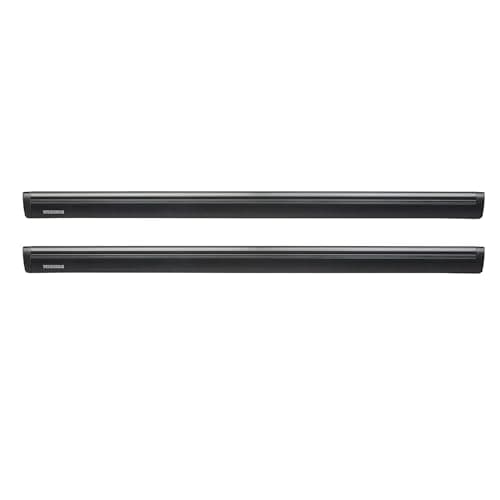 Yakima JetStreamA full-length top channel means an accessory goes anywhere along the bar, which is the most flexible interface you can own. | Best interface to buy into | 8.4 | |
| 2 | 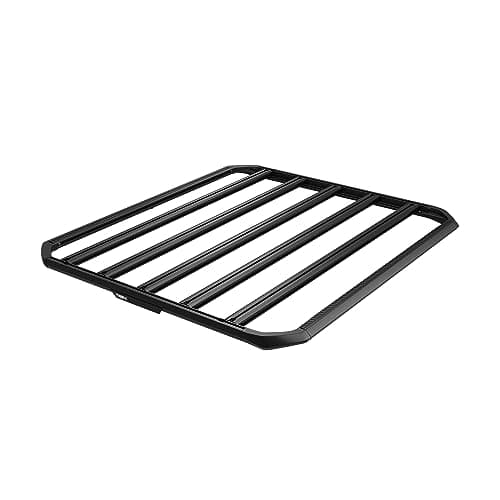 Thule Caprock XLT-slots along every slat, so a mount goes where the load needs it rather than where a bar happens to be. | Best for mounting things in the middle | 7.9 | |
| 3 | 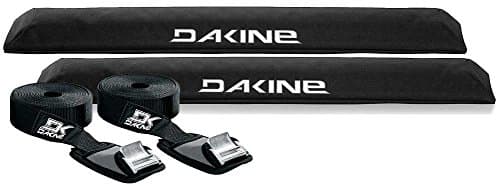 Dakine Aero Rack Pad Set (28 in)A pair of padded crossbar sleeves with 12 ft tie-down straps — the cheapest honest way to carry a board on bars you already own. | Cheapest useful accessory | 8.0 | |
| 4 | 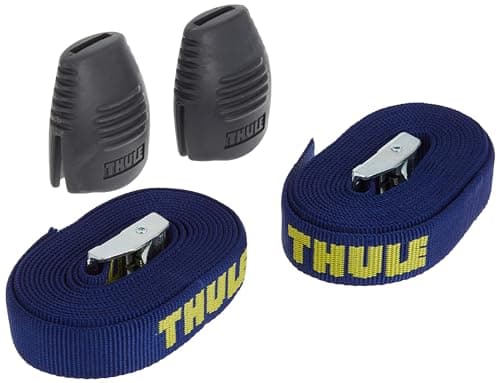 Thule Load StrapsCam straps with a rubber buckle guard, sized for roof-rack loads — hand tension only, which is what you want over anything painted. | The accessory everyone needs first | 8.4 |
Prices checked October 12, 2026. Product photographs come from Amazon and are refreshed with the prices. Affiliate disclosure.
#1 · Best interface to buy into
Yakima JetStream
A full-length top channel means an accessory goes anywhere along the bar, which is the most flexible interface you can own.
- Interface
- Full-length top channel
- Type
- Wing-profile aluminum bar
- Sold as
- Fixed lengths plus a separate tower kit
- Accessory range
- Yakima's full catalog
What works
- Accessories slide anywhere along the bar instead of landing on fixed points
- Deep accessory catalog behind it, from bike mounts to boat saddles
- Aero profile, so quieter than any square bar
- Towers sold separately means one bar family covers most rail types
What doesn’t
- The channel collects grit and needs an occasional rinse
- Two purchases — bars and towers
- Locks you into one brand's accessory pricing
Our scoring
8.4overall
#2 · Best for mounting things in the middle
Thule Caprock XL
T-slots along every slat, so a mount goes where the load needs it rather than where a bar happens to be.
- Interface
- T-slots along every slat
- Deck
- 65 x 59 in
- Rated load
- 330 lb (rack rating)
- Needs
- A crossbar system already fitted
What works
- T-slots everywhere means tie-down points in the middle of the load, not just at the edges
- Carries awkward shapes that bridge two bars badly
- 330 lb rack rating leaves the vehicle as the limiting factor
- Low profile for a deck this size
What doesn’t
- This is an addition to a bar system, not a replacement for one
- Heavy, and your roof allowance counts it
- An open deck drums at highway speed without the fairing
Our scoring
7.9overall
#3 · Cheapest useful accessory
Dakine Aero Rack Pad Set (28 in)
A pair of padded crossbar sleeves with 12 ft tie-down straps — the cheapest honest way to carry a board on bars you already own.
- Type
- Padded crossbar sleeves
- Size
- 28 in
- Fabric
- 600-denier
- Includes
- 12 ft tie-down straps
What works
- Fits any bar shape, because it wraps rather than clamps
- Straps included, so it is a complete solution out of the box
- Protects both the board and the bar's finish
- Costs a fraction of a dedicated board carrier
What doesn’t
- No mechanical attachment — the strap is doing all the work
- Pads slide along a smooth bar unless you cinch them properly
- Not a substitute for a cradle on a long drive with a heavy board
Our scoring
8.0overall
#4 · The accessory everyone needs first
Thule Load Straps
Cam straps with a rubber buckle guard, sized for roof-rack loads — hand tension only, which is what you want over anything painted.
- Type
- Cam buckle strap
- Guard
- Rubber buckle guard
- Tension
- Hand only, by design
- Sized for
- Roof-rack loads
What works
- Cam buckle cannot over-tension the way a ratchet can
- Buckle guard stops the metal marking a hull or a roof
- The right first purchase for anyone with bars and no accessories
- Works on every bar interface, because it does not use one
What doesn’t
- Hand tension is wrong for heavy rigid loads — use ratchets there
- Webbing degrades in sunlight over years
- Costs more than a generic strap for a rubber guard and a known length
Our scoring
8.4overall
The three interfaces, side by side
| Interface | How to recognize it | What mounts to it | Watch out for |
|---|---|---|---|
| Full-length channel | A groove running the whole length of the bar top | Nearly everything in that brand’s catalog, anywhere along the bar | End caps have to come off to slide hardware in |
| T-slot | A T-shaped groove; the bolt turns 90 degrees to lock | Heavy mounts, platform accessories, tie-down eyes | T-bolt sizes differ between brands |
| Round or square bar, no interface | Plain tube or box section, nothing on top | Clamp-around carriers with U-bolts or straps | Premium accessories increasingly skip round-bar hardware |
A fourth case worth naming because it causes confusion: a platform is not a bar interface, it is a deck that sits on bars and then provides its own interface — usually T-slots. If you own a platform, your accessory question is about the platform’s slots, not the bars underneath it. See the platform roundup.
The order to buy in
Accessory purchases go wrong mostly through sequencing. This is the order that does not waste money.
- Rails or a foot pack. Whatever attaches to the car. If you do not know whether you have raised rails, flush rails or a bare roof, start here.
- Crossbars. Pick the interface you want to live with, not just the price. This is the decision that constrains every accessory you will ever buy. Do I need crossbars if the rails-versus-bars distinction is unclear.
- Straps. Before any carrier. A set of cam straps makes bare bars immediately useful and you will need them regardless of what you buy next.
- The carrier for your main load. Box, basket, kayak cradle, bike mount — one, chosen for the thing you actually carry most.
- Everything else, later. Fairings, load stops, locks, a second carrier. None of it is urgent and all of it is cheaper once you know what annoys you.
Note what is not on that list near the top: a wind fairing. Fairings are sold as a noise fix and they are a partial one. If the noise started when you fitted bars, work through the wind noise guide first — the cause is often an empty accessory mount or a bar set too narrow, and both of those are free to fix.
Every accessory spends your roof allowance
This is the arithmetic that stops people over-accessorizing. Your vehicle’s published roof load figure is a total — bars, feet, platform, carrier and cargo together. Most crossovers publish somewhere between 150 and 176 lb, and some are much lower: Toyota’s manual for the fifth-generation 4Runner lists 120 lb for the factory luggage carrier.
| What it is | Typical weight | What it leaves on a 150 lb roof |
|---|---|---|
| Aero bars and feet | Around 12 lb | 138 lb |
| Platform deck on top of them | 30-40 lb | 98-108 lb |
| Large hard-shell box instead | 40-50 lb | 88-98 lb |
| Bike mount per bike | 10-15 lb plus the bike | Depends entirely on the bikes |
The pattern to notice: hardware spends a third to a half of a typical allowance before you carry anything. That is the real reason to own one carrier chosen well rather than three chosen cheaply. Check your own figure on the fit pages and read the weight limits guide for the dynamic-versus-static distinction.
Ecosystem lock-in, honestly
Buy Thule bars and you are buying into Thule accessory pricing for as long as you own them. Same for Yakima. That is the cost of the deep catalogs, and it is a real cost — accessories are where these brands make their margin.
What you get for it: a bike mount, a boat saddle, a box and a basket that all fit the same bars with no adapters, and a replacement part available by number in year eight. What you give up: the ability to buy the cheapest version of each accessory from whoever is cheapest this week.
Two practical notes. Many carriers ship with hardware for more than one interface, so cross-brand fitment is sometimes possible — but the T-track and channel systems are genuinely different and some accessories are brand-specific, so assume you are buying into one ecosystem and treat any cross-fit as a bonus. And the Thule versus Yakima comparison is really a comparison of two catalogs rather than two bars.
The exception to all of this is straps and pads. They wrap rather than clamp, so they fit anything, and they are the one part of this category where buying on price is simply correct. The strap picks cover it.
Common questions
Will any roof rack accessory fit my car?
Are Thule accessories compatible with Yakima bars?
What roof rack accessory should I buy first?
Do accessories count toward my roof weight limit?
Sources
Not sure it fits your car?
Our vehicle pages carry the published roof load limit, the roof type by model year, and what actually mounts to it — cited, and honest about what the manufacturer does not publish.
Read next
Do I Need Crossbars for a Roof Rack?
Rails versus crossbars, how to tell what you have, and the one case where rails alone work.
What Size Crossbars Do I Need?
How to measure crossbar spread and length, and what each carrier type needs.
Thule vs Yakima Roof Racks
Bar profile, load rating, accessory interface, fit coverage and price — compared on published specs.
How Much Weight Can a Car Roof Rack Hold?
Dynamic versus static limits, what the figure includes, and why the rack's rating is not yours.