Kayak Racks
Thule Hullavator Pro Alternatives
Nothing else loads a kayak the way the Hullavator does. The question is whether you need a lift assist or just an easier slide — and the answer changes the price by a lot.
Roof & Route is funded by affiliate commission. If you buy through a link on this page we may earn a commission at no extra cost to you. It never decides what we recommend or the order we recommend it in — read the full disclosure.
The verdict first. If what you want is an easier load rather than a powered one, the alternative to buy is the Yakima SweetRoll: a full-support saddle set with rear rollers, so you rest the bow, walk round and slide the boat forward instead of pressing it overhead. The budget pick is the Malone SeaWing — a very low V-saddle that carries the hull flat for a small fraction of the Hullavator's price, accepting that you lift the boat into place yourself.
What the Hullavator Pro is known for, using the figures Thule publishes: it takes roughly 40 lb of the boat’s weight on gas-assisted struts, and the cradle lowers up to about 40 inches down the side of the vehicle, so you load at hip height and the mechanism lifts the boat to the roof. It carries one boat, mounts across both crossbars, and comes with integrated straps. Nothing else in this category does that, and we rank it first on our load-assist kayak racks page for exactly that reason.
So people do not look for an alternative because it disappoints. They look for one of three reasons: it is the most expensive carrier in the category by a wide margin; it is heavy and uses the full width of both bars; or they have realized that their boat and their roof do not actually need a lift assist — they need a carrier they can slide a boat onto.
That third case is the common one, and it is why this page exists. Below, each pick is matched to the Hullavator on a specific stated strength — loading effort, hull support, or simply price — and we say which. If you genuinely cannot get the boat up there at all, the honest answer is that no carrier here replaces it.
Quick picks
Tap any row to jump to the full write-up below. Scores are our editorial judgment on published specifications — not a star rating, and not a product we claim to have tested.
| # | Product | Best for | Score | Price |
|---|---|---|---|---|
| 1 | 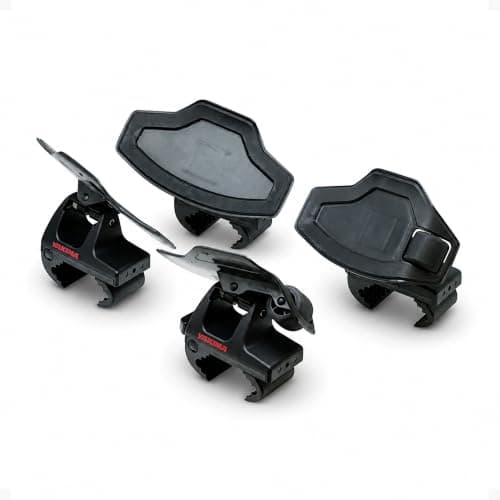 Yakima SweetRollRear rollers and full hull support. It does not lift the boat for you, but it removes the overhead press — which is the part of loading that stops people paddling. | Closest match on the thing that matters: loading effort | 8.6 | |
| 2 | 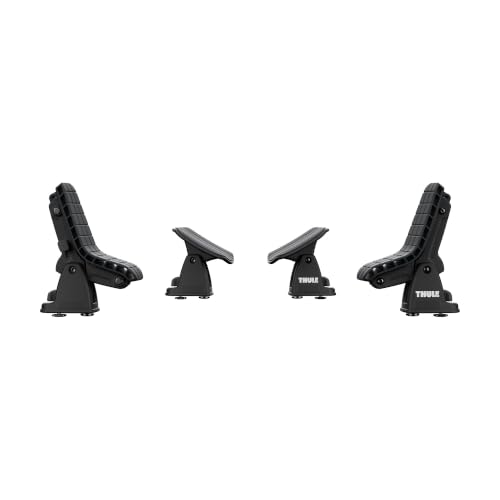 Thule DockGlideThule's own slide-on saddle set, built around wide and heavy hulls. The in-family alternative: the same brand, the same carrying position, no mechanism. | Heavy, wide hulls — the same boats people buy a Hullavator for | 8.5 | |
| 3 | 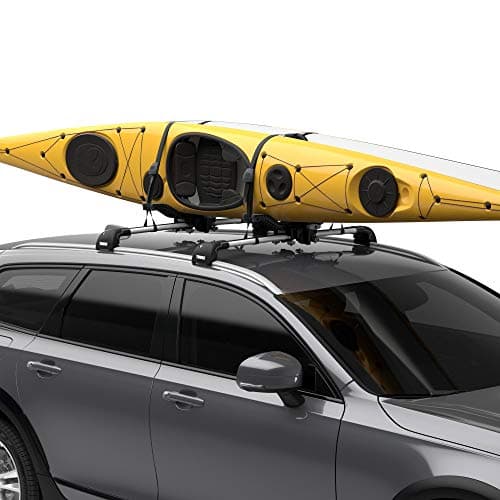 Thule CompassSaddle, J-cradle or stacker from one carrier, rated to 130 lb and 36 inches of boat width, with straps and bow and stern lines included. Carries two boats, which the Hullavator cannot. | Flexibility the Hullavator does not have | 8.5 | |
| 4 | 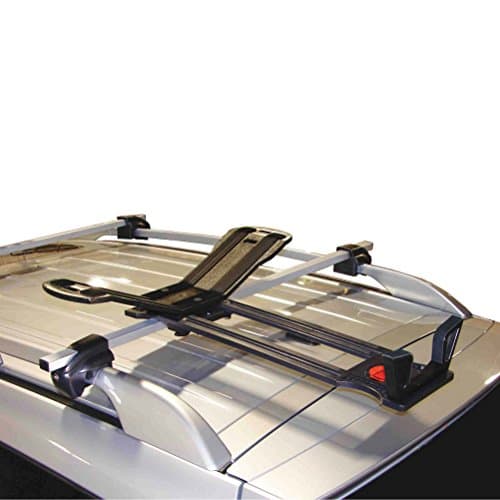 Malone SeaWingA very low V-saddle. No rollers and no assistance, but it carries the hull flat and fully supported for less than a tenth of what a Hullavator costs. | Budget pick — flat carrying for a tiny fraction of the price | 8.1 | |
| 5 | 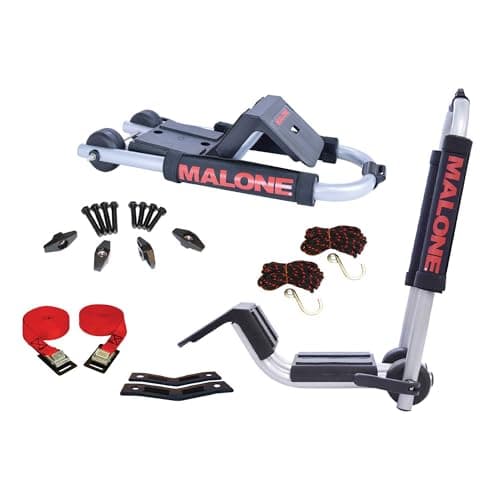 Malone DownLoaderA folding J-cradle. It solves a different problem from the Hullavator — roof space rather than loading effort — and it is the cheapest real carrier here. | Half the roof, and room for a second boat | 8.0 |
Prices checked November 27, 2026. Product photographs come from Amazon and are refreshed with the prices. Affiliate disclosure.
#1 · Closest match on the thing that matters: loading effort
Yakima SweetRoll
Rear rollers and full hull support. It does not lift the boat for you, but it removes the overhead press — which is the part of loading that stops people paddling.
- Capacity
- One boat, hull down
- Loading
- Slide on from the rear
- Hull support
- Full, cradled
- Carrying angle
- Flat, hull down
- Bar width used
- Most or all
What works
- Rear-loading rollers address the same problem as the Hullavator from the other direction — you slide rather than lift
- Full hull support, flat carrying, which is the Hullavator's carrying position too
- A small fraction of the Hullavator's price, and far lighter on the bars
What doesn’t
- You still take the full weight of the bow at the start of the slide — there is no assistance
- Uses most or all of the bar width, like the Hullavator does
- No side-loading: the boat still goes on over the back of the car
Our scoring
8.6overall
#2 · Heavy, wide hulls — the same boats people buy a Hullavator for
Thule DockGlide
Thule's own slide-on saddle set, built around wide and heavy hulls. The in-family alternative: the same brand, the same carrying position, no mechanism.
- Type
- Saddle set, hull down
- Loading
- Slide on from the rear
- Hull support
- Wide pads, shaped to the hull
- Carrying angle
- Flat, hull down
- Needs
- Crossbars, both bars
What works
- Designed for the wide, heavy fishing hulls that are the main reason people look at a Hullavator
- Same brand and hardware ecosystem, so accessories and spares are familiar
- Sliding load with no moving parts to service
What doesn’t
- No lift assistance at all — this is a carrier, not a mechanism
- One boat, using the full bar width
- Premium pricing for a saddle set, even at a fraction of the Hullavator
Our scoring
8.5overall
#3 · Flexibility the Hullavator does not have
Thule Compass
Saddle, J-cradle or stacker from one carrier, rated to 130 lb and 36 inches of boat width, with straps and bow and stern lines included. Carries two boats, which the Hullavator cannot.
- Carries
- One or two kayaks, or up to two SUPs in saddle mode
- Max load
- 130 lb
- Boat width
- Up to 36 in
- Included
- Load straps with buckle bumpers, bow and stern tie-downs
- Needs
- Crossbars
What works
- Two boats in J or stacker mode — the Hullavator is strictly a one-boat carrier
- Three carrying styles from one purchase, which suits a household with different hulls
- Published capacity and width figures that cover almost any recreational or fishing boat
What doesn’t
- No loading assistance in any of its modes
- More parts and more setup than a fixed saddle set
- Saddle mode needs a reasonable bar spread, so measure a short roof
Our scoring
8.5overall
#4 · Budget pick — flat carrying for a tiny fraction of the price
Malone SeaWing
A very low V-saddle. No rollers and no assistance, but it carries the hull flat and fully supported for less than a tenth of what a Hullavator costs.
- Needs
- Crossbars
- Type
- V-style saddle
- Profile
- Very low
- Carrying position
- Hull down
- Capacity
- One boat
What works
- By far the cheapest way to get hull-down carrying, which is the Hullavator's carrying position
- Lowest profile here, so the boat sits close to the roof and the center of gravity stays down
- Nothing mechanical to maintain or seize
What doesn’t
- Lift-and-place: this is the opposite of a loading aid
- The V shape suits a defined keel better than a flat, wide fishing hull
- One boat, and it uses most of the bar width
Our scoring
8.1overall
#5 · Half the roof, and room for a second boat
Malone DownLoader
A folding J-cradle. It solves a different problem from the Hullavator — roof space rather than loading effort — and it is the cheapest real carrier here.
- Type
- Folding J-cradle
- Capacity
- One boat
- Folding
- Folds down when empty
- Included
- Cam straps, bow and stern lines
- Needs
- Crossbars
What works
- Carrying on edge uses half the roof width, so a second boat or a cargo load can share the bars
- Folds flat when empty, which neither the Hullavator nor a saddle set does
- Straps and bow and stern lines included
What doesn’t
- Lifting a boat up and into a J-cradle is a higher lift than sliding one onto saddles — the wrong direction if loading is your problem
- Less hull support than any saddle here, and a boat on edge catches more crosswind
- Not a comparison with the Hullavator on loading at all; it is a comparison on space and price
Our scoring
8.0overall
Do you need a lift assist, or just an easier load?
You need the assist if the boat weighs enough that getting it overhead is genuinely unsafe, if you load alone, if the vehicle is tall, or if a shoulder or a back makes the overhead press the limiting factor. Thule publishes roughly 40 lb of assistance and about 40 inches of drop down the side of the car — on a tall SUV with a heavy touring boat, nothing else on this page replaces that.
You need an easier load — not an assist — if you can lift the bow but dislike pressing the whole boat above your head. That is what rear rollers solve, for a fraction of the money. Rest the bow on the rollers, walk to the stern, slide forward. Most people looking at a Hullavator are in this group.
You need neither if the boat is a light plastic rec kayak and the vehicle is a car. A J-cradle or a stacker from kayak racks under $200 is the honest purchase, and kayak racks for a car covers that case properly.
One more consideration the price comparison hides: the Hullavator uses the full width of both bars and is heavy, which means no second boat and a real share of your dynamic roof load spent on the mechanism. Roof rack weight limits is where to check that against your vehicle.
Choose by the reason you are looking
If the problem is the price: the Malone SeaWing for flat carrying, or the Malone DownLoader if you would rather have the roof space. Both are a small fraction of the cost.
If the problem is the overhead lift: the Yakima SweetRoll or the Thule DockGlide. Rear loading is the feature to buy, and it is the closest honest substitute for the mechanism.
If the problem is that it only carries one boat: the Thule Compass, used in J or stacker mode, or a dedicated stacker — carriers for two kayaks is the page.
If the problem is roof load or bar width: any saddle set or J-cradle here is dramatically lighter than the Hullavator, and a folding J-cradle gives half the roof back.
If the problem is that you cannot lift the boat at all: none of these. Read load-assist kayak racks and budget for the mechanism, or look at a trailer. We would rather say that than sell you a cheaper carrier you will not use.
Three things to check before you choose
1. Your boat's width and weight. A wide fishing hull needs a saddle set with the published width to match, and will not sit in a J-cradle. Measure the widest point and check it against the carrier's figure — the Compass publishes 36 inches and 130 lb, which is a useful benchmark.
2. Your crossbars. Every alternative here needs bars rated for the boat, and a saddle set uses the full width. If the bars are factory items, check their published rating before trusting them, and see the quietest aero crossbars if they need replacing anyway.
3. Your loading method. Decide it before you buy. Slide from the rear, lift from the side, or two people. The carrier that suits a rear slide is not the one that suits a side lift, and getting this right matters more than the badge. How to tie down a kayak has the method once the boat is up, and kayak racks under $500 is the bracket almost every pick here falls into.
Common questions
What is the closest alternative to the Thule Hullavator Pro?
Is there a cheaper kayak loading assist?
Can I carry two kayaks instead of one Hullavator setup?
Does a saddle set protect the hull as well as a Hullavator?
Is the Hullavator Pro worth it?
Sources
Not sure it fits your car?
Our vehicle pages carry the published roof load limit, the roof type by model year, and what actually mounts to it — cited, and honest about what the manufacturer does not publish.
Read next
The Best Load-Assist Kayak Racks
Load-assist and slide-on kayak carriers ranked by how much of the lift they actually remove.
Thule Hullavator Pro Review
What the gas-assist actually does for the lift, what it costs, and who genuinely needs one.
The Best Kayak Roof Racks Under $500
Kayak saddle sets and multi-mode carriers with a live price under $500, compared on hull support, loading method and boat width.
J-Cradle vs Saddle vs Stacker
Hull protection, boats per bar and loading ease across the three carrier styles.
The Best Kayak Racks for Two Kayaks
Stackers and paired J-cradles for two boats, and the weight arithmetic that decides it.