Roof Racks
The Best Roof Racks for Surfboards
A surfboard is light, long and easy to damage. That makes this the one category where the cheap answer is often the correct one.
Roof & Route is funded by affiliate commission. If you buy through a link on this page we may earn a commission at no extra cost to you. It never decides what we recommend or the order we recommend it in — read the full disclosure.
The verdict first. If you already have crossbars, buy Dakine Aero Rack Pads — they are also the budget pick on this page, and for one or two boards they are genuinely the right answer rather than the cheap one: thick foam over the bar, a flat bed for the board to lie on, nothing to pressure-dent a rail. If you have no rack at all, the Malone HandiRack is the one to get: an inflatable soft rack that straps through the door openings and turns a bare roof into a board carrier in about five minutes.
Surfboards are the easiest thing on this site to carry and the easiest to ruin. They weigh very little, so load rating is almost never the constraint. They are long, so overhang and strap position matter more than the rack does. And they are a thin skin over foam, so the thing that breaks them is pressure — a bar edge, an over-tightened cam, a strap pulled down onto a rail.
That is why the top of this page is soft, not structural. What you are buying is contact area and strap discipline, not capacity. The rigid carriers further down earn their place for specific jobs — multiple boards, long highway trips, boards sharing the roof with a SUP — and they are the right call in those cases.
Load boards fins up and toward the rear, deck down, and put a strap over the board rather than over the fins. That one sentence prevents most board damage, and it costs nothing. How to tie down cargo has the strap technique, including the twist that stops a cam strap from humming at highway speed.
Quick picks
Tap any row to jump to the full write-up below. Scores are our editorial judgment on published specifications — not a star rating, and not a product we claim to have tested.
| # | Product | Best for | Score | Price |
|---|---|---|---|---|
| 1 | 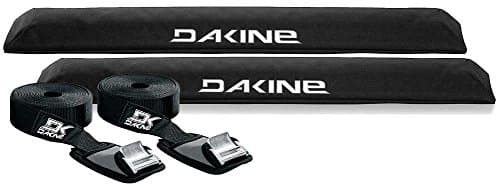 Dakine Aero Rack Pad Set (28 in)Thick padded wraps that turn your crossbars into a board bed. The cheapest pick here and the one most surfers should buy, because soft contact is what a board actually needs. | Best overall and budget pick — one or two boards on existing bars | 8.6 | |
| 2 | 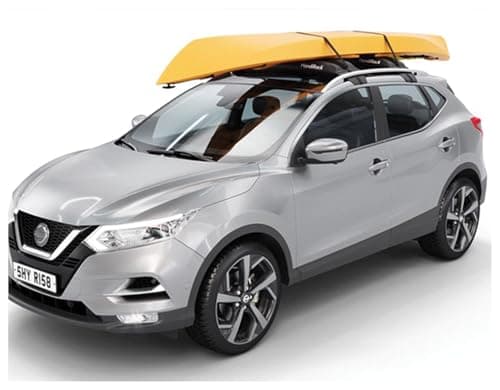 Malone HandiRackAn inflatable soft rack that straps through the door openings. The answer for a bare roof, a rental car or a second vehicle you do not want to buy bars for. | No roof rack at all | 8.5 | |
| 3 | 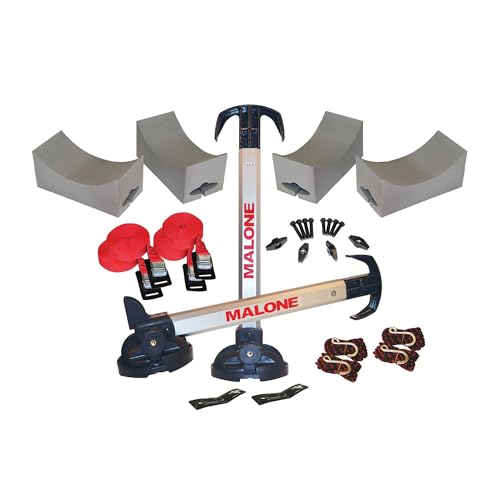 Malone Stax Pro2A folding vertical stacker. Built for kayaks, and useful for boards when the roof has to take several on edge or share space with a hardshell. | Boards on their side, sharing the roof | 8.0 | |
| 4 | 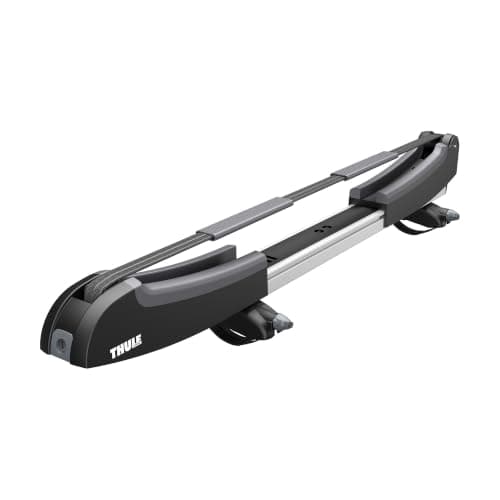 Thule SUP Taxi XTA padded board carrier with ratcheting arms, built for SUPs and equally happy with surfboards. The pick when the drive is long, the speed is high and you want the board held rather than strapped. | The rigid carrier for a long highway haul | 7.8 | |
| 5 | 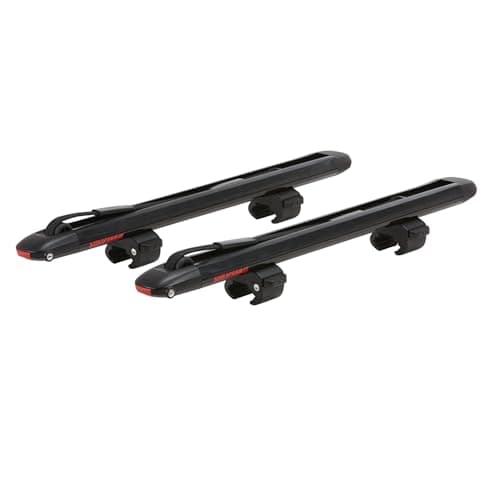 Yakima SupDawgA board carrier with a load-assist arm that lets you set a board down on the side of the car and slide it across. The pick if you load by yourself or drive something tall. | Loading alone, without lifting over the roof | 7.9 |
Prices checked November 27, 2026. Product photographs come from Amazon and are refreshed with the prices. Affiliate disclosure.
#1 · Best overall and budget pick — one or two boards on existing bars
Dakine Aero Rack Pad Set (28 in)
Thick padded wraps that turn your crossbars into a board bed. The cheapest pick here and the one most surfers should buy, because soft contact is what a board actually needs.
- Type
- Padded bar wraps
- Fits
- Crossbars you already own
- Sold as
- A pair
- Contact
- Foam over the full bar width used
- Boards
- One or two, deck down, fins up
What works
- Soft, wide contact with no hard edge to pressure-dent a rail or a deck
- Nothing to adjust, nothing to seize, and they live in the car between sessions
- By far the cheapest pick here, and the one a board shop would recommend first
What doesn’t
- Needs crossbars already on the car — these are pads, not a rack
- No fixed cradle, so the strap technique is doing all the work of holding the board in place
- Two boards is comfortable, four is a stack that wants a rigid carrier instead
Our scoring
8.6overall
#2 · No roof rack at all
Malone HandiRack
An inflatable soft rack that straps through the door openings. The answer for a bare roof, a rental car or a second vehicle you do not want to buy bars for.
- Type
- Inflatable soft rack
- Mounting
- Straps through the door openings
- Needs
- No crossbars
- Storage
- Deflates and packs away
- Fit
- Most cars with four doors and a closing seal
What works
- Turns a bare roof into a board carrier in minutes, with no bars to buy
- Inflated tubes are the softest contact available — kind to both the board and the roof
- Packs into a bag, so it travels and does not live on the car
What doesn’t
- Straps run through the door openings, so you cannot open the doors without unthreading them
- Lower practical speed and load tolerance than a bolted rack — treat it as a short-haul solution
- Needs re-checking on a long drive as tubes settle and straps stretch
Our scoring
8.5overall
#3 · Boards on their side, sharing the roof
Malone Stax Pro2
A folding vertical stacker. Built for kayaks, and useful for boards when the roof has to take several on edge or share space with a hardshell.
- Type
- Folding vertical stacker
- Carries
- Multiple hulls or boards on edge
- Mounting
- Bolts to crossbars
- Folds
- Yes — lies flat when not in use
- Padding
- Add pads or a towel at the contact points
What works
- Vertical loading is the most space-efficient way to get several boards on one roof
- Folds down flat, so it can stay on the bars all season
- Cheapest rigid carrier here by a wide margin
What doesn’t
- Designed for kayak hulls — boards need padding at the contact points, which is on you
- Boards on edge catch more crosswind than boards lying flat
- Does nothing for a single board that would be happier on pads
Our scoring
8.0overall
#4 · The rigid carrier for a long highway haul
Thule SUP Taxi XT
A padded board carrier with ratcheting arms, built for SUPs and equally happy with surfboards. The pick when the drive is long, the speed is high and you want the board held rather than strapped.
- Type
- Padded board carrier
- Designed for
- Stand-up paddleboards and surfboards
- Mounting
- Bolts to crossbars
- Clamping
- Ratcheting padded arms
- Capacity
- Published per listing — commonly two boards
What works
- Padded arms hold the board positively, so a long highway leg does not depend on strap tension alone
- Thule's mounting hardware and spares network behind it
- Takes a thick SUP as happily as a surfboard, which matters if the household has both
What doesn’t
- Many times the price of a set of pads for a job pads often do well enough
- Needs crossbars, and adds height and weight to the roof
- Over-specified for a single shortboard and a twenty-minute drive to the beach
Our scoring
7.8overall
#5 · Loading alone, without lifting over the roof
Yakima SupDawg
A board carrier with a load-assist arm that lets you set a board down on the side of the car and slide it across. The pick if you load by yourself or drive something tall.
- Type
- Board carrier with load assist
- Designed for
- SUPs and surfboards
- Mounting
- Bolts to crossbars
- Loading
- Side-load arm, then slide across
- Capacity
- Published per listing — commonly two boards
What works
- Side loading removes the overhead lift, which is the whole problem on a tall SUV or van
- Padded, positive clamping for long drives
- Yakima's accessory and spares ecosystem behind it
What doesn’t
- The most expensive way to carry a surfboard on this page
- Mechanism adds weight and height to the bars
- Unnecessary if you can comfortably reach your own roof
Our scoring
7.9overall
What actually damages a board on a roof
Pressure dents, not impacts. A hard bar edge under a tightened strap puts all the load into a narrow line across the board. That is how rails crease and decks dent on a drive where nothing went wrong. Wide, soft contact spreads the same load until it is harmless, which is why pads outrank hardware at the top of this page.
Over-tightening. A cam strap can generate far more force than a surfboard needs. Snug it until the board does not move when you push it, then stop. If the deck is visibly compressed under the strap, it is too tight.
Fins. Load fins up and toward the rear, and route straps over the board rather than across a fin. A strap over a fin box is a repair bill.
Heat and wax. A dark board strapped deck-down on a hot day is a wax transfer waiting to happen. A towel or a board bag between board and pad solves it, and a bag also deals with road grit on a long drive.
Pads, soft rack or rigid carrier?
Pads if you have crossbars and carry one or two boards. This covers most surfers most of the time, it is the cheapest option, and the soft contact is genuinely better for the board than a hard cradle.
A soft rack if you have no bars. Inflatable tubes strapped through the door openings are a legitimate carrier for short and medium runs, and our soft roof racks guide covers their honest limits — including why you should not treat them as a permanent, high-speed, fully-loaded solution.
A rigid carrier if you are carrying several boards, driving long highway distances regularly, loading alone onto a tall vehicle, or sharing the roof with a SUP or a kayak. A padded ratcheting arm holds a board in a way straps alone do not, and it is worth the money for that use.
If boards and boats share the roof, the paddleboard carriers page is the companion read — SUPs are heavier and wider, and the carrier choice changes. And if you have no crossbars yet, complete roof rack kits is the shortest route to having some.
The tie-down that keeps the board on the car
Two straps minimum, one per bar, each running over the board and under the bar — not over the board and around the rail. The strap should pull the board down onto the pad, not sideways.
Put a twist in each strap span. A flat strap in fast air vibrates and hums; a single half-twist in the exposed run stops it. This is the oldest trick in the category and it works.
Use cam buckles, not ratchets. A ratchet multiplies force, which is exactly what you do not want against a foam board. Cam straps let you feel the tension. The best cam buckle straps is what we would buy for this, and tie-down straps under $50 covers the whole kit at the price most people are ready to spend.
For a long board or a long drive, add a nose line. A bow line to a tow point stops a long nose lifting in a crosswind or behind a truck. The kayak version of this is covered in bow and stern tie-downs and the principle is identical.
Common questions
Do I need a special roof rack for surfboards?
Can I carry a surfboard without a roof rack?
Should surfboards go fins up or fins down?
How many straps do I need for a surfboard?
Will roof racks dent my surfboard?
Sources
Not sure it fits your car?
Our vehicle pages carry the published roof load limit, the roof type by model year, and what actually mounts to it — cited, and honest about what the manufacturer does not publish.
Read next
Soft Roof Racks: What They Can and Cannot Do
What inflatable bars and foam pads can carry safely, and when to buy real bars.
The Best Paddleboard and Surfboard Roof Racks
SUP and surfboard carriers compared on boards carried, published board widths, locking and loading, from locking racks to pads on existing bars.
The Best Cam Buckle Straps
Cam straps for hulls and cargo boxes, why hand tension is the point, and how many to buy.
How to Tie Down Cargo
Anchor points, strap direction, correct tension, tail management and the pre-drive checks.
The Best Complete Roof Rack Kits
Roof racks sold as one complete kit rather than bars plus foot pack plus fit kit, ranked by how little is left to decide.