Roof Racks
The Best Roof Racks for a Subaru Forester
Flat, long and low for an SUV: the Forester's roof is a genuinely easy place to put things, as long as you know which of Subaru's two published limits is yours.
Roof & Route is funded by affiliate commission. If you buy through a link on this page we may earn a commission at no extra cost to you. It never decides what we recommend or the order we recommend it in — read the full disclosure.
The pick for most Foresters is the Thule WingBar Evo on the raised-rail foot pack — the quietest mainstream bar on a roof that is flat enough to sit a box level and low enough to load without standing on the sill.
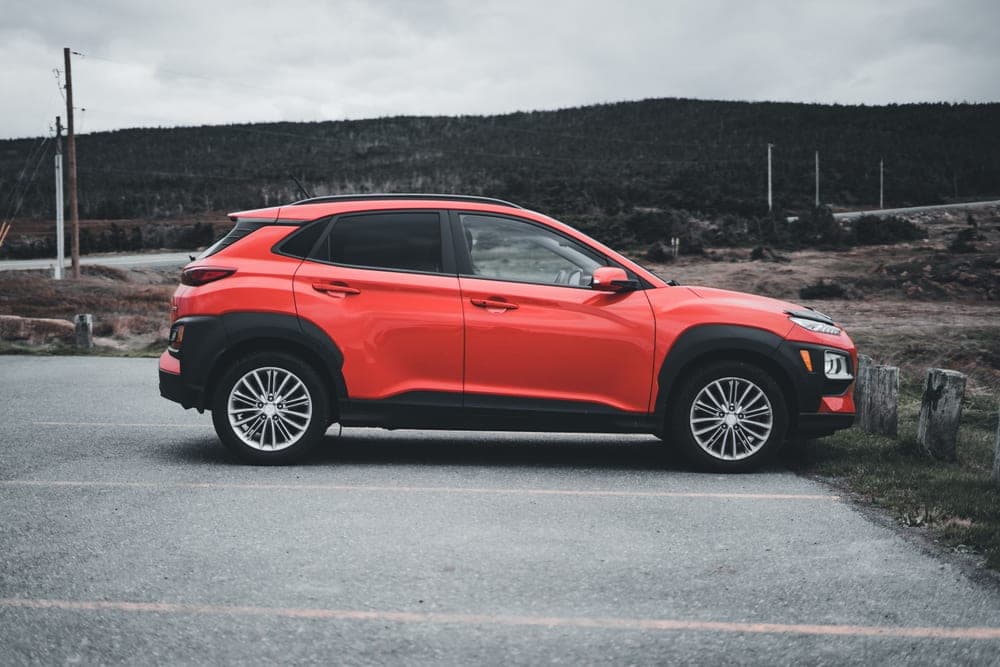
A Forester’s roof is flat, long and low for an SUV, and that combination is worth more than it sounds. Flat means a cargo box sits level instead of nose-down. Long means a big box will not overhang your windshield. Low means you can actually reach the thing.
Subaru has published two different roof load figures across the Forester’s life and the change happened at the 2010 model year: 176 lb (80 kg) for 2010-2021 cars, 150 lb (68 kg) for 2000-2009. Owners of older Foresters are frequently working to the newer, higher number. We could not confirm whether 176 lb carries into 2022-onward cars, so we are not going to assume it does.
The Forester’s real limitation is at the back, not the top — and that catches people out after they have already bought a bike rack. More on that below. Our Forester fit page carries the full fitment detail.
Quick picks
Tap any row to jump to the full write-up below. Scores are our editorial judgment on published specifications — not a star rating, and not a product we claim to have tested.
| # | Product | Best for | Score | Price |
|---|---|---|---|---|
| 1 | 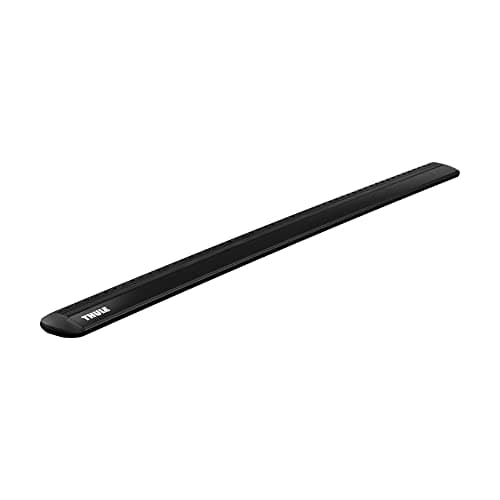 Thule WingBar EvoQuietest mainstream aero bar, on sliding rail-mount feet that let you set the widest spread the Forester's long rails allow. | Best overall | 8.5 | |
| 2 | 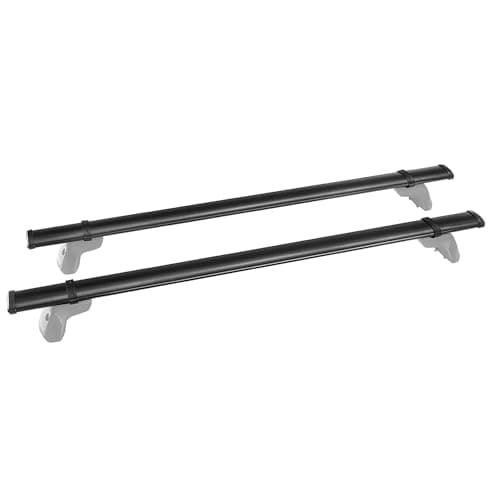 Yakima CoreBarYakima's steel entry bar — heavier and noisier than the JetStream and considerably cheaper, with the same tower system behind it. | Best cheap bar from a real brand | 7.6 | |
| 3 | 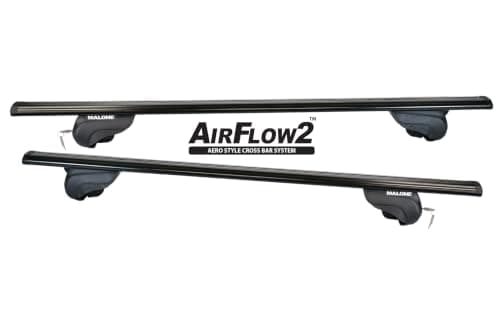 Malone AirFlow2A complete aero crossbar system, usually cheaper than the equivalent Thule or Yakima build and designed around boats. | Best complete aero kit on a budget | 7.7 | |
| 4 | 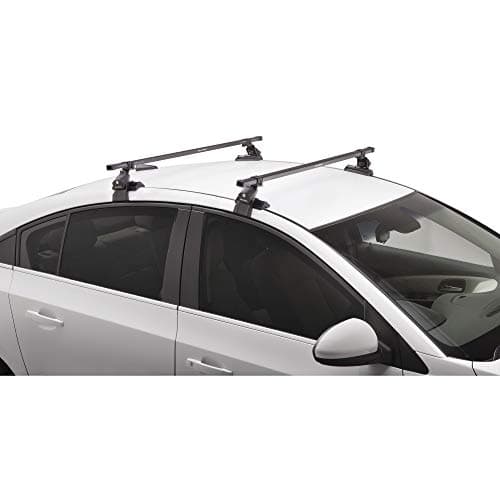 SportRack Complete Roof Rack SystemAn all-in-one budget kit for vehicles that already have raised side rails — which is nearly every Forester. | Cheapest way to get bars on rails | 7.4 |
Prices checked October 12, 2026. Product photographs come from Amazon and are refreshed with the prices. Affiliate disclosure.
#1 · Best overall
Thule WingBar Evo
Quietest mainstream aero bar, on sliding rail-mount feet that let you set the widest spread the Forester's long rails allow.
- Type
- Aerodynamic aluminum crossbar
- Sold as
- Bars plus a vehicle-specific foot pack and fit kit
- For a Forester
- Raised-rail foot pack
- Spread
- Set by you, anywhere along the rails
What works
- Sliding feet plus long Forester rails means a very wide, very steady spread
- Markedly quieter than any steel bar at highway speed
- Thule accessories mount without adapters
- Locks, and removes in minutes when the trip is over
What doesn’t
- Bars, feet and fit kit are three purchases
- More expensive than the complete budget kits below
- Fixed bar lengths — measure before ordering
Our scoring
8.5overall
#2 · Best cheap bar from a real brand
Yakima CoreBar
Yakima's steel entry bar — heavier and noisier than the JetStream and considerably cheaper, with the same tower system behind it.
- Type
- Steel crossbar
- Profile
- Square-ish, not aero
- Sold as
- Bars plus a separate tower kit
- Upgrade path
- Same towers take Yakima aero bars later
What works
- Real brand support at close to no-name money
- Shares the tower system, so you can upgrade bars later and keep the feet
- Steel shrugs off the knocks a roof bar actually takes
What doesn’t
- Audible at highway speed — a square bar whistles and there is no fixing that
- Heavier than aluminum, so less of the 176 lb allowance is left for cargo
- Tower kit is still a separate purchase
Our scoring
7.6overall
#3 · Best complete aero kit on a budget
Malone AirFlow2
A complete aero crossbar system, usually cheaper than the equivalent Thule or Yakima build and designed around boats.
- Type
- Aero crossbar system
- Sold as
- Complete system, bars and feet together
- Brand focus
- Paddlesport
- Best for
- Kayaks, boards, a first proper rack
What works
- Aero bars and feet in one order at a budget price
- Built around carrying boats, which suits a lot of Foresters
- Nothing missing when the box arrives
What doesn’t
- Smaller accessory range than Thule or Yakima
- Thinner dealer and spares support long-term
- Confirm fit for your exact model year before ordering
Our scoring
7.7overall
#4 · Cheapest way to get bars on rails
SportRack Complete Roof Rack System
An all-in-one budget kit for vehicles that already have raised side rails — which is nearly every Forester.
- Type
- Complete crossbar kit
- Requires
- Raised side rails
- Brand
- Thule's value label
- Includes
- Bars and rail-mount feet
What works
- The cheapest route from bare rails to usable bars
- One purchase, no fit kit to get wrong
- Backed by Thule's value brand rather than an unknown seller
What doesn’t
- Noisier and heavier than any aero bar
- Lower rating than the premium bars — check it against your load
- Limited accessory compatibility compared with Thule or Yakima proper
Our scoring
7.4overall
176 lb or 150 lb — the 2010 cut-off
Subaru changed the Forester’s published roof figure at the 2010 model year, and because the cars look similar enough across that boundary, owners of older Foresters routinely work to the newer number.
| Model years | Published dynamic limit | Source |
|---|---|---|
| 2010-2021 | 176 lb (80 kg) total — rack, crossbars and cargo | Subaru owner’s manual, roof rail section |
| 2000-2009 | 150 lb (68 kg) total | Subaru owner’s manual, roof rail section |
| 2022 onward | Not confirmed against Subaru documentation by us | Check the roof rail section of your own manual |
One more trap specific to cars that came with factory crossbars: the bars have their own rating, and it is often lower than the roof’s total published limit. Two numbers apply at once and the smaller one wins. If you are loading to the roof’s figure on factory bars rated below it, the bars are the thing that fails.
Check your trim too. The base trim in some years shipped without crossbars, which is not the same as shipping without rails — you may have rails and simply nothing bridging them.
The rail kit, and the hand-gap test
Foresters from 2014 onward carry conventional raised side rails on most trims: a rail with a visible gap you can pass your hand under. That is the easiest case in the whole rack market. Every major system has a rail-mount fit kit, there is no drilling, and no vehicle-specific fit kit is needed on top of the feet.
Do the test anyway before ordering. Hook a finger under the rail. Gap means raised rails and a raised-rail foot pack. No gap means flush rails and a completely different, non-interchangeable part. No rail at all means a clamp-on foot pack plus a vehicle-specific fit kit. The rail type guide shows all three.
Because rail-mount feet slide, your spread is whatever you set it to within the rails’ usable length. Set it as wide as the rails and the carrier allow — a wider spread is a steadier, quieter load — then measure center-to-center and check it against the box’s stated range. The spread guide covers why too narrow is a real problem and too wide is usually not.
The Forester's limit is the receiver, not the roof
This is the part that costs Forester owners money. There is no factory receiver on most trims, and the aftermarket hitches commonly fitted to a Forester are Class I or II with a 1-1/4 inch opening.
That quietly rules out most hitch cargo carriers and nearly all platform bike racks, which want a 2-inch Class III. People buy the rack first, discover the opening second, and end up either returning it or buying a hitch they did not budget for. Measure your receiver opening before you shop; our hitch classes guide has the class-by-class numbers.
The upside is that it pushes the answer back to the roof, and a Forester’s roof is good. A roof bike rack or a trunk rack is the realistic route for bikes here, and both work well on a car this shape.
The tall rear hatch is the other detail. It opens high, and a short-shank hitch carrier can foul it — check the swing path with the hatch fully up before you trust it, not after.
Boxes, boards and the fuel cost
The flat roof is what makes the Forester a good box car. A box that sits level seals better, loads more evenly and does not drain water into one corner. The long roof means you can run a full-size box without its nose entering the windshield’s field of view, which is a real constraint on shorter crossovers.
Size it against the weight, not the volume. A full-size box empty is already 40-50 lb of a 176 lb allowance before anything goes in it — the sizing guide walks through the arithmetic, and the box roundup ranks the boxes themselves.
Expect a double-digit percentage fuel penalty at highway speed with a box fitted — published testing on cargo boxes consistently finds one, and a boxy car feels it more than a slippery one. Our gas mileage guide covers what the tests actually measured. Take it off between trips.
Common questions
What is the roof weight limit on a Subaru Forester?
Can I fit a hitch bike rack to a Forester?
Does my Forester need crossbars if it has rails?
Does a cargo box hurt the Forester's fuel economy much?
Sources
Not sure it fits your car?
Our vehicle pages carry the published roof load limit, the roof type by model year, and what actually mounts to it — cited, and honest about what the manufacturer does not publish.
Read next
The Best Roof Racks for a Subaru Outback
Aftermarket bars that beat the Outback's factory integrated crossbars, and Subaru's limit by model year.
Roof Rail Types: Flush, Raised, Fixed Point and Bare
Four roof types, the hand test that tells them apart, and which fit kit each needs.
Hitch Classes Explained
Classes, receiver sizes and tongue weight ratings — and why tongue weight is the number that matters.