Roof Racks
The Best Yakima Roof Racks
Yakima splits the decision in two: pick a bar, then pick a tower. The tower is the part that has to match your roof, and it is where most purchases go wrong.

Roof & Route is funded by affiliate commission. If you buy through a link on this page we may earn a commission at no extra cost to you. It never decides what we recommend or the order we recommend it in — read the full disclosure.
The Yakima rack to buy for most cars is the Yakima JetStream: an aero bar with a full-length top channel and a push-down strip that closes the channel when nothing is in it. If the budget matters more than the noise, the Yakima CoreBar takes the same towers for noticeably less, and you can swap up to aero bars later without buying towers twice. If the roof is bare, the tower you need is the Yakima BaseLine, which clamps into the door aperture with a vehicle-specific BaseClip.
The direct answer to the question most people actually have: in the Yakima system a complete rack is bars plus towers plus, on a bare roof, a vehicle clip. The bar choice is about noise and what mounts to it. The tower choice is about whether it fits your car at all. Get the tower wrong and the bar is irrelevant.
That split is Yakima’s real advantage over a vehicle-specific system. Towers outlive bars and often outlive cars: a BaseLine tower set plus a new BaseClip moves to your next vehicle for a fraction of a new rack. Thule’s Edge range cannot do that, which is the honest trade-off in our Thule versus Yakima comparison.
One warning before the picks. Yakima publishes a rack capacity and your car publishes a roof capacity, and they are different numbers. The LockNLoad platform below is listed at 165 to 330 lb depending on vehicle and roof type precisely because the vehicle governs. Our weight limits guide explains which number is yours, and it is almost never the bigger one.
Below: four racks ranked, the tower table, and the case for the CoreBar over the JetStream that Yakima will never make for you.
Quick picks
Tap any row to jump to the full write-up below. Scores are our editorial judgment on published specifications — not a star rating, and not a product we claim to have tested.
| # | Product | Best for | Score | Price |
|---|---|---|---|---|
| 1 | 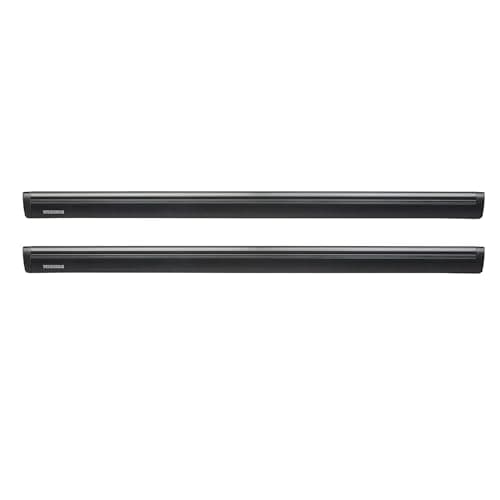 Yakima JetStreamThe aero bar in the range, with a full-length top channel that takes Yakima accessories directly and closes off when empty. | Best Yakima rack overall | 8.9 | |
| 2 | 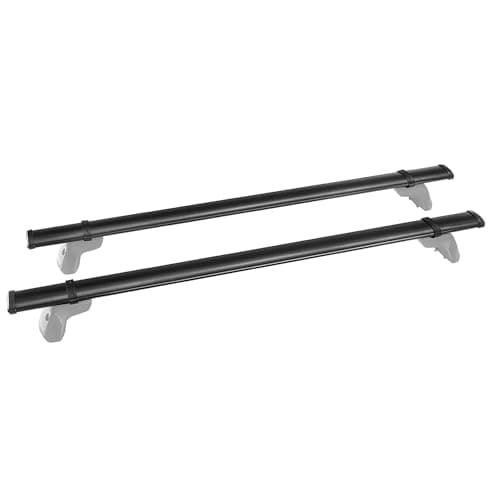 Yakima CoreBarSteel, square-ish and cheap, on exactly the same towers as the JetStream — which makes it the smartest first rack in the range. | Best value Yakima rack | 8.2 | |
| 3 | 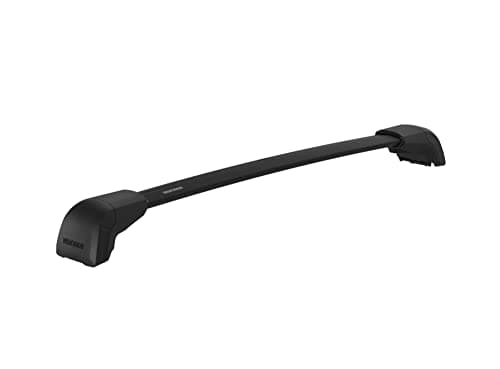 Yakima BaseLine towersThe tower that makes a rack possible on a car with no rails and no fixed points: it clamps into the door aperture, with no drilling. | Best tower for a bare roof | 8.3 | |
| 4 | 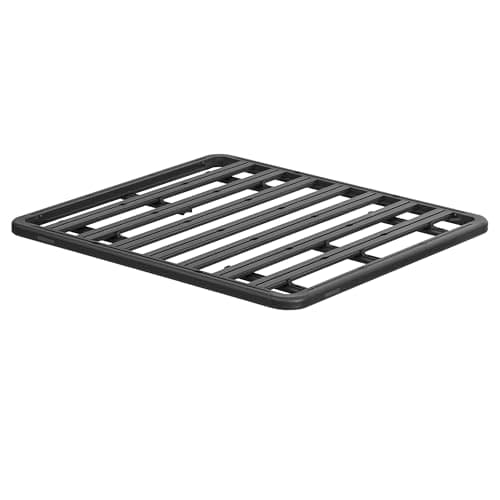 Yakima LockNLoad Platform 60 x 54A 60 by 54 inch aluminum deck with T-slots in every slat — the Yakima answer when a pair of bars will not hold the shape of your load. | Best Yakima platform | 8.0 |
Prices checked October 17, 2026. Product photographs come from Amazon and are refreshed with the prices. Affiliate disclosure.
#1 · Best Yakima rack overall
Yakima JetStream
The aero bar in the range, with a full-length top channel that takes Yakima accessories directly and closes off when empty.
- Profile
- Aero aluminum
- Channel
- Full-length top channel with push-down strip
- Accessory range
- Yakima's full catalog
- Needs
- Yakima towers plus, on a bare roof, a vehicle clip
What works
- Quiet for an aero bar, and the push-down strip removes the empty-channel whistle
- Full-length channel means an accessory mounts anywhere along the bar, not at fixed points
- Takes every Yakima tower, so it fits whatever roof you have
- Strong fit coverage on mainstream US vehicles
What doesn’t
- Bars and towers are separate purchases
- Length is fixed at purchase
- Costs meaningfully more than the CoreBar it shares towers with
Our scoring
8.9overall
#2 · Best value Yakima rack
Yakima CoreBar
Steel, square-ish and cheap, on exactly the same towers as the JetStream — which makes it the smartest first rack in the range.
- Type
- Steel crossbar
- Profile
- Square-ish, not aero
- Needs
- Towers plus a vehicle clip
- Upgrade path
- Same towers take Yakima aero bars later
- Lengths
- Several
What works
- The cheapest honest way into the Yakima tower system
- Towers carry over to aero bars later, so the upgrade costs bars only
- Steel takes abuse that an aluminum aero bar does not
- Several lengths, so you can match the car rather than the catalog
What doesn’t
- Noisier than the JetStream, and you will hear it above about 50 mph
- More frontal area, so a small standing fuel cost
- No full-length channel — accessories clamp around the bar
Our scoring
8.2overall
#3 · Best tower for a bare roof
Yakima BaseLine towers
The tower that makes a rack possible on a car with no rails and no fixed points: it clamps into the door aperture, with no drilling.
- Mounting
- Clamps into the door aperture
- Drilling
- None
- Fit kit
- Vehicle-specific BaseClip
- Material
- Composite tower with steel clamp
- Needs
- Yakima bars plus the vehicle BaseClip
What works
- Turns a plain painted roof into a rack-capable one with no permanent change to the car
- A new BaseClip moves the towers to your next car for far less than a new rack
- Takes any Yakima bar, aero or steel
- No drilling, so nothing to undo at trade-in
What doesn’t
- Two purchases on top of the bars — towers and the vehicle clip
- The clip is vehicle-specific, so check it exists for your car before buying anything
- Door-aperture clamps need the published torque and a re-check after the first trip
Our scoring
8.3overall
#4 · Best Yakima platform
Yakima LockNLoad Platform 60 x 54
A 60 by 54 inch aluminum deck with T-slots in every slat — the Yakima answer when a pair of bars will not hold the shape of your load.
- Deck
- 60 x 54 in
- Material
- Powder-coated aluminum
- Interface
- T-slots in every slat and the outer frame
- Max load
- 165-330 lb depending on vehicle and roof type
- Weight
- 65.1 lb
What works
- T-slots in every slat and around the frame, so tie-down points land where the load is
- Flat deck carries awkward loads that would roll or sag between two bars
- Published load figures by vehicle and roof type rather than one marketing number
- Mounts on Yakima towers and tracks you may already own
What doesn’t
- 65.1 lb empty is a large share of most cars' dynamic roof limit before you load anything
- Big frontal area, so the fuel penalty is real at highway speed
- The 330 lb top figure applies only to the strongest roof types, not to most cars
- Two-person job to fit or remove
Our scoring
8.0overall
The Yakima range at a glance
Each figure below is the one this site already carries for that listing, from Yakima’s own fit and specification pages or the live Amazon listing. The load column deliberately shows a range where Yakima publishes one.
| Rack | Type | Accessory interface | Published load | Buy it if |
|---|---|---|---|---|
| JetStream | Aero aluminum bar | Full-length top channel | Set by towers and vehicle | The bars live on the car |
| CoreBar | Steel bar | Clamp around the bar | Set by towers and vehicle | Budget first, upgrade later |
| BaseLine towers | Door-aperture tower | n/a — takes any Yakima bar | Set by vehicle | Your roof is bare |
| LockNLoad platform | 60 x 54 in aluminum deck | T-slots in every slat | 165-330 lb by vehicle and roof type | Flat, awkward or oversized loads |
Notice that two of the four load cells say “set by vehicle”. That is not evasion — it is how roof capacity works. The bar is almost never the weakest link.
Pick the tower first
Yakima bars are close to universal within the brand. Towers are not. So work in this order:
- Identify your roof. Bare, raised rails, flush rails, fixed points or factory tracks. Our rail types guide has photos of each and the ten-second test that tells them apart.
- Find the tower for that roof. A bare roof needs BaseLine towers plus the BaseClip for your exact vehicle. Raised rails are the easy case and need no vehicle part.
- Confirm the vehicle part exists. This is the step people skip. If no BaseClip is listed for your car and model year, the whole system is unavailable to you regardless of what the bar listing says.
- Then choose the bar. Aero if the rack lives on the car, steel if it does not.
Done in that order, a Yakima purchase is hard to get wrong. Done in the other order, you own a pair of bars with nothing to attach them to — which is the single most common roof rack return in this category, and the reason our first roof rack guide opens with the roof rather than the rack.
The case for the CoreBar that Yakima will not make
Yakima would rather sell you a JetStream, and for a rack that stays on the car the JetStream is right. But a large share of roof racks in this country are fitted twice a year, for a vacation and a move.
For that pattern the CoreBar is the better buy, and not only on price. The aero advantage is a noise and fuel advantage, and both are only collected while the bars are up. Fit them for three weeks a year and the premium buys you three weeks of quiet.
Meanwhile the towers — the expensive, vehicle-specific, hard-to-get part — are identical. So the CoreBar is not a dead end. If the rack turns out to live on the car after all, you buy aero bars alone and keep everything else. That is a genuinely good upgrade path and almost nobody tells you it exists.
The honest counter-argument: steel bars are heavier to lift onto a tall vehicle, and on an SUV that is a real daily annoyance. If your roof is above shoulder height, pay for the aluminum.
What bolts onto it, and the limit you have to respect
The reason to buy into a system brand at all is what comes next: a box, a bike rack, a kayak cradle. On the JetStream that mounts into the full-length channel; on the CoreBar it clamps around the bar. Both work, and the channel is tidier.
The limit that governs every one of those additions is your vehicle’s published dynamic roof load — the weight allowed on the roof while moving, including the rack itself and the carrier itself. On a lot of cars that figure is around 150 lb, and a platform plus a loaded box can reach it on its own. Our weight limits guide works the arithmetic and the accessories guide covers what is worth adding first.
If the answer turns out to be “not much”, that is not a Yakima problem — it is a roof problem, and the fix is to move the weight to the back of the car. Our roof-or-hitch guide covers that decision honestly, including the fuel difference.
Common questions
Which Yakima roof rack is best?
Do Yakima bars need towers?
How much weight can a Yakima roof rack hold?
Can Yakima towers move to a different car?
Is the Yakima JetStream noisy?
Sources
Not sure it fits your car?
Our vehicle pages carry the published roof load limit, the roof type by model year, and what actually mounts to it — cited, and honest about what the manufacturer does not publish.
Read next
The Best Thule Roof Racks
Which Thule rack to buy for your roof type, ranked, plus the foot pack and fit kit you have to buy with it.
Thule vs Yakima Roof Racks
Bar profile, load rating, accessory interface, fit coverage and price — compared on published specs.
Yakima JetStream Review
The value aero bar — what the lower published load rating really costs, and who it suits.
How Much Weight Can a Car Roof Rack Hold?
Dynamic versus static limits, what the figure includes, and why the rack's rating is not yours.