Roof Racks
The Best Roof Racks for Cars
A car is not a small SUV. The roof limit is lower, the bar spread is shorter, and the thing most listings hide is that bars alone are only half the purchase.
Roof & Route is funded by affiliate commission. If you buy through a link on this page we may earn a commission at no extra cost to you. It never decides what we recommend or the order we recommend it in — read the full disclosure.
For most cars the rack to buy is the Thule WingBar Evo on the foot pack your roof type calls for — the quietest mainstream aero bar, and the one with the widest range of boxes, cradles and bike carriers behind it. The Yakima JetStream is the same engineering answer at a lower price. If you want one box with everything in it, the Malone AirFlow2 and the SportRack Complete arrive as finished kits. And if you need to move things twice a year, the RoofPax Car Roof Bag straps to a bare roof and skips the rack entirely.
Three things make a car different from the SUV that most roof rack content is written for, and all three change what you should buy.
One: the roof limit is lower. Sedans, hatchbacks and wagons commonly publish a dynamic roof load in the region of 100 to 165 lb, and that figure includes the rack. A set of bars and feet can account for 15 to 25 lb of it before anything goes on top, and an empty hard-shell cargo box can account for another 40 to 50. Your own owner’s manual is the only authority on your car’s number — that is why our roof rack weight limits guide tells you where to find it rather than publishing a figure for your model.
Two: the bar spread is shorter. A wagon has a long roof; a sedan has a short one, and the distance between the front and rear feet is what stabilizes a long load. Short spread is why a kayak on a sedan wants bow and stern lines more than a kayak on a wagon does, and why crossbar spacing is worth checking before you order. The numbers and what they mean are in our crossbar spread and length guide.
Three: bars are half a purchase. This is the single most common unpleasant surprise in this category. Thule and Yakima sell the bar and the mounting hardware separately, and the hardware is specific to your car. Two line items minimum, three if the fit kit is listed on its own. The complete kits below exist precisely because that annoys people.
Quick picks
Tap any row to jump to the full write-up below. Scores are our editorial judgment on published specifications — not a star rating, and not a product we claim to have tested.
| # | Product | Best for | Score | Price |
|---|---|---|---|---|
| 1 | 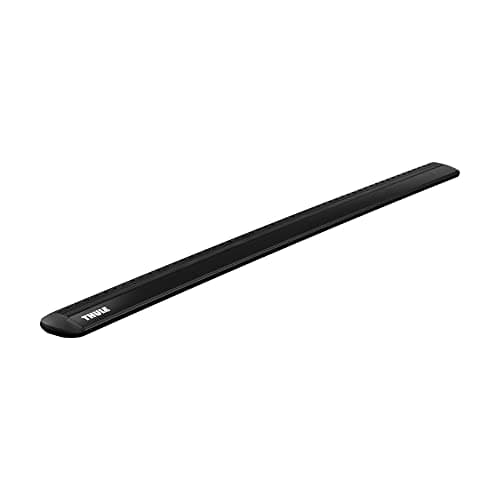 Thule WingBar EvoThe quietest mainstream aero bar and the deepest accessory range behind it — bought with the foot pack your roof type needs, not on its own. | Best bars for a car | 8.6 | |
| 2 | 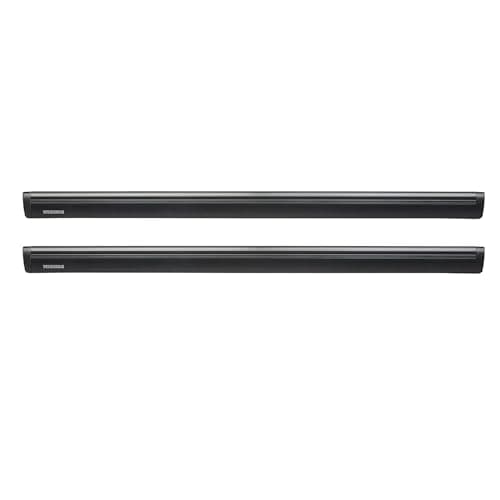 Yakima JetStreamA wing bar with a full-length top channel that normally undercuts the Thule equivalent for the same job on the same car. | Best value aero bars | 8.4 | |
| 3 | 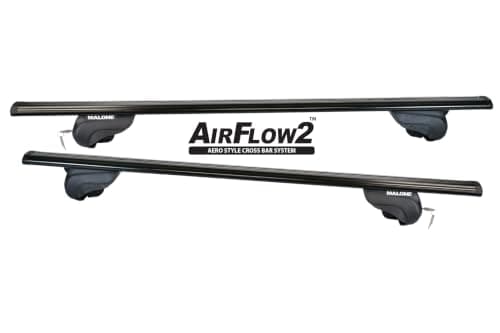 Malone AirFlow2An aero cross-rail system sold as a finished kit rather than three line items, which is the right trade for a car that will carry one thing. | Best complete aero kit | 8.2 | |
| 4 | 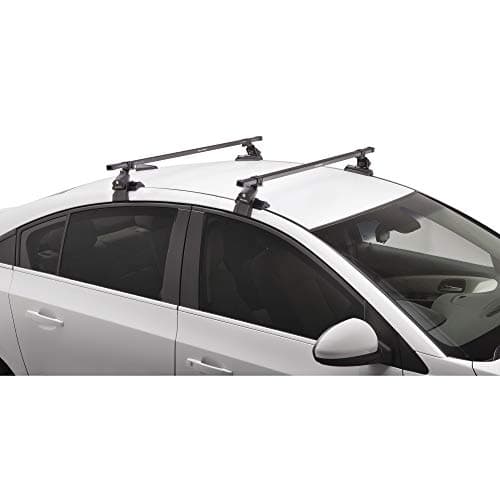 SportRack Complete Roof Rack SystemThe entry point into a real rack: bars, feet and clamps in one box, from Thule's own value label, with the compromises you would expect at the price. | Cheapest complete system | 7.6 | |
| 5 |  Thule SquareBar EvoThe cheap way into the Thule Evo platform: steel bars on the same feet the aero bars use, so the upgrade path stays open. | Budget bars in a premium system | 7.5 | |
| 6 | 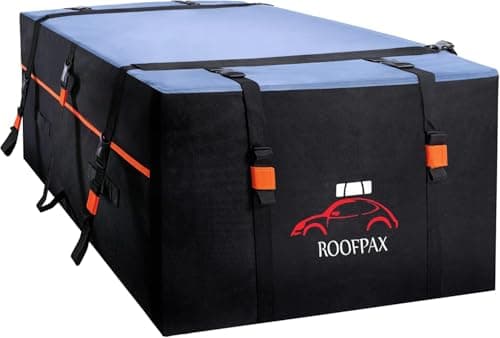 RoofPax Car Roof BagA waterproof bag that straps directly to a bare car roof — the honest answer when the roof is needed twice a year and a rack never gets used. | No rack at all | 7.4 |
Prices checked November 11, 2026. Product photographs come from Amazon where the listing is matched, and are representative stock images otherwise. Affiliate disclosure.
#1 · Best bars for a car
Thule WingBar Evo
The quietest mainstream aero bar and the deepest accessory range behind it — bought with the foot pack your roof type needs, not on its own.
- Profile
- Aero aluminum
- Channel
- T-slot for direct-mount accessories
- Sold as
- Bars only — foot pack and fit kit are separate
- Lengths
- Fixed — choose by your roof width at purchase
- Works with
- Bare roofs, flush rails, raised rails and fixed points, via the matching foot
What works
- Lowest wind noise of the mainstream bars, which matters more on a quiet car than on a diesel SUV
- T-slot channel takes boxes, kayak cradles and bike carriers directly rather than clamping around the bar
- Light aluminum, and on a car whose roof limit includes the rack, bar weight is cargo you give away
- Mounts and unmounts in minutes, so the drag penalty is only paid on the weekends you use it
What doesn’t
- The bars do nothing on their own — budget for the foot pack and the vehicle fit kit in the same order
- The most expensive route to two crossbars by a clear margin
- Fixed lengths, so measure your roof before ordering rather than planning to trim
- Confirm your car in Thule's own fit guide; fit kits are revised as models are
Our scoring
8.6overall
#2 · Best value aero bars
Yakima JetStream
A wing bar with a full-length top channel that normally undercuts the Thule equivalent for the same job on the same car.
- Profile
- Wing-profile aluminum
- Channel
- Full-length top channel
- Sold as
- Fixed lengths, plus a separate tower kit
- Also needs
- Towers and a vehicle-specific clip or landing pad
- Fit tool
- Yakima Fit My Car, specific down to trim
What works
- Aero profile at a lower price than the Thule bar it competes with
- Full-length channel lets accessories slide anywhere along the bar instead of into fixed slots
- Yakima's fit tool asks for trim level, which is what short-roof cars with optional rails need
- One bar family carries over to the next car, whatever roof that car has
What doesn’t
- Still two purchases, and the vehicle-specific clip is a third line item
- The open channel collects grit and road salt — keep the filler strip in place
- Marginally noisier than the Thule aero bar on both brands' own published descriptions
- Thinner dealer-stocked spares network years later
Our scoring
8.4overall
#3 · Best complete aero kit
Malone AirFlow2
An aero cross-rail system sold as a finished kit rather than three line items, which is the right trade for a car that will carry one thing.
- Profile
- Aero aluminum cross rail
- Sold as
- Complete kit — bars and mounting hardware together
- Lengths
- Multiple, chosen at purchase
- Accessories
- Universal clamp-on carriers; no proprietary T-slot ecosystem
What works
- Arrives as one purchase, so there is no fit-kit decision to get wrong
- Aero profile at well under the price of the two-part premium systems
- Malone's own kayak and board carriers are built around these rails
- Lighter than any steel bar, which the roof limit rewards
What doesn’t
- Universal fit means it is not shaped to your exact car the way a vehicle-specific foot is
- No deep first-party accessory range — you are buying clamp-on carriers, not a system
- Fewer published vehicle-by-vehicle fit confirmations than Thule or Yakima offer
- Resale and spares are thinner than the two big brands
Our scoring
8.2overall
#4 · Cheapest complete system
SportRack Complete Roof Rack System
The entry point into a real rack: bars, feet and clamps in one box, from Thule's own value label, with the compromises you would expect at the price.
- Profile
- Square steel
- Sold as
- Complete system — bars, towers and clamps
- Brand
- SportRack, Thule Group's value label
- Typical use
- Flat loads, baskets, bags, occasional boxes
What works
- One purchase and one price, with nothing else to order
- Steel square bars are strong and take clamp-on accessories easily
- Backed by a company that will still be selling parts in five years
- The cheapest honest way onto a rack rather than a roof bag
What doesn’t
- Square steel bars are the loudest shape at highway speed, by a clear margin
- Heavier than aluminum, and that weight comes off your roof allowance
- No channel or T-slot, so accessories clamp around the bar instead of mounting into it
- Clamp-on fit is broad rather than exact — check the fit list for your car first
Our scoring
7.6overall
#5 · Budget bars in a premium system
Thule SquareBar Evo
The cheap way into the Thule Evo platform: steel bars on the same feet the aero bars use, so the upgrade path stays open.
- Profile
- Square steel
- Sold as
- Bars only — uses the same Evo foot packs
- Upgrade path
- Swap to WingBar Evo later, keeping the feet
- Accessories
- Clamp-on, not T-slot
What works
- Buys into the Thule Evo foot-pack system at the lowest possible bar price
- Steel is strong and shrugs off being leaned on while you load
- You can upgrade to aero bars later without re-buying the feet or the fit kit
- Easiest bar to find second-hand in this system
What doesn’t
- Noticeably noisier than any aero bar — this is the shape wind whistles through
- Steel weight counts against a car's lower roof allowance
- Still needs the foot pack and fit kit, so it is not a complete system
- No T-slot, so direct-mount accessories will not attach
Our scoring
7.5overall
#6 · No rack at all
RoofPax Car Roof Bag
A waterproof bag that straps directly to a bare car roof — the honest answer when the roof is needed twice a year and a rack never gets used.
- Type
- Soft roof bag
- Needs a rack
- No — straps through the door frames on a bare roof
- Weather
- Waterproof zippers and seams
- Storage
- Folds into its own bag
What works
- Costs a fraction of any rack system and needs no fit kit at all
- Works on a bare roof, which is what most sedans and hatchbacks have
- Packs away to nothing between trips instead of living in the garage
- Adds very little weight of its own to a car's roof allowance
What doesn’t
- Straps run through the door openings, so doors must be opened to load and unload
- No lock worth the name — this is not luggage you leave at a trailhead
- Soft sides mean soft shapes; it will not carry skis, boards or anything rigid and long
- Protect the paint with a mat or a blanket; grit under a loaded bag is what scratches a roof
Our scoring
7.4overall
What we ranked on, and why a car changes the weighting
These are the same four criteria we use on every vehicle page. On a car, two of them move up the list.
1. Total cost of a working rack, not bar price. A bar that looks cheap and needs a hundred dollars of feet is not cheap. We rank what it costs to end up with two crossbars actually attached to your car, which is why two complete kits sit above a premium bar on value even though the premium bar is the better product.
2. Noise, because a car is quiet. A square steel bar whistles. In a diesel SUV at 70 mph that is one noise among several; in a modern sedan it is the only noise, and it is the reason people take racks off and leave them off. Our wind noise guide covers what actually reduces it, and the honest answer is bar shape first, everything else second.
3. Rack weight, because it is cargo. Your car’s published dynamic roof load includes the rack. Aluminum bars are not a luxury on a 100 lb allowance — they are the difference between carrying a loaded box and carrying an empty one.
4. What the bar lets you add later. A channel or T-slot bar takes a box, a cradle or a bike carrier directly. A plain round or square bar needs clamps. If you know the roof is only ever carrying a bag, this does not matter. If you expect a kayak in two years, it is the whole decision.
What we deliberately did not rank on is a bar’s own published load rating. Every bar on this page is rated well above what a car roof allows, so the bar’s number is not a differentiator here — the car’s number is the one that governs.
Which of the four roofs does your car have?
Everything about ordering follows from this, and it takes about fifteen seconds to work out standing next to the car. Our roof rail types guide has photographs of each; here is the short version and what each one means for the shopping list.
Bare roof. Nothing on it at all. Most sedans, a great many hatchbacks, and more wagons than people expect. You need bars plus a clamp-on foot pack plus a vehicle-specific fit kit that shapes the clamp to your door frames. This is the most common car roof in America and the one product listings serve worst, which is why it has its own page here: the best roof racks for cars without rails.
Flush side rails. Rails that run front to back and sit flat against the roof with no gap under them. Very common on newer hatchbacks and wagons. You need bars plus a flush-rail foot — a different foot from the bare-roof one, and usually a cheaper and quieter mount.
Raised side rails. Rails with a visible gap you can get your hand under. Mostly wagons and crossovers. These are the easiest and cheapest roofs to fit, because a raised-rail foot clamps straight around the rail and needs no vehicle-specific kit.
Fixed points. Small covered threaded points in the door channel, often hidden under plastic caps. Common on European cars. Strong, tidy, quiet — and absolutely vehicle-specific.
One warning that applies to flush and raised rails equally: side rails are not crossbars, and you cannot put a box, a kayak or a bike on them. They are the thing crossbars attach to. If that is news, read do I need crossbars before you buy anything else.
The two-purchase problem, and the three ways around it
Search for a car roof rack and you will find bars at one price and a total at checkout that is half again as much. That is not a trick; it is how a modular system works. Thule and Yakima sell one bar that fits hundreds of cars and one foot kit per car, which is why the fit coverage is so good and why the basket is never one item.
There are three honest ways to deal with it.
Pay for the system. Buy the bars, the feet and the fit kit, and you get exact fit, low noise, locks, and a decade of accessories that mount without adapters. This is the right answer if the roof will be used more than a few times a year or will ever carry a boat, a box or a bike.
Buy a complete kit. The Malone and SportRack systems above arrive finished. You give up exact-fit engineering and the first-party accessory ecosystem; you gain one price and no decisions. For a car that will carry a basket or a bag, this is a perfectly rational purchase.
Buy neither. If the honest answer is “twice a year,” a roof bag on a bare roof or a hitch-mounted carrier does the job without a rack at all. We would rather send you to roof rack or hitch carrier than sell you bars that live in the garage.
What we would not do is buy an unbranded vehicle-specific bar set purely on price. Not because they do not work — many do — but because the listings churn, the load claims are routinely higher than any car roof permits, and a bar with no channel may not accept a carrier you already own. If you go that route, buy from a listing whose fitment line names your exact model year, and ignore its load rating in favor of your manual’s.
What a rack costs a car in fuel and noise
A car pays a bigger proportional penalty than an SUV does, because the car started more aerodynamic. Consumer Reports’ own testing of rooftop carriers found meaningful highway fuel economy losses, and the pattern is consistent: bare bars cost a little, a loaded box costs a lot, and the loss scales with speed rather than with distance.
We are not going to publish a percentage for your car, because we have not measured your car. What we will say is what the arithmetic reliably looks like:
- Bare aero bars on a car: a small, often barely noticeable loss, and almost no noise if the bar is a wing profile.
- Bare square bars: the same small fuel loss, plus a whistle you will hear from inside the car at highway speed.
- A loaded hard box: the expensive configuration, and the one worth removing between trips.
- A loaded roof bag: cheaper than a box to buy, worse than a box aerodynamically, because it has no shape.
The practical rule for a car is simply this: take the bars off when you are not using them. On a modular system that is a five-minute job, which is one more reason to prefer a system you can lift off over a kit you fight with. The numbers behind all of this are in roof racks and gas mileage, and the full list of what a rack does to a car — noise, mpg, paint, car washes — is in how roof racks affect your car.
Loading a car roof is a different job from loading an SUV
This is the part nobody mentions, and it cuts both ways.
In your favor: the roof is reachable. A sedan roof is somewhere around shoulder height for most adults. You can lift a kayak onto it, strap a box down and reach the far side without standing on anything. On a tall SUV the same jobs need a step, a load assist or a second person. For kayaks and boards especially, a car is genuinely easier to live with — which is why our kayak carrier picks spend so much of their time on loading aids that a car owner can skip.
Against you: less roof, and a lower ceiling. A short bar spread means a long load has less to brace against, and a lower roof limit means less to play with once the hardware is counted. Both point the same direction: use bow and stern lines on anything long, and keep dense cargo off the roof entirely. Our bow and stern tie-down picks cover the lines and the anchor points for cars that have no tow hooks to clip to — which is most of them.
And one thing that is true of every car with a sunroof or a panoramic panel: the glass is not a mounting surface and not a step. Load from the side, standing on the ground.
The short version
Buy the Thule WingBar Evo with the foot pack your roof type needs if the roof is going to earn its keep. Quietest, lightest, widest accessory range, highest total price — and the system you will not replace.
Buy the Yakima JetStream if you want the same answer for less. Marginally noisier on paper, a full-length channel instead of a T-slot, and a fit tool that asks for your trim level.
Buy the Malone AirFlow2 if you want an aero bar without the three-line-item order, and you are happy with clamp-on accessories rather than a first-party ecosystem.
Buy the SportRack Complete if the budget is the constraint and the load is flat. Accept the noise; it is the price of a square steel bar.
Buy the RoofPax bag — or nothing at all — if the honest answer is that the roof gets used twice a year. A rack that lives in the garage is the most expensive rack there is.
Cross-shopping brands rather than parts? Our Thule vs Yakima comparison settles the two-brand question on published specs, and the Thule range guide walks the full lineup bar by bar.
Common questions
Can you put a roof rack on a car with no rails?
How much weight can a car roof carry?
Do I need crossbars, or are my side rails enough?
Are cheap roof bars safe on a car?
Will a roof rack make my car noisier?
Should I get a roof rack or a hitch carrier for my car?
Sources
Not sure it fits your car?
Our vehicle pages carry the published roof load limit, the roof type by model year, and what actually mounts to it — cited, and honest about what the manufacturer does not publish.
Read next
The Best Roof Racks for Cars Without Rails
Clamp-on systems for a bare roof, what a fit kit does, and the honest cost of getting started.
Roof Rail Types: Flush, Raised, Fixed Point and Bare
Four roof types, the hand test that tells them apart, and which fit kit each needs.
Do I Need Crossbars for a Roof Rack?
Rails versus crossbars, how to tell what you have, and the one case where rails alone work.
Thule vs Yakima Roof Racks
Bar profile, load rating, accessory interface, fit coverage and price — compared on published specs.
How Much Weight Can a Car Roof Rack Hold?
Dynamic versus static limits, what the figure includes, and why the rack's rating is not yours.
The Best Bow and Stern Tie-Downs
Bow and stern lines and the hood-loop anchors cars need, ranked on how they tension, what they do to a hull, and whether they survive a season outdoors.