Guides
Can You Use a Roof Box and a Bike Rack Together?
Three layouts work and one does not. The answer depends on your bar spread and your tailgate, not on which brands you own.
Roof & Route is funded by affiliate commission. If you buy through a link on this page we may earn a commission at no extra cost to you. It never decides what we recommend or the order we recommend it in — read the full disclosure.
Usually yes. The combination that works for most families is a roof box on the crossbars and the bikes on the hitch — it is the only layout that gives both carriers all the room they need and it keeps the heavy things low. The layout that almost never works is a full-size box and roof bike mounts on the same pair of bars, because the box takes the bar width the bike trays need.
Here are the three that do work, in the order we would choose them:
- Box on the roof, bikes on the hitch. Best of all. No competition for space, weight stays low, and bikes load at knee height.
- Bikes on the roof, cargo on the hitch. The inversion. Works well if your hitch carrier folds and your bikes are light.
- A narrow box and one roof bike mount, side by side. Possible on a wide roof with a long bar, and only after you measure.
Two numbers decide which of those you get. The first is your usable bar width — the actual clear length of the crossbar, minus the feet. The second is your published dynamic roof load, because an empty box plus a bike mount plus a bike plus the bars themselves adds up faster than people expect. Our crossbar spread and length guide covers the first and our weight limits guide covers the second.
The third constraint is the one people forget until the first rest stop: with a bike rack on the hitch, can you still open the tailgate? On a minivan or a liftgate SUV, that is not a small question.
Quick picks
Tap any row to jump to the full write-up below. Scores are our editorial judgment on published specifications — not a star rating, and not a product we claim to have tested.
| # | Product | Best for | Score | Price |
|---|---|---|---|---|
| 1 | 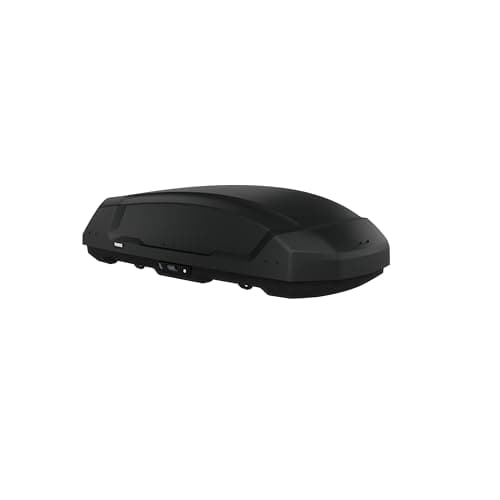 Thule Force 3Dual-side opening and quick-mount clamps mean you can slide it along the bars to make room, then open it from whichever side is free. | The box half of the best layout | 8.6 | |
| 2 | 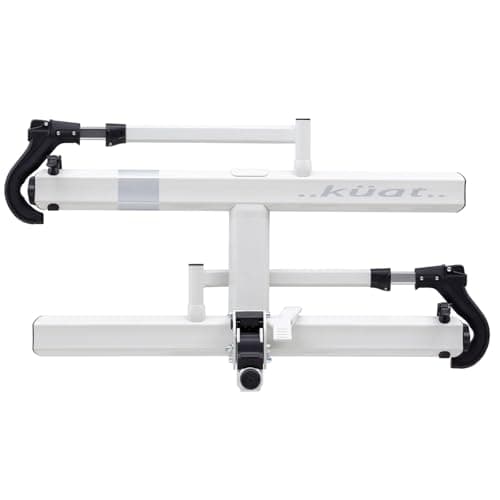 Kuat Sherpa 2.0Light enough that adding it to a car that already has a loaded box does not become a two-person production. | The bikes half of the best layout | 8.7 | |
| 3 | 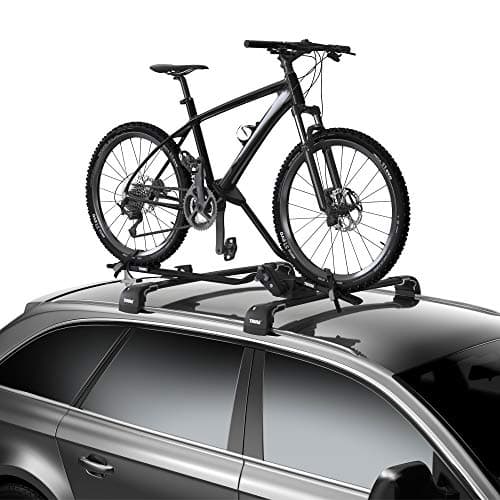 Thule ProRide XTAn upright frame-clamp carrier that holds the bike by the down tube and takes one bar position, so it is the realistic partner for a narrow box. | The roof mount for a side-by-side layout | 7.6 |
Prices checked October 17, 2026. Product photographs come from Amazon and are refreshed with the prices. Affiliate disclosure.
#1 · The box half of the best layout
Thule Force 3
Dual-side opening and quick-mount clamps mean you can slide it along the bars to make room, then open it from whichever side is free.
- Finish
- Matte
- Opening
- Dual side
- Mounting
- Quick-mount clamps
- Needs
- Crossbars
- Why it matters here
- Clamps slide, so the box position is adjustable
What works
- Quick-mount clamps make repositioning along the bar easy, which is the whole trick
- Dual-side opening, so a bike mount beside it never blocks the lid
- Matte shell hides the scuffs a crowded roof produces
- Strong used market if the plan changes
What doesn’t
- A full-size box still takes most of the bar width
- Needs crossbars, and the bars count toward the roof limit too
- No key retention
Our scoring
8.6overall
#2 · The bikes half of the best layout
Kuat Sherpa 2.0
Light enough that adding it to a car that already has a loaded box does not become a two-person production.
- Capacity
- 2, expandable on some racks
- Material
- Aluminum
- Frame contact
- None
- Loading height
- Knee height
- Receiver
- 2-inch
What works
- Takes the bikes off the roof entirely, which frees all the bar width
- Knee-height loading, which matters when the roof is already full
- One person can fit it, so it comes off after the trip
- No frame contact at all
What doesn’t
- 2-inch receiver only
- Blocks the tailgate unless tilted, so check that with bikes loaded
- Adds length to the car, which you will forget in a parking lot
Our scoring
8.7overall
#3 · The roof mount for a side-by-side layout
Thule ProRide XT
An upright frame-clamp carrier that holds the bike by the down tube and takes one bar position, so it is the realistic partner for a narrow box.
- Mounting
- Down-tube clamp, both wheels strapped
- Frame tubes
- 22-80 mm
- Published bike limit
- 44 lb (Thule); some retailers list 40 lb
- Carrier weight
- 11 lb
What works
- Upright, so it occupies less bar width than a wheel-tray roof carrier
- 11 lb carrier weight, which matters on a roof that already has a box
- Thule publishes the bike weight limit, so the arithmetic is possible
- Keeps the hitch free for a cargo carrier
What doesn’t
- 44 lb published bike limit rules out e-bikes entirely
- Clamps the down tube, which some carbon frames do not permit
- Lifting a bike onto a roof beside a box is awkward and gets paint scratched
- Adds height on top of a box that already added some
Our scoring
7.6overall
The three layouts, and the one that does not work
| Layout | Works? | The catch |
|---|---|---|
| Box on roof, bikes on hitch | Yes — the default | Tailgate access; check it with bikes loaded |
| Bikes on roof, cargo on hitch | Yes | Lifting bikes overhead, and a fuel penalty up top |
| Narrow box + one roof bike mount | Sometimes | Needs real usable bar width — measure first |
| Full-size box + roof bike mounts, same bars | No | The box takes the width the trays need |
| Box on roof + bikes on roof + carrier on hitch | Check the roof limit hard | Three carriers and their cargo add up fast |
The pattern across all five rows: the roof is a scarce resource in two dimensions — width and weight — and the hitch is scarce in one, which is access. Spend the roof on the thing that is bulky and light, and the hitch on the thing that is heavy, and the conflict mostly goes away.
Measure before you buy the second carrier
Three measurements, ten minutes, and they settle the question for your specific car.
- Usable bar width. Measure the clear length of the crossbar between the feet, not the nominal bar length. On a vehicle-specific bar with integrated feet this is noticeably less than the box on the shelf suggests.
- The box’s footprint and the mount’s footprint. Add them. Add two inches for the gap you need to open the box lid and work the bike clamp. If the total exceeds the usable width, the side-by-side layout is out.
- The weight sum. Bars and feet, plus the empty box, plus the bike mount, plus the bike, plus what you put in the box. Compare with the published dynamic roof load from your owner’s manual. This is where the side-by-side plan usually dies even when the width works.
Then one dynamic check: with everything mounted, open the box lid fully and confirm it does not hit the bike or its clamp, and open the tailgate fully and confirm it does not hit the hitch rack. Do both by hand, slowly. A power tailgate on a minivan will not stop for you — our minivan box guide has the tailgate routine in detail.
What two carriers cost you
Running both is not free, and the costs are worth knowing before the trip rather than at the second gas stop.
Fuel. Roof load dominates. A box plus bikes on the roof is a large frontal area and the penalty rises sharply with speed. Moving the bikes to the hitch cuts a meaningful share of that, because a load in the wake behind the vehicle disturbs the airflow far less. Consumer Reports’ published rooftop testing is our reference and our gas mileage guide works it through.
Handling. A box and bikes on the roof raises the center of gravity more than either alone, and crosswinds will tell you about it. Our guide to what a roof load changes covers what to expect and how to drive around it.
Access. A hitch rack blocks the tailgate unless it tilts, and it tilts more easily empty than loaded. Plan which bag you will need at lunch and put it in the cabin.
Length. Bikes on a hitch add several feet. Reversing, parking structures and drive-throughs all change. Our hitch safety guide covers the plate, lights and length checks that go with any rear-mounted load.
The combination we would actually run
For a family of four with two or three bikes and a week of luggage: a dual-opening box on the crossbars, and a tilting platform bike rack on a 2-inch receiver.
Why that one. The box takes the bulky light items — bedding, duffels, coats — which is what a roof is good for. The bikes go on the hitch, where they load at knee height and weigh nothing against the roof limit. The dual-side opening means whichever side of the driveway you park on, the lid still opens. And the platform rack tilts so the tailgate works.
What to buy in which order, if you are starting from nothing: bars first, then the box, then the hitch rack. The bars decide everything and the box is the part that most improves a packed car. Our first roof rack guide covers the bars, our cargo box roundup covers the box, and the two-bike rack roundup covers the rack.
And if the receiver does not exist and is not going to: then it is a narrow box and one roof mount, after the measurements, or it is a trunk rack and a box — but a trunk rack blocks the hatch completely, so pack accordingly.
Common questions
Can you use a roof box and a bike rack at the same time?
Will a roof box and a roof bike rack fit on the same bars?
Should bikes go on the roof or the hitch if I also have a cargo box?
Does running a box and bikes together hurt gas mileage a lot?
Can I carry a roof box, roof bikes and a hitch carrier all at once?
Sources
Not sure it fits your car?
Our vehicle pages carry the published roof load limit, the roof type by model year, and what actually mounts to it — cited, and honest about what the manufacturer does not publish.
Read next
The Best Bike Racks for Two Bikes
Two-bike racks ranked by receiver size and per-bike weight limit, including the no-hitch option.
Hitch vs Trunk vs Roof Bike Rack
The three ways to carry a bike, compared on cost, loading, capacity and fuel.
What Size Crossbars Do I Need?
How to measure crossbar spread and length, and what each carrier type needs.
How Much Weight Can a Car Roof Rack Hold?
Dynamic versus static limits, what the figure includes, and why the rack's rating is not yours.