Guides
Hauling Gear With a Compact SUV: What Actually Fits
A RAV4, CR-V, Forester or Crosstrek looks like it can carry anything. The published numbers say otherwise, and they say it about both ends of the car.

Roof & Route is funded by affiliate commission. If you buy through a link on this page we may earn a commission at no extra cost to you. It never decides what we recommend or the order we recommend it in — read the full disclosure.
The direct answer: on a compact SUV, flexibility is decided by two numbers you have probably never read — the published roof load figure in your owner’s manual, and the receiver opening and tongue rating on your hitch label. Read those two and the whole decision falls out. Read neither and you will buy something that does not fit.
Here is why this vehicle class is specifically awkward. A compact SUV has the shape of a vehicle that can carry anything and the ratings of a tall wagon. Published roof allowances in this class run around 150-176 lb total — Subaru lists 176 lb (80 kg) for 2010-2021 Foresters and 150 lb (68 kg) for 2020-onward Outbacks, and both figures include the bars and the carrier, not just the cargo.
And at the back, most of these cars have no factory receiver. The aftermarket hitches commonly fitted are Class I or II with a 1-1/4 inch opening, while the overwhelming majority of hitch cargo carriers and nearly all platform bike racks want a 2-inch Class III. That is the single most expensive surprise in this class: people buy the rack, then discover the opening.
So the sequence is: measure the receiver, read the hitch label, read the manual, and only then shop. The picks below are the hardware that suits what those numbers usually allow, and the sections after them cover how to choose between the two ends of the car.
Quick picks
Tap any row to jump to the full write-up below. Scores are our editorial judgment on published specifications — not a star rating, and not a product we claim to have tested.
| # | Product | Best for | Score | Price |
|---|---|---|---|---|
| 1 | 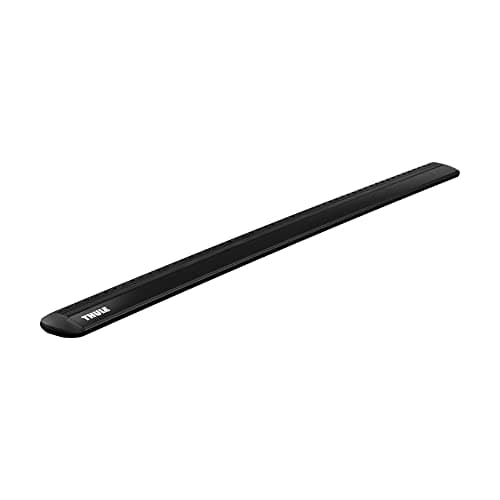 Thule WingBar EvoLight aluminum aero bars on sliding feet — the setup that spends the least of a 150 lb allowance on hardware and the least of your patience on noise. | Best bars for a modest allowance | 8.5 | |
| 2 | 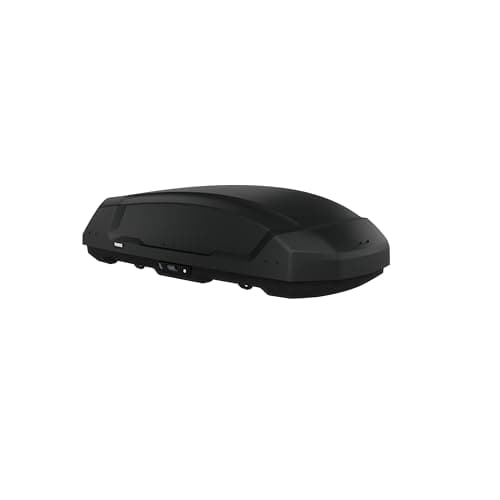 Thule Force 3Dual-side opening and a size range from roughly 300 to 610 liters, which means there is a variant that fits a compact roof rather than overwhelming it. | Best box for this class | 8.3 | |
| 3 | 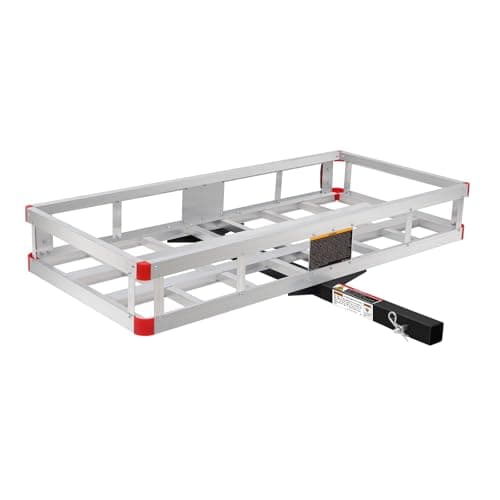 MaxxHaul 70108 Aluminum CarrierAluminum instead of steel, which hands weight back to the cargo on exactly the kind of modest tongue rating this class comes with. | Best carrier for a Class II hitch | 7.7 | |
| 4 | 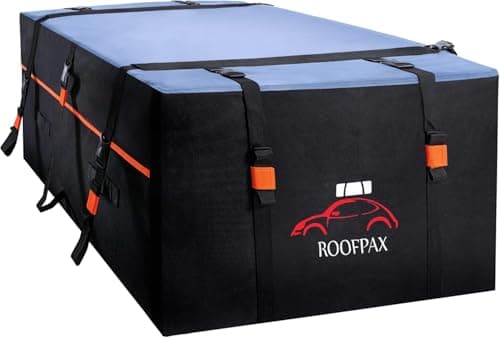 RoofPax Car Roof BagA waterproof bag with door-hook straps that works with or without a rack — the honest answer when the trunk is full twice a year. | Cheapest way to add volume | 7.8 |
Prices checked October 12, 2026. Product photographs come from Amazon and are refreshed with the prices. Affiliate disclosure.
#1 · Best bars for a modest allowance
Thule WingBar Evo
Light aluminum aero bars on sliding feet — the setup that spends the least of a 150 lb allowance on hardware and the least of your patience on noise.
- Type
- Aerodynamic aluminum crossbar
- Sold as
- Bars plus a vehicle-specific foot pack and fit kit
- Weight
- Light — around 12 lb for bars and feet
- Spread
- Adjustable where the feet are rail-mounted
What works
- Aluminum keeps the hardware share of a modest allowance small
- Quietest mainstream bar at the highway speeds this class lives at
- Sliding rail-mount feet let you set the spread a cargo box needs
- Comes off in minutes, so it is not a year-round fuel cost
What doesn’t
- Bars, feet and fit kit are three purchases
- You must identify your rail type correctly before ordering
- Fixed bar lengths — measure your roof width
Our scoring
8.5overall
#2 · Best box for this class
Thule Force 3
Dual-side opening and a size range from roughly 300 to 610 liters, which means there is a variant that fits a compact roof rather than overwhelming it.
- Type
- Hard shell
- Opening
- Both sides
- Sizes
- Roughly 300 to 610 liters, five variants
- Finish
- Matte
- Mounting
- Quick-mount clamps
What works
- The small and mid sizes genuinely suit a compact roof and a modest allowance
- Dual-side opening, which matters when you load at a curb
- Matte shell hides the scuffs a gloss box shows
- Thule spares network means a broken catch is a part, not a new box
What doesn’t
- The large sizes are already 40-50 lb empty — wrong end of the range here
- Costs meaningfully more than the value brands
- No box fixes the fuel penalty of putting one on a roof
Our scoring
8.3overall
#3 · Best carrier for a Class II hitch
MaxxHaul 70108 Aluminum Carrier
Aluminum instead of steel, which hands weight back to the cargo on exactly the kind of modest tongue rating this class comes with.
- Material
- Aluminum
- Weight
- Roughly a third of the steel equivalent
- Shank
- Fixed
- Why it suits this class
- Less of a modest rating spent on the carrier
What works
- Light enough for one person to fit and remove
- Leaves more of a Class II tongue rating for actual cargo
- No rust on the underside, which a compact SUV's rear wheels soak
- Cheapest aluminum carrier we would recommend
What doesn’t
- Costs more than the steel basket it replaces
- Deflects visibly under a concentrated load
- Does not fold, and these cars have tall hatches that open high
Our scoring
7.7overall
#4 · Cheapest way to add volume
RoofPax Car Roof Bag
A waterproof bag with door-hook straps that works with or without a rack — the honest answer when the trunk is full twice a year.
- Type
- Waterproof soft bag
- Sold with
- Door-hook straps
- Needs a rack?
- No — it works on a bare roof
- Weight
- A fraction of a hard box
What works
- Weighs almost nothing against a modest roof allowance
- Works with no rack at all, which saves the whole bar purchase
- Folds into a cupboard between trips
- Genuinely waterproof rather than water-resistant
What doesn’t
- No security — it is a zip and a strap
- Noisier and draggier than a shaped hard box
- Door-hook mounting marks door seals over time if you are careless
Our scoring
7.8overall
The two numbers, and where to find them
Everything in this guide reduces to these. Go and read them before you shop; it takes five minutes and saves a return.
| Number | Where it is | What it rules out |
|---|---|---|
| Published roof load (dynamic) | Owner’s manual, roof rail or cargo section | Large hard boxes, roof tents, dense loads — it includes the bars |
| Receiver opening | Measure it, or read the hitch label | Most cargo carriers and nearly all platform bike racks, if it is 1-1/4 in |
| Tongue-weight rating | Sticker on the hitch itself | Heavy carrier loads — and it counts the carrier |
| Towing capacity | The brochure | Nothing here. Different number, different load path — do not use it |
Published figures for the common vehicles in this class live on our fit pages with the document each one came from: RAV4, Forester, Crosstrek, CR-V. Where the manufacturers disagree — and on the RAV4 they genuinely do — we publish the disagreement rather than picking one for you.
Which end of the car, for which load
The flexible answer for this class is usually bars on the roof and a bag or a carrier chosen per trip, rather than one big permanent installation. Here is the split that holds up.
| Load | Where it goes | Why |
|---|---|---|
| Soft bags, clothes, bedding | Roof, in a box or bag | Bulky and light — exactly what a roof allowance suits |
| Coolers, bins, tools, water | Hitch, if you have a 2 in receiver | Dense — a roof allowance disappears fast under weight |
| Kayaks, boards, lumber | Roof | Long and light; nothing else carries length |
| Bikes | Roof or trunk, usually | A 1-1/4 in receiver rules out most platform racks in this class |
| Anything muddy or awkward | Hitch basket, or a roof basket | A molded shell will not take it |
The bike row is the one that costs people money, so it is worth repeating: measure the receiver opening before you buy a bike rack in this class. If it is 1-1/4 in, your realistic options are a roof rack or a trunk rack, and both work fine on a car this shape. The hitch classes guide has the class-by-class numbers.
What flexibility costs in fuel
This class is bought partly for fuel economy, so the penalty lands harder in percentage terms than it does on a truck. Published testing on rooftop carriers consistently finds a double-digit percentage penalty at highway speed — and a boxy compact SUV with a box on top feels it more than a slippery sedan does.
A hitch load costs less for the same cargo, because it sits in the vehicle’s wake rather than in clean air above it. That is the real argument for the receiver in this class, over and above capacity.
Either way, the single highest-value habit is taking the carrier off between trips. An empty box or basket costs fuel and buys nothing. Light hardware is what makes that habit realistic, which is why the aluminum and aero recommendations above are not vanity. The measured figures are here, and the noise guide covers the other thing you will notice.
What we would buy, in order
For a compact SUV where the trunk is full two or three times a year, in the order that wastes the least money:
- A set of cam straps. Cheap, universal, and they make whatever you buy next work properly.
- A waterproof bag. If the problem is twice a year, this is often the whole answer — no bars, no box, nothing to store.
- Aero crossbars, if you will use them more than that. This is the purchase that unlocks boxes, boats and bikes. Pick the interface you want to live with — see the accessories guide.
- One carrier, chosen for your actual main load. A mid-size box for luggage, a cradle for boats, a basket for awkward things. Not three.
- A hitch carrier, only if your receiver is 2 inch. If it is, this is the better place for anything heavy. Aluminum is worth it here.
And the honest counter-case: if the answer is “once a year, for one trip,” renting a box is cheaper than owning one, and we did the arithmetic.
Common questions
How much can a compact SUV carry on the roof?
Why will a hitch bike rack not fit my compact SUV?
Roof or hitch for a compact SUV?
Is a roof bag good enough instead of a box?
Sources
Not sure it fits your car?
Our vehicle pages carry the published roof load limit, the roof type by model year, and what actually mounts to it — cited, and honest about what the manufacturer does not publish.
Read next
Roof Rack or Hitch Carrier?
Bulky and light goes up top; heavy and dense goes on the back. The full comparison.
Hitch Classes Explained
Classes, receiver sizes and tongue weight ratings — and why tongue weight is the number that matters.
The Best Roof Racks for a Toyota RAV4
The right rack for each of the RAV4's three roof types, plus the load figure Toyota and the internet disagree on.
The Best Roof Racks for a Subaru Forester
Rail-mount bars for a Forester's flat roof, Subaru's limit by generation, and why the back of the car is the real constraint.