Roof Racks
The Best Roof Racks for a Honda CR-V
One published load figure, two possible roofs and one number that decides everything: 165 lb. Identify your rail first, then buy bars.
Roof & Route is funded by affiliate commission. If you buy through a link on this page we may earn a commission at no extra cost to you. It never decides what we recommend or the order we recommend it in — read the full disclosure.
For a CR-V with factory side rails — most mid and higher trims — the bars to buy are the Thule WingBar Evo on the foot pack that matches your rail, or the Thule WingBar Edge if you want a complete pair with nothing else to order and the lowest profile Thule makes. The Yakima JetStream is the value pick and usually undercuts both. If your CR-V is a base trim with a bare roof, you need the Thule Evo Clamp foot pack plus a vehicle-specific fit kit instead, which is a different part at a different price.
The CR-V is one of the easier vehicles on this site to fit, and the reason is a single number that has barely moved in a decade. Honda publishes 165 lb (75 kg) for the CR-V roof — the figure appears on Honda’s own roof rail and crossbar part listings and in the owner’s manual carrying-cargo section, and it has held across a long run of model years.
That matters more than any bar’s spec sheet, because of something the Amazon listings for CR-V-specific bars will not tell you: a rack rated higher does not raise your roof’s limit. We found CR-V crossbars advertising 220 lb, 260 lb, 300 lb and 330 lb load capacities. Every one of those is a seller claim about the bar. Honda’s 165 lb is the claim about your car, it is the lower number, and it is the one that governs.
So there are really only two questions here. Which rail do you have, and how much of that 165 lb is already spoken for by the carrier before you put anything in it? Our CR-V fit guide carries the fitment detail and the interference list; this page ranks the hardware and does the arithmetic.
Quick picks
Tap any row to jump to the full write-up below. Scores are our editorial judgment on published specifications — not a star rating, and not a product we claim to have tested.
| # | Product | Best for | Score | Price |
|---|---|---|---|---|
| 1 | 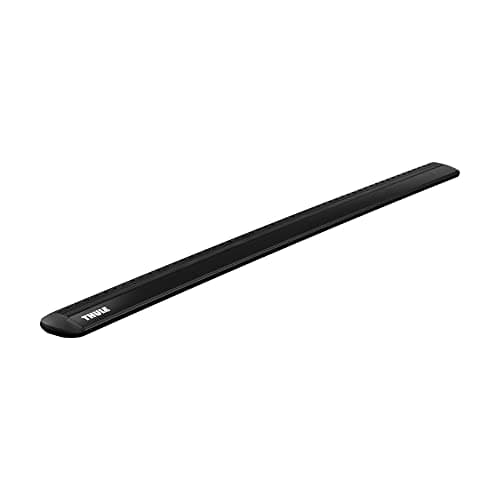 Thule WingBar EvoThe quiet aero bar, on whichever Evo foot pack matches your rail — the setup with the widest fit coverage and the deepest accessory range. | Best overall for a rail-equipped CR-V | 8.7 | |
| 2 | 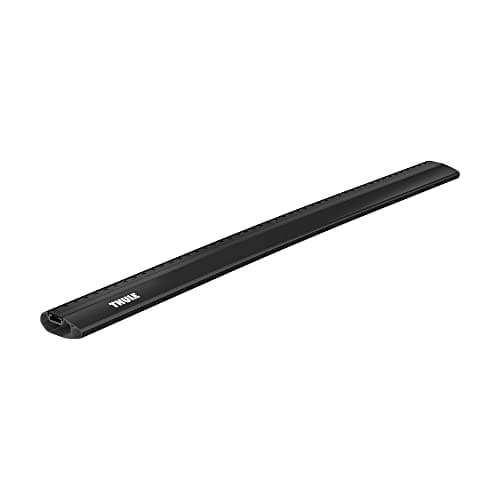 Thule WingBar EdgeOne purchase instead of three: a vehicle-specific aero pair with the feet already integrated, sitting closer to the roofline than anything in the Evo range. | Best complete pair, lowest profile | 8.4 | |
| 3 | 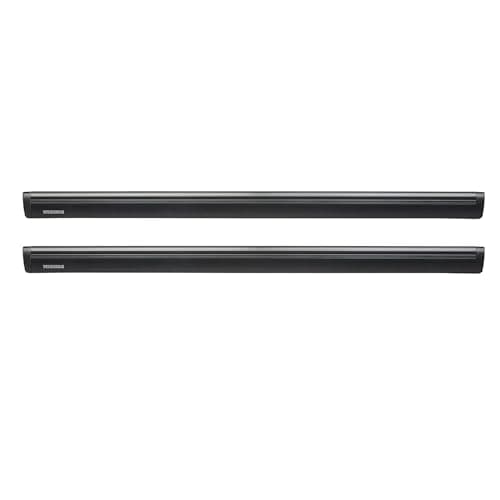 Yakima JetStreamA wing bar with a full-length top channel and a tower range that covers every CR-V roof, normally cheaper than the Thule equivalent for the same job. | Best value from a major brand | 8.5 | |
| 4 | 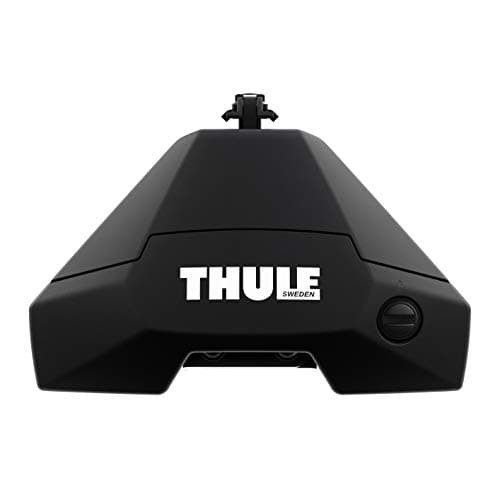 Thule Evo Clamp foot packThe foot pack that clamps Evo bars to a CR-V with no rails at all, gripping the door frames through a vehicle-specific fit kit. | Best for a bare-roof base trim | 7.6 | |
| 5 | 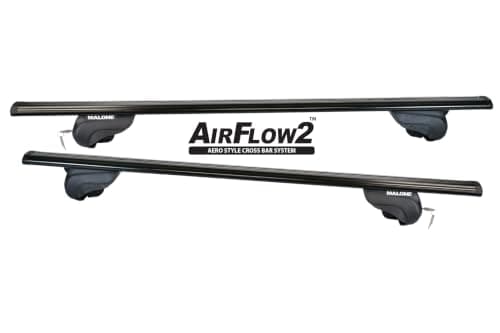 Malone AirFlow2A complete aero crossbar system from a paddlesport brand — the budget way onto a rail-equipped CR-V without dropping to an unbranded bar set. | Cheapest route to real aero bars | 7.8 |
Prices checked November 11, 2026. Product photographs come from Amazon and are refreshed with the prices. Affiliate disclosure.
#1 · Best overall for a rail-equipped CR-V
Thule WingBar Evo
The quiet aero bar, on whichever Evo foot pack matches your rail — the setup with the widest fit coverage and the deepest accessory range.
- Profile
- Aero aluminum
- Channel
- T-slot for direct-mount accessories
- Sold as
- Bars, plus a separate foot pack and fit kit
- For a CR-V
- Foot pack chosen by your rail type
- Lengths
- Fixed — choose at purchase
What works
- Quietest mainstream bar at highway speed, which decides whether the rack stays on the car
- T-slot channel takes boxes, kayak cradles and bike carriers directly rather than clamping around the bar
- Feet slide along the rail, so you can set the spread a full-size cargo box asks for
- Thule's fit guide covers the CR-V across more model years than any rival system
What doesn’t
- Three separate purchases before you own a working rack — bars, foot pack, fit kit
- Costs more than a CR-V-specific Amazon bar set that carries the same legal 165 lb
- Bar length is fixed at purchase and cannot be trimmed
- Wrong foot pack for your rail type means it does not fit at all, not that it fits badly
Our scoring
8.7overall
#2 · Best complete pair, lowest profile
Thule WingBar Edge
One purchase instead of three: a vehicle-specific aero pair with the feet already integrated, sitting closer to the roofline than anything in the Evo range.
- Type
- Vehicle-specific aero bar
- For
- Flush rails — no gap under the rail
- Sold as
- Complete pair with integrated feet
- Profile
- Sits close to the roofline
- Channel
- T-slot for direct-mount accessories
What works
- Nothing else to order and nothing to measure — the vehicle-specific pair arrives correct
- Lowest profile of the Thule bars, which helps garage clearance and wind noise at the same time
- Looks close to factory, which is the usual objection to aftermarket bars on a CR-V
- Keeps the T-slot channel, so the accessory range is unchanged
What doesn’t
- Vehicle-specific, so it does not move to your next car
- Only correct for a flush rail — the wrong roof means the wrong rack entirely
- Spread is largely set by the mounting points rather than by you, which can limit a long box
- Shorter usable bar than an Evo bar of the same nominal size
Our scoring
8.4overall
#3 · Best value from a major brand
Yakima JetStream
A wing bar with a full-length top channel and a tower range that covers every CR-V roof, normally cheaper than the Thule equivalent for the same job.
- Type
- Wing-profile aluminum bar
- Channel
- Full-length top channel
- Sold as
- Fixed lengths plus a separate tower kit
- For a CR-V
- Tower kit chosen by your rail type
What works
- One bar family with towers for flush rails, raised rails and bare roofs
- Full-length channel means accessories slide anywhere along the bar instead of into fixed slots
- Usually undercuts the equivalent Thule build
- Yakima's Fit My Car tool is specific down to trim, which is exactly what a CR-V buyer needs
What doesn’t
- Still two purchases — bars and towers
- The open channel collects grit and needs the filler strip kept in place
- Not quite as quiet as a WingBar Edge on a flush-rail car
- Fewer dealer-stocked spares than Thule if a knob or strap goes missing in year five
Our scoring
8.5overall
#4 · Best for a bare-roof base trim
Thule Evo Clamp foot pack
The foot pack that clamps Evo bars to a CR-V with no rails at all, gripping the door frames through a vehicle-specific fit kit.
- Type
- Clamp-on foot pack
- For
- Bare roof, no rails
- Also needs
- A vehicle-specific fit kit and bars
- Pairs with
- Thule Evo bar range
What works
- Opens the whole Evo bar range to a base-trim CR-V that has nothing to mount to
- No drilling and no permanent change to the car — it grips the door frames through a shaped kit
- Locks, which a bare-roof setup needs more than a rail-mount one
- Comes off in minutes, so the fuel cost is only paid on trip weekends
What doesn’t
- The most expensive of the three routes once you add bars, foot pack and fit kit
- Clamp-on feet sit higher than a flush-rail foot, so marginally more noise and drag
- The fit kit is model-specific, and the wrong one does not fit at all
- Fitting takes longer the first time than any rail-mount system
Our scoring
7.6overall
#5 · Cheapest route to real aero bars
Malone AirFlow2
A complete aero crossbar system from a paddlesport brand — the budget way onto a rail-equipped CR-V without dropping to an unbranded bar set.
- Type
- Complete aero crossbar system
- Sold as
- Bars and mounting hardware together
- Profile
- Aero
- Brand focus
- Paddlesport carriers
What works
- Complete system in one purchase, which the Thule Evo route is not
- Aero profile, so it is not the noise penalty a square bar would be
- Noticeably cheaper than the equivalent Thule or Yakima build
- Sensible pairing if the rack exists mainly to carry a kayak
What doesn’t
- Fit coverage is nowhere near Thule's or Yakima's — confirm your CR-V year and rail before ordering
- Accessory ecosystem is small, so third-party carriers may need a universal clamp instead of a direct mount
- Finish and hardware are a step down from the premium brands
- Resale value is close to nothing compared with a Thule set
Our scoring
7.8overall
What we ranked on
Four criteria, in the order they actually decide the purchase on this vehicle.
1. Does it fit your rail? This is binary and it comes first. Everything else is preference.
2. Noise. The difference between a rack you keep on the car and a rack that lives in the garage is whether it whistles at 65 mph. A CR-V is a quiet car, so a noisy bar is more obvious on it than on a truck. Our wind noise guide covers what actually reduces it.
3. What the bar lets you add later. A T-slot or channel bar takes a box, a kayak cradle or a bike carrier directly. A plain round or square bar needs a clamp, and clamps limit which carriers you can buy. If there is any chance of a cargo box in the future, this is worth paying for now — what fits the top of your crossbar is the page on that.
4. Spread, measured not assumed. Crossbar spread is the center-to-center distance between the two bars, and a cargo box publishes a minimum it needs. Rail-mount feet slide, so the spread is yours to set within the rails; a vehicle-specific pair largely sets it for you. Measure yours before ordering a box — our crossbar spread guide shows how.
What we deliberately did not rank on is published load rating. On a CR-V every bar here is rated above the 165 lb the vehicle allows, so the bar’s number is not a differentiator — it is a distraction.
Which rail do you have? The ten-second test
Honda has fitted the CR-V with a low, close-to-the-roof side rail on mid and higher trims for years, and left several base trims bare. Brands do not label that rail consistently: Rhino-Rack sells its flush-rail systems for the 2017-2022 car, Thule’s flush-rail fit kits are listed for the same generation, and other retailers describe the 2023-onward rail as a “factory flush side rail.” Some fit tables treat the small gap under it as a raised rail instead.
Which is why you should not shop by the label. Do this instead, with your hand:
- Can you hook a finger right under the rail and all the way through? That is a raised rail. Use a raised-rail foot pack.
- Is the rail sitting down on the roof with no usable gap underneath? That is a flush rail. Use a flush-rail fit kit or a vehicle-specific pair like the WingBar Edge.
- Is there no rail at all? Bare roof. You need a clamp-on foot pack plus a vehicle-specific fit kit.
Then put your exact year and trim into the manufacturer’s own fit guide and buy what it returns. The guide is reliable; what is unreliable is the rail type you tell it. Our roof rail types guide has the photographs and covers the two that are genuinely hard to tell apart, and do I need crossbars is the page to read first if your CR-V has rails and you are not sure whether that is already a rack.
One more CR-V-specific note: a mid-generation refresh can change roof hardware without changing the model name. If your car sits on a generation boundary year, check the fit guide by VIN or by trim rather than by year alone.
The 165 lb number, and the arithmetic nobody does
Honda’s figure is 165 lb (75 kg) for the roof, and it is a dynamic figure — the limit while the car is moving. Honda’s own accessory listings for the CR-V roof rails (part 08L02-3A0-100) and the matching crossbar set (08L04-3A0-100) both state the same 165 lb maximum, which is a useful cross-check on the manual.
Now the part that catches people out: the rack is part of the load. Work an actual example for a family trip.
- A pair of aero crossbars with feet is commonly in the region of 10 to 15 lb.
- A mid-size hard cargo box is typically 40 to 50 lb empty — our cargo box sizing guide lists what the common sizes weigh.
- That is roughly 55 to 65 lb of hardware before anything goes in.
Which leaves you around 100 lb of actual cargo inside the box. That is a lot of sleeping bags, jackets and camp chairs — and it is not a lot of books, tools or water. The practical rule on a CR-V roof is the same one that applies everywhere: the roof is for bulky and light, the hitch is for heavy and dense. If your load is heavy, read roof rack or hitch carrier before you spend anything on bars.
Two caveats worth knowing. Honda does not publish a separate static figure in the manual text we reviewed, so a roof top tent — which loads the roof while parked, with people in it — is not a question the manual answers for this car. And the 165 lb applies to the roof, not to the rack: fitting bars rated 300 lb does not give you 300 lb.
The CR-V-specific bars on Amazon, honestly
Search for CR-V crossbars and you will find a tier of vehicle-specific aluminum bar sets at a fraction of Thule money, sold under brand names most people have never heard of. We are not going to pretend they do not exist or that they do not work, because plenty of them do. Here is the honest read.
What is genuinely good about them. They are vehicle-specific, so there is no foot pack and no fit kit to get wrong. They arrive complete. They are a quarter to a third of the price. For a rack that will carry a flat load a few times a year, that is a rational purchase.
What to discount entirely. The load claims. We found the same category of bar advertised at 220, 260, 300 and 330 lb. Those numbers are not validated by Honda and they cannot increase what your roof is rated to carry. The governing number stays 165 lb.
What to actually check. Three things. First, the exact fitment line — these listings are specific not just to generation but to whether your car has factory rails, and several explicitly exclude the 2023-onward car. Second, whether a carrier you already own will clamp to the bar’s profile, because many of these bars have no usable channel. Third, how the ends are finished, because unfilled end caps are a whistle at highway speed.
Why nothing in that tier is ranked above. Listings in this category churn — brand names change, the same bar reappears under a new seller, and a model we verified today may be gone next month. We rank products we can point you at with some confidence that they will still be there, which is why the picks above are brands with fit guides and spare parts behind them. If you buy the cheap route anyway, buy it from a listing whose fitment line names your exact year and rail.
Honda’s own rails-plus-crossbar accessory is the other end of that spectrum: dealer-priced, factory-matched, and rated at the same 165 lb as everything else. Worth a quote if appearance is the priority.
Once the bars are on: what a CR-V carries well
The CR-V is a good base for a roof load for one unglamorous reason: the roof is low. You can reach the middle of it from the side of the car without a step, which makes the difference between a box you load properly and a box you throw things at.
A cargo box is the natural fit, and a mid-size one suits the car better than a full-length box. A long box on a CR-V can reach far enough back that it interferes with the rear hatch when the hatch is fully open — check the arc before you commit to a length. Our cargo boxes for an SUV picks cover the sizes that suit a compact SUV, and roof rack versus cargo box is the page if you have not decided between hard and soft.
A kayak works well on this car because the roof height is manageable from the ground — a J-cradle on a channel bar is the standard answer, and a load-assist rack is less necessary here than on a tall SUV.
Bikes are the one place we would steer a CR-V owner away from the roof. The CR-V has no factory receiver on most trims, but an aftermarket hitch is widely available and commonly Class II with a 1-1/4 inch opening — which puts a platform rack in play at waist height. Confirm your opening size before buying a rack, and see our hitch versus trunk versus roof comparison for the trade-offs.
If you are cross-shopping the CR-V against the obvious rival, the RAV4 rack page covers a car with three different roofs inside one model year — the CR-V is considerably simpler. And if you have settled on a brand rather than a part, our Thule range guide and Yakima range guide walk the full lineups.
Common questions
What is the roof weight limit on a Honda CR-V?
Does my Honda CR-V have flush rails or raised rails?
Do I need crossbars if my CR-V already has roof rails?
Are the cheap CR-V-specific crossbars on Amazon any good?
How much can I actually put in a cargo box on a CR-V?
Can I fit a roof top tent to a Honda CR-V?
Sources
Not sure it fits your car?
Our vehicle pages carry the published roof load limit, the roof type by model year, and what actually mounts to it — cited, and honest about what the manufacturer does not publish.
Read next
The Best Roof Racks for a Toyota RAV4
The right rack for each of the RAV4's three roof types, plus the load figure Toyota and the internet disagree on.
Roof Rail Types: Flush, Raised, Fixed Point and Bare
Four roof types, the hand test that tells them apart, and which fit kit each needs.
What Size Crossbars Do I Need?
How to measure crossbar spread and length, and what each carrier type needs.
The Best Cargo Box for an SUV
Hard-shell boxes for SUVs, ranked — plus the weight arithmetic that decides your size before volume does.